

Why Is the Quick-Release Single-Seat Design a Maintenance-Friendly Control Valve Feature?
2026-10-27
A plant maintenance engineer is planning the turnaround of a distillation column. The column has 18 control valves. The turnaround window is 72 hours. Each Conventional Series Control Valve requires 2 to 4 hours to disassemble, inspect, replace the gasket, and reassemble. If the valves are found to need trim replacement, the time doubles. The engineer calculates that the valve work alone will consume 50 to 70 hours of the window. The engineer proposes replacing the most critical valves with a quick-release single-seat design. The disassembly time drops to 30 to 60 minutes per valve. The savings in turnaround time is 20 to 30 hours, which is worth more than the price difference between the two designs. This guide explains why the quick-release single-seat design is a maintenance-friendly feature.
1. Why Does a Control Valve's Maintenance Time Matter More Than Its Purchase Price?
The purchase price of a Conventional Series Control Valve is a one-time cost. The maintenance time is a recurring cost that occurs every time the valve is inspected, cleaned, or repaired. For a valve in a fouling service, the maintenance interval may be every six months. Over a 15-year life, the valve may be opened 30 times. If each opening takes 3 hours and the maintenance labor rate is $80 per hour, the labor cost alone is $7,200. If the valve is in a critical service, the production loss during the maintenance is far higher than the labor cost. In our factory, we design the Conventional Series Control Valve with a quick-release bonnet to reduce this recurring cost. Zhejiang Lozose Intelligent Control Instrument Co., Ltd. has been manufacturing control valves for over 12 years.
The maintenance time also affects the quality of the maintenance. A valve that is difficult to open is often left unopened until a failure occurs. A valve that opens in minutes is more likely to be inspected on schedule. The result is fewer unexpected failures and a more predictable maintenance budget.
2. What Is the Structural Difference Between a Quick-Release Single-Seat Design and a Conventional Bolted Bonnet?
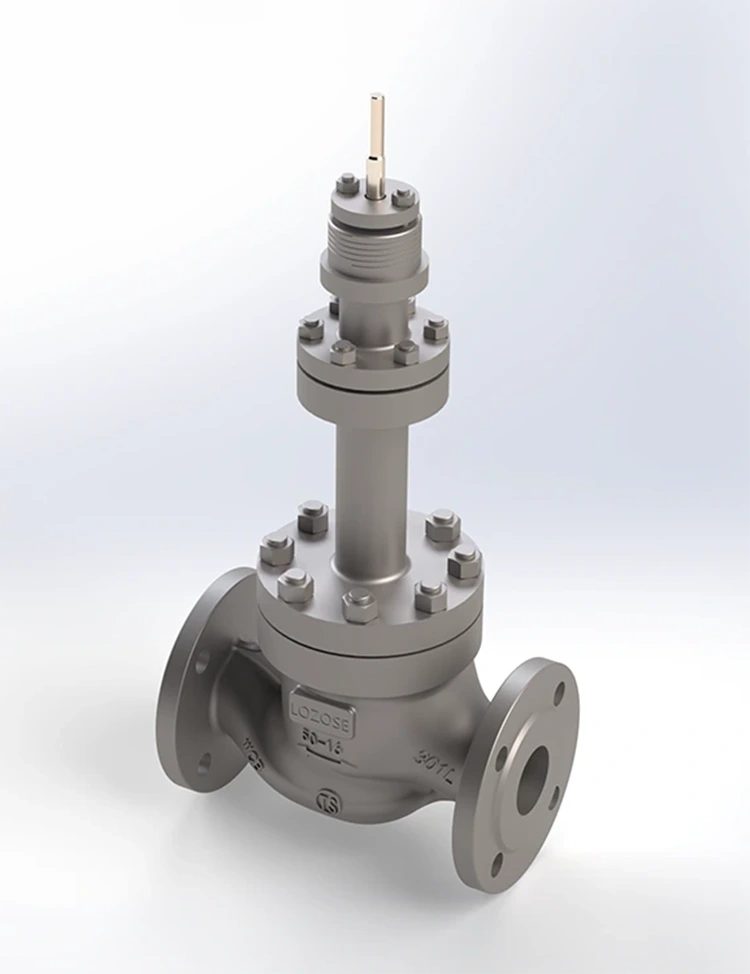
The conventional bolted bonnet uses a flange connection between the bonnet and the body. The flange has 8 to 16 bolts, depending on the size and pressure class. The seal is a spiral wound gasket or a metal ring joint gasket. The bolts must be tightened in a star pattern with a torque wrench. The gasket is deformed during tightening and must be replaced every time the bonnet is opened. The quick-release single-seat design uses a clamp ring or a threaded retaining nut to hold the bonnet in place. The seal is a reusable O-ring or a proprietary sealing ring. The bonnet is removed by loosening the clamp or unscrewing the nut, without removing multiple bolts. The table below compares the two designs.
| Feature | Conventional bolted bonnet | Quick-release single-seat |
| Bonnet connection | Flange with 8 – 16 bolts | Clamp ring or threaded nut |
| Seal type | Spiral wound or ring joint gasket | Reusable O-ring or sealing ring |
| Tools required | Torque wrench, socket set | Standard wrench or hand tool |
| Gasket replacement | Every opening | Every 5 – 10 openings |
| Typical disassembly time | 2 – 4 hours | 30 – 60 minutes |
In our factory, the quick-release bonnet is available on the Conventional Series Control Valve from size 1 inch to 8 inch and pressure class 150 to 600. The clamp ring is made from stainless steel and is designed to withstand the full body pressure. The sealing ring is made from PTFE or a graphite composite, depending on the temperature. Zhejiang Lozose Intelligent Control Instrument Co., Ltd. tests the quick-release connection with a hydrostatic test at 1.5 times the rated pressure.
3. How Does the Quick-Release Design Reduce Downtime and Spare Parts Consumption?
The quick-release design reduces downtime in three ways. The first is the disassembly time. The bonnet can be removed in 10 to 15 minutes, compared to 45 to 90 minutes for the bolted bonnet. The second is the seal replacement. The reusable sealing ring eliminates the need to stock and replace a gasket at every opening. The third is the trim access. The single-seat geometry allows the plug and seat to be removed from the top of the valve without removing the body from the pipeline. The table below shows the downtime and spare parts consumption for a typical maintenance event.
| Maintenance activity | Conventional bolted bonnet | Quick-release single-seat |
| Bonnet removal | 45 – 90 minutes | 10 – 15 minutes |
| Trim inspection and replacement | 60 – 120 minutes | 30 – 60 minutes |
| Bonnet reassembly and torque | 45 – 90 minutes | 10 – 15 minutes |
| Gasket consumption per event | 1 gasket | 0.1 – 0.2 sealing ring |
| Total downtime per event | 2.5 – 5 hours | 0.8 – 1.5 hours |
Maintenance engineer's note: The downtime reduction is the largest benefit for valves in continuous processes. If the valve is on a line that generates $10,000 per hour of product value, saving 3 hours of downtime per maintenance event is worth $30,000. Over a 15-year life with 30 maintenance events, the total saving is $900,000. This is why the quick-release design pays for itself many times over. In our factory, we provide a downtime cost calculator to help the plant compare the two designs. Zhejiang Lozose Intelligent Control Instrument Co., Ltd. can supply the quick-release bonnet as a factory option or as a retrofit kit for existing valves.
4. Why Does the Single-Seat Geometry Also Improve Maintenance Access to the Trim and Seat?
The single-seat geometry has a straight-through flow path and a single plug that moves against a single seat. When the bonnet is removed, the plug and stem assembly can be lifted out of the body. The seat ring is accessible from the top of the body and can be unscrewed or pulled out with a standard tool. In a cage-guided or double-seat valve, the trim is more complex. The cage must be removed first, and the seat ring may be located at the bottom of the body, which requires the body to be removed from the pipeline. The table below compares the trim access for different valve designs.
| Valve design | Trim access | Seat access | Body removal required |
| Quick-release single-seat | Top entry, plug lifts out | Top entry, seat unscrews | No (for sizes up to 4 inch) |
| Conventional single-seat | Top entry, plug lifts out | Top entry, seat unscrews | No |
| Cage-guided | Cage must be removed first | Bottom of body | Yes (in most sizes) |
| Double-seat | Complex, two plugs | Bottom of body | Yes |
In our factory, the Conventional Series Control Valve is designed so that the seat ring can be replaced with the body in the pipeline for sizes up to 4 inch. The seat ring is threaded into the body and is locked with a set screw. The plug and stem are removed as a single assembly. Zhejiang Lozose Intelligent Control Instrument Co., Ltd. provides a maintenance manual that shows the step-by-step disassembly procedure and the torque values for the seat ring and the bonnet clamp.
5. How Should Plant Engineers Specify and Verify a Quick-Release Control Valve for Maintenance-Friendly Operation?
The specification of a quick-release control valve must include five parameters. The first is the size and pressure class. The second is the connection type and the face-to-face dimension. The third is the trim characteristic and the flow coefficient. The fourth is the sealing ring material and the temperature range. The fifth is the quick-release mechanism type, which can be a clamp ring or a threaded nut. The verification at receipt should include a hydrostatic test, a seat leakage test, and a disassembly and reassembly cycle test. In our factory, we perform a minimum of five disassembly and reassembly cycles on every quick-release valve before shipment. The test verifies that the sealing ring maintains its integrity and that the clamp ring engages smoothly. We also provide the test report with the shipment.
We recommend that the plant engineer verify the disassembly time during the first maintenance event. If the actual time is significantly longer than the specification, the cause may be a damaged thread or a deformed sealing ring. The plant should also verify that the spare sealing rings are stocked in the correct size and material. Zhejiang Lozose Intelligent Control Instrument Co., Ltd. provides a spare parts kit with every quick-release valve. The kit includes two sealing rings and one clamp ring.
Frequently Asked Questions About Quick-Release Single-Seat Control Valves
Summary for Plant Maintenance Engineers
The quick-release single-seat design is a maintenance-friendly control valve feature because it reduces the disassembly and reassembly time from hours to minutes, eliminates the need to replace a gasket at every opening, and provides direct top access to the trim and seat. The reduction in downtime and spare parts consumption can be worth many times the price difference between the conventional and quick-release designs. The sealing class and pressure boundary integrity are maintained through the use of a reusable sealing ring and a robust clamp ring. Zhejiang Lozose Intelligent Control Instrument Co., Ltd. has been manufacturing Conventional Series Control Valve units for over 12 years and provides full quick-release options and spare parts kits for our customers.