

Why is Stainless Steel the Preferred Material for Safety Valves
2025-09-28
When specifying a Safety Valve, material choice is not just a detail—it’s the foundation of reliability and longevity. Among the options, stainless steel consistently stands out as the industry favorite. But what makes it so exceptional for this critical safety component
Stainless steel offers a unique combination of properties that directly address the harsh demands placed on a Safety Valve. Its superior corrosion resistance is paramount. Safety Valves often handle steam, aggressive chemicals, or volatile process media. Stainless steel, particularly grades like 316, resists rust and pitting, ensuring the valve’s internal mechanism remains uncompromised over time. Furthermore, its high tensile strength and durability allow it to withstand extreme pressures and temperatures without deforming, guaranteeing the valve operates at its precise set pressure when needed most.
At Baoyi, we leverage these inherent benefits by engineering our valves with precision. For instance, our Baoyi Series 500 Safety Valve utilizes 316L stainless steel for both the body and trim. This grade provides enhanced resistance to intergranular corrosion, a critical factor for applications in chemical processing or marine environments.
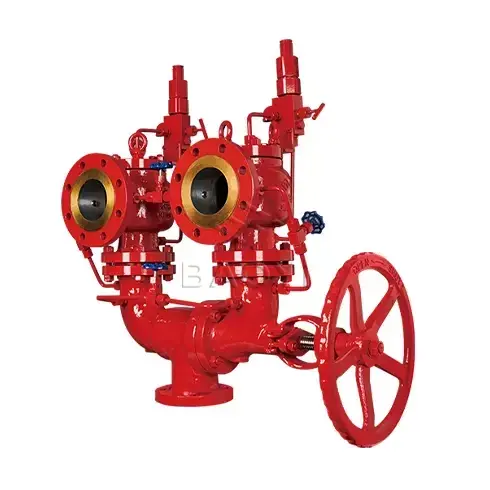
Key Advantages of Stainless Steel in Safety Valves
-
Exceptional Corrosion Resistance: Withstands corrosive media, preventing internal damage.
-
High Strength-to-Weight Ratio: Offers robust performance without excessive weight.
-
Temperature Resilience: Maintains structural integrity from sub-zero to high-temperature operations.
-
Long Service Life: Reduces total cost of ownership by minimizing replacement frequency.
| Feature | Standard Carbon Steel Valve | Baoyi Stainless Steel Valve |
|---|---|---|
| Corrosion Resistance | Prone to rust, requires coatings | Inherently resistant, ideal for harsh environments |
| Durability | Can degrade with exposure to moisture | Long-lasting, minimal maintenance |
| Optimal Service Temp | Limited range | Excellent performance from cryogenic to high heat |
| Lifecycle Cost | Lower initial cost, higher maintenance | Higher initial investment, significantly lower lifetime cost |
Safety Valve FAQ
Is stainless steel necessary for all Safety Valve applications
While not always mandatory, stainless steel is highly recommended for most applications beyond clean, dry air. It provides a critical safety margin against corrosion-related failures, making it a prudent choice for ensuring long-term system integrity.
How does stainless steel improve the performance of a Safety Valve
The material's stability ensures that the valve's calibration remains accurate. It prevents seat damage from corrosion, which can cause leakage, and ensures the moving parts function smoothly without seizing, leading to reliable operation over time.
Why choose a Baoyi stainless steel Safety Valve over other brands
Baoyi valves are not just made from stainless steel; they are precision-engineered from superior grades. We subject our valves to rigorous testing to meet international standards, ensuring each Safety Valve delivers consistent, dependable performance you can trust.
Choosing the right material is the first step in protecting your assets and personnel. The proven reliability of stainless steel makes it the intelligent choice for any critical application. Contact us today to discuss how a Baoyi Safety Valve can enhance the safety and efficiency of your operations. Our experts are ready to help you select the perfect solution.