

Why Is Cracking Pressure Critical When Selecting a High Pressure Check Valve
2026-08-10
When engineers evaluate High Pressure Check Valves, flow coefficient and material compatibility often dominate the discussion. Yet one parameter—cracking pressure—quietly determines whether the valve will protect your pump, prevent waterhammer, or fail prematurely. For over a decade, Hanno has engineered High Pressure Check Valves with precision-set cracking pressures, and field data consistently shows that misapplied cracking pressure ranks among the top three causes of valve-related downtime in hydraulic and process systems.
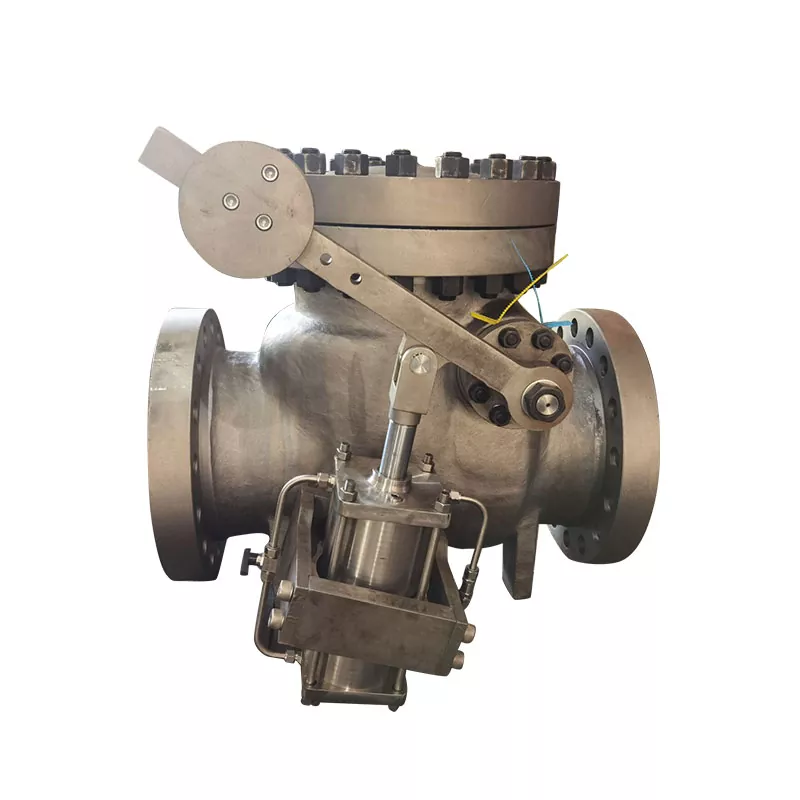
What Is Cracking Pressure in Technical Terms?
Cracking pressure is the minimum upstream pressure required to overcome the spring force and seat friction, initiating flow through the check valve. In High Pressure Check Valves, this value typically ranges from 0.5 bar to over 10 bar, depending on spring design, orifice size, and closure element mass.
| Parameter | Low Cracking Pressure (<1 bar) | High Cracking Pressure (>5 bar) |
|---|---|---|
| Response sensitivity | Very high | Deliberately damped |
| Backflow prevention speed | Slower closure | Faster closure |
| Suitable media | Thin liquids, gases | Viscous fluids, slurries |
| Energy loss per cycle | Minimal | Noticeable |
| Typical application | Pilot lines, lubrication | Plunger pumps, high-head systems |
Why Cracking Pressure Directly Affects System Performance
1. Pump Protection and Surge Prevention
If cracking pressure is set too low, the valve opens at the slightest pressure fluctuation, causing rapid cycling (chattering). This hammering destroys seats and seals within weeks. Conversely, excessively high cracking pressure forces the pump to work against an artificial head, reducing flow efficiency and increasing power consumption. Hanno recommends matching cracking pressure to 5–10% of the system’s normal operating pressure for most reciprocating pump applications.
2. Energy Efficiency Over the Duty Cycle
Every extra bar of cracking pressure adds permanent pressure drop across the valve. For a system running 24/7 at 300 bar, an unnecessary 2-bar increase in cracking pressure can raise annual energy costs by 3–5%. Hanno High Pressure Check Valves offer interchangeable spring kits, allowing on-site adjustment without replacing the entire body—a feature that maintenance teams consistently prioritize.
3. Dynamic Response in Variable Flow Conditions
Systems with frequent start-stop cycles or variable-speed drives demand a cracking pressure that balances quick opening with stable closing. A valve that opens too early may flutter; one that opens too late starves downstream actuators. The correct cracking pressure ensures the disc or poppet lifts fully within 0.1–0.3 seconds of reaching set pressure, as validated in Hanno’s flow bench tests.
Common Misconceptions About Cracking Pressure
-
“Higher cracking pressure means better sealing.” – Not true. Sealing integrity depends on seat geometry and material hardness, not spring preload.
-
“Cracking pressure and closing pressure are the same.” – They differ. Closing pressure is always lower due to hysteresis, typically 80–90% of cracking pressure.
-
“Any spring can be swapped to change cracking pressure.” – Only if the valve design allows it. Many fixed-body High Pressure Check Valves require factory recalibration.
Technical Comparison Table – Cracking Pressure by Application
| Application | Recommended Cracking Pressure | Rationale |
|---|---|---|
| High-pressure waterjet cutting (4000 bar) | 8–10 bar | Preifies rapid closure to prevent diamond orifice damage |
| Hydraulic power units (250 bar) | 3–5 bar | Balances pump pulsation damping and response time |
| Chemical injection skids (100 bar) | 1–2 bar | Minimizes additive waste; low viscosity media |
| Gas booster systems (350 bar) | 0.5–1 bar | Low density gas requires minimal lift resistance |
| Slurry transport pipelines (150 bar) | 6–8 bar | Overcomes particle settling friction on the disc |
Frequently Asked Questions About High Pressure Check Valves
Q: What happens if I select a High Pressure Check Valve with cracking pressure lower than my system’s backpressure?
A: The valve will remain partially open during reverse flow conditions because the backpressure alone can exceed the spring force, preventing full seating. This leads to continuous leakage, loss of prime in pumps, and gradual erosion of the sealing surface. In severe cases, the valve fails to close entirely, allowing full reverse flow that can spin pumps backwards—a dangerous condition that may shear shafts or damage gearboxes. To avoid this, always measure the maximum expected backpressure at the valve outlet and specify a cracking pressure at least 1.5 times higher than that backpressure, or choose a spring-assisted design with a positive shut-off feature. Hanno provides backpressure calculation sheets for every quoted system.
Q: How do temperature variations affect the cracking pressure of High Pressure Check Valves over time?
A: Temperature impacts cracking pressure through two mechanisms: spring modulus reduction and thermal expansion of internal components. For every 50°C increase above 20°C, a stainless steel spring loses approximately 3–5% of its free length force due to reduced shear modulus. Meanwhile, the valve stem and guide clearances change, altering friction coefficients. Over a 12-month period in a cyclic thermal environment (e.g., 20°C to 120°C daily), cracking pressure can drift downward by 0.5–1.2 bar. Hanno addresses this by using Inconel springs in high-temperature variants and publishing temperature-derating charts. For critical applications, we recommend an annual cracking pressure verification using a portable pressure-decay tester.
Q: Can I use the same High Pressure Check Valve for both liquid and gas service if I adjust the cracking pressure?
A: Not safely. Liquids are incompressible, so a valve that opens at 3 bar for water will see rapid, full lift. Gases, being compressible, require a higher differential pressure to achieve the same lift because the gas density is lower and provides less momentum to push the disc. Moreover, gas systems experience sonic flow and chattering at much lower pressure ratios. Even if you increase cracking pressure, the damping characteristics—which depend on fluid viscosity—remain mismatched. A valve calibrated for liquid will typically open 30–50% slower in gas service, causing pressure spikes. Hanno manufactures dedicated gas-service High Pressure Check Valves with modified damping orifices and lighter spring rates, and we never recommend cross-service use without re-engineering the trim.
Best Practice Workflow for Selecting Cracking Pressure
-
Determine normal operating pressure – Use the average, not peak.
-
Measure backpressure at valve outlet – Include static head and downstream restrictions.
-
Calculate minimum cracking pressure = backpressure + 0.5 bar safety margin.
-
Check pump flow ripple frequency – If ripple exceeds 10 Hz, increase cracking pressure by 20% to dampen chatter.
-
Verify with manufacturer curves – Hanno supplies individual pressure-drop-vs-flow graphs for every spring option.
-
Field-test under load – Adjust spring preload within the first 100 operating hours.
Final Engineering Verdict
Cracking pressure is not a secondary footnote—it is the primary tuning variable that governs reliability, efficiency, and safety in high-pressure circuits. Overlooking it leads to valve chatter, seal extrusion, unstable actuator response, and premature pump failure. Conversely, a correctly specified cracking pressure extends component life, reduces maintenance intervals, and lowers total cost of ownership.
Hanno integrates cracking pressure optimization into every quotation process, providing application engineers who review your P&ID and duty cycle before recommending a model. Our High Pressure Check Valves are available with field-adjustable springs, non-invasive pressure taps, and certified test reports for traceability.
Need expert assistance with your high-pressure system design? Contact Hanno today—our technical team offers free cracking pressure calculations, sample testing, and on-site commissioning support. Reach us at [email protected] or visit our website to request a customized selection spreadsheet for your exact duty conditions. Your system’s uptime starts with the right crack.