

Why Is a Water Control Valve the Key to High-Efficiency Fluid Management?
2025-12-03
A water control valve is a precision-engineered device designed to regulate, direct, and stabilize water flow across residential, commercial, and industrial systems. Its performance directly affects system efficiency, equipment protection, water conservation, and operational safety.
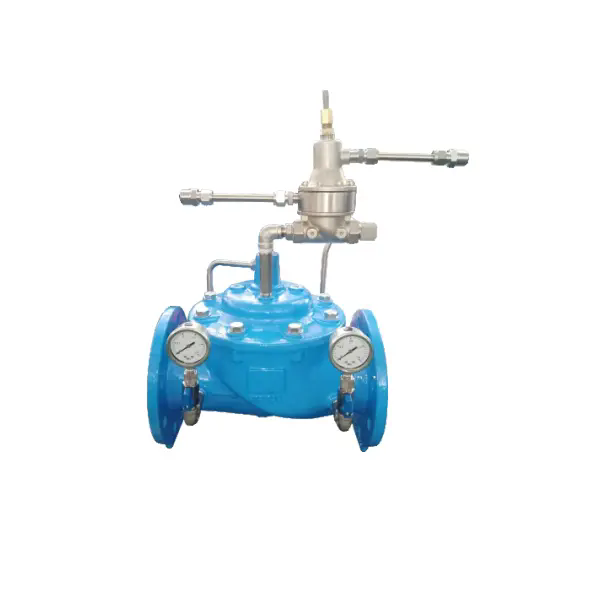
How Does a Water Control Valve Deliver Stable and Accurate Flow Regulation?
A water control valve manages pressure, flow rate, and on/off control within a hydraulic system. It uses mechanical or electro-hydraulic mechanisms to adjust internal openings, enabling dynamic water control in real time. By optimizing flow and pressure distribution, it ensures that pipelines, pumps, and terminal equipment operate at peak performance without overload or fluctuation.
Core Functions Explained Through “How” Questions
-
How does the valve maintain constant pressure?
By reacting to upstream or downstream fluctuations and modulating the internal flow path, the valve stabilizes pressure to protect system components. -
How does the valve support precise flow metering?
Calibrated openings and responsive actuators adjust the water volume with high accuracy, delivering predictable flow performance. -
How does it prevent water hammer?
Controlled opening and closing sequences reduce sudden pressure surges, protecting pipelines from stress and vibration. -
How does it enhance water efficiency?
By managing unnecessary flow and minimizing leak pathways, it reduces overall water waste.
How Do Technical Parameters Influence Water Control Valve Performance?
Below is a professional, concise technical parameter overview illustrating the performance profile typically required in high-demand applications:
Water Control Valve Technical Specifications
| Parameter Category | Specification Description |
|---|---|
| Material Options | Stainless steel, ductile iron, bronze, or engineered plastics depending on corrosion resistance and pressure needs |
| Nominal Pressure Range | PN10–PN25 (145–362 psi) to support municipal water, HVAC, industrial cooling, and irrigation systems |
| Operating Temperature | -10°C to 120°C (14°F to 248°F) depending on sealing components |
| Valve Size Range | DN15–DN600 suitable for small pipelines, commercial buildings, and large industrial installations |
| Flow Coefficient (Cv) | Engineered for stable high-volume flow with low pressure loss |
| Connection Type | Flanged, threaded, welded, or grooved for broad installation compatibility |
| Actuator Options | Hydraulic, electric, pneumatic, or manual control based on automation needs |
| Seal Material | EPDM, NBR, PTFE for chemical compatibility and long-term durability |
| Control Features | Pressure reducing, pressure sustaining, flow control, level control, solenoid on/off, remote automation |
These parameters determine how well the valve can perform in real-world applications such as municipal water supply, fire protection systems, irrigation networks, HVAC water balancing, industrial processing, and desalination facilities.
How Do Its Benefits Transform System Efficiency Across Industries?
A high-quality water control valve provides measurable improvements across multiple engineering dimensions.
How It Improves System Safety
-
Prevents pressure overloads and system failures
-
Stabilizes flow to avoid equipment fatigue
-
Eliminates damaging water hammer effects
How It Enhances Operational Efficiency
-
Reduces pump workload and energy consumption
-
Optimizes water allocation for complex building or industrial systems
-
Supports consistent water supply during peak demand
How It Reduces Maintenance and Lifecycle Costs
-
Durable materials extend service life
-
Smart automation lowers manual intervention
-
Modular design simplifies replacements and upgrades
How It Aligns with Sustainability and Water Conservation Goals
-
Minimizes unnecessary discharge
-
Enhances recycling loops in industrial operations
-
Supports long-term environmental stewardship initiatives
The combined advantages of stability, precision, durability, and energy conservation make the water control valve essential for modern water networks and engineered fluid systems.
How Will Water Control Valves Evolve in the Near Future?
The next generation of water control valves is expected to integrate deeper automation, smarter diagnostics, and improved materials.
How Digitalization Will Transform Valve Management
-
IoT-enabled sensors will provide real-time pressure and flow feedback
-
Predictive analytics will anticipate maintenance needs
-
Remote control will reduce labor and manual adjustments
How Material Innovation Elevates Durability
-
Enhanced corrosion-resistant alloys
-
High-temperature polymer composites
-
Eco-friendly coatings for municipal water systems
How Smart Infrastructure Demands Shape the Future
-
More buildings will integrate fully automated water balancing
-
Industrial facilities will adopt energy-optimized valve networks
-
Agriculture will increasingly rely on automated irrigation valves
These advancements point toward an intelligent, sustainable, and highly integrated water management environment.
Common Questions About Water Control Valves
Q1: How can a water control valve improve pressure stability in a building’s water supply system?
A1: It continuously monitors downstream pressure and adjusts the internal opening to counteract fluctuations caused by demand changes. By actively regulating pressure, it keeps faucets, HVAC systems, and industrial equipment operating smoothly without pressure spikes or flow disruptions.
Q2: How long does a water control valve typically last under continuous operation?
A2: Service life depends on water quality, material selection, and operating pressure. High-quality valves built with corrosion-resistant materials can last 8–15 years or more with routine maintenance. Modern sealing technologies and surface treatments extend durability even in harsh environments such as seawater, chemicals, or high-temperature systems.
How Does the Water Control Valve Strengthen System Reliability and Future-Ready Performance?
A water control valve is more than a flow regulator; it is an essential component that defines the efficiency, stability, and longevity of water systems across nearly every sector. By delivering precise control, protecting against pressure risks, supporting automation, and aligning with global sustainability goals, it meets both present-day engineering demands and future expectations for smart water management.
As industries and cities move toward intelligent infrastructure, valves engineered for reliability, automation compatibility, and long-term durability become indispensable. Brands like Taian continue to advance water control valve design through innovation in materials, structural engineering, and digital integration, ensuring that each system operates with optimal efficiency and dependable performance.
For engineering support, product specifications, or customized solutions tailored to your project requirements, contact us to connect with Taian’s professional service team.