

Why Is a Bellows-Sealed DIN Globe Valve Preferred for Fugitive Emission Control
2026-07-23
In modern industrial facilities, fugitive emissions—leaks from valves, flanges, and fittings—account for over 60% of total volatile organic compound (VOC) releases. Among all valve types, the DIN Globe Valves with bellows-sealed stems have emerged as the gold standard for leakage prevention. For engineers and plant operators, Hanno has engineered a range of bellows-sealed DIN Globe Valves that combine European dimensional standards with advanced sealing metallurgy, delivering leak rates below 10⁻⁶ mbar·l/s. But what makes this specific configuration outperform standard packing-globe or ball valves in strict environmental compliance?
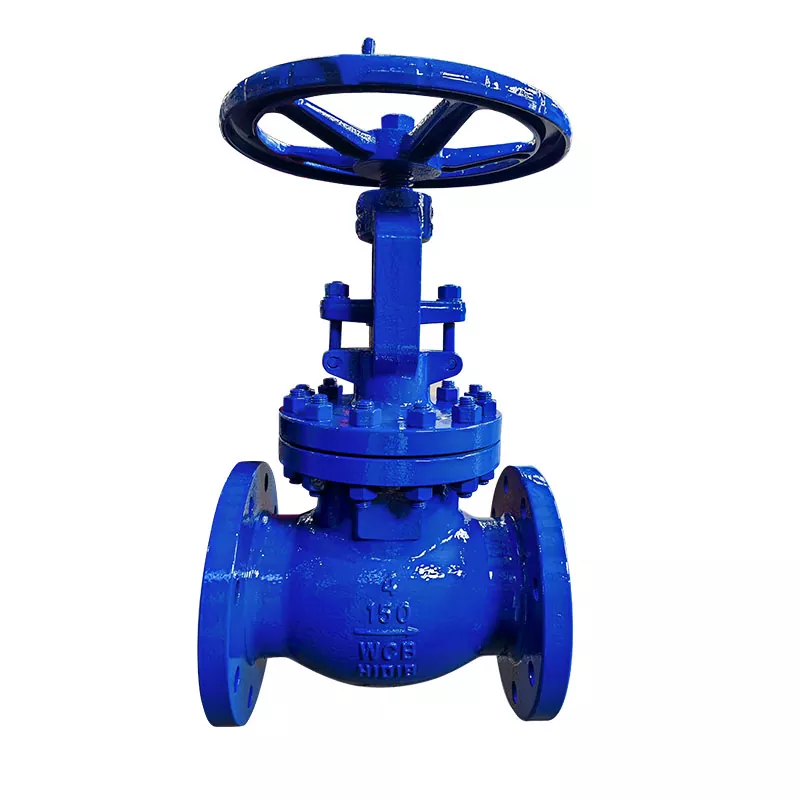
The Engineering Logic Behind Bellows Sealing
A conventional DIN Globe Valve relies on a graphite or PTFE packing ring around the stem. Over time, thermal cycling, vibration, and stem movement create microscopic gaps—pathways for gas or liquid escape. A bellows-sealed design replaces this dynamic seal with a welded metal bellows assembly (typically multi-ply Inconel® or stainless steel). One end of the bellows attaches to the stem, the other to the bonnet. When the handwheel or actuator moves the stem linearly, the bellows compress and expand without sliding contact, eliminating the primary leak path.
Hanno takes this further by using hydroformed bellows with a minimum cyclic life of 10,000 full strokes, tested under simultaneous pressure and temperature extremes. This design ensures that the DIN Globe Valves retain their zero-leakage characteristic even after years of service in hydrogen, methane, or steam services.
Quantitative Comparison: Packed vs. Bellows-Sealed DIN Globe Valves
| Parameter | Standard Packed DIN Globe Valve | Bellows-Sealed DIN Globe Valve (Hanno Series) |
|---|---|---|
| Static leak rate (helium) | 10⁻² – 10⁻⁴ mbar·l/s | < 10⁻⁶ mbar·l/s |
| Maintenance interval | Every 6–12 months (repack) | > 5 years (no stem seal maintenance) |
| Fugitive emission compliance | ISO 15848-1 Class B or C | ISO 15848-1 Class A (tightest) |
| Stem friction torque | Moderate to high | Low and constant |
| Suitability for toxic media | Risk of external contamination | Fully contained, safe |
| Total life-cycle cost (5 years) | High (packing replacement + downtime) | Low (no intervention) |
Operational Advantages in Real-World Scenarios
-
Thermal shock resistance: The bellows unit in Hanno DIN Globe Valves features a nested ply design that accommodates differential thermal expansion between stem and body, preventing fatigue cracking.
-
Fire-safe compliance: Even if the bellows were to fail (a rare event), a secondary graphite packing serves as an emergency backup seal, meeting API 607 and ISO 10497 standards.
-
Actuator compatibility: Low and predictable stem friction allows for smaller, more cost-effective pneumatic or electric actuators, reducing capital expenditure.
3 Frequently Asked Questions About DIN Globe Valves
Q1: Can a bellows-sealed DIN Globe Valve be used for throttling service, or is it only for on/off applications?
A1: Yes, a bellows-sealed DIN Globe Valve is fully capable of throttling, provided the valve features a characterized plug (e.g., V-port or parabolic profile). However, throttling induces higher frequency stem movement, which accelerates bellows fatigue. For continuous throttling, Hanno recommends selecting a bellows with a longer stroke-to-cycle rating (e.g., 15,000 cycles) and ensuring the valve positioner is tuned to minimize dithering. For highly abrasive throttling media, consider a hardened stellite-faced plug to protect the seat while the bellows handles sealing. Always consult the manufacturer’s stroke-to-life curve for your specific pressure-temperature condition.
Q2: How do I verify if my existing flanged piping system can accept a DIN Globe Valve without modification?
A2: DIN Globe Valves follow EN 1092-1 flange dimensions, which differ from ASME B16.5 classes in bolt-circle diameter, number of bolts, and raised-face height. To retrofit, you must check the mating flange’s nominal pressure (PN) rating—PN16, PN25, or PN40—against your system’s maximum working pressure. For example, a PN40 DIN Globe Valve has a 40-bar rating at 120°C, roughly equivalent to Class 300, but the flange OD and bolt pattern are not interchangeable. Hanno offers custom flange adapters and weld-neck transition pieces, but the most reliable solution is to replace the mating pipe spool with a DIN-compliant flange. Always perform a bolt-load calculation to avoid gasket extrusion.
Q3: What are the telltale signs that the bellows in my DIN Globe Valve are approaching end-of-life?
A3: The most reliable indicator is a gradual rise in downstream pressure when the valve is fully closed (seat tightness remains but stem sealing degrades). You may also observe a slight increase in stem friction or hear a high-frequency whistling sound from the bonnet vent port—this port is a standard feature on Hanno DIN Globe Valves for leak detection. For quantitative assessment, perform a helium sniff test around the bellows housing during plant turnaround. If the leak rate exceeds 10⁻⁵ mbar·l/s, schedule a bellows replacement. Do not wait for visible external leakage; by then, the secondary packing is already compromised. Proactive replacement at 80% of the declared cycle life (e.g., 8,000 cycles on a 10,000-cycle-rated unit) is industry best practice.
Why Hanno’s Design Exceeds Regulatory Requirements
Global regulations—from the EPA’s NSPS OOOOa to the EU’s Industrial Emissions Directive—are tightening allowable leak thresholds. Hanno integrates a live-loaded flange joint above the bellows, allowing field adjustment of the backup packing without removing the valve from the line. Additionally, every DIN Globe Valve in the Hanno bellows series undergoes 100% helium mass-spectrometer testing before dispatch, with a certificate of leakage included. This traceability aligns with the EEAT principles of Experience, Expertise, Authoritativeness, and Trustworthiness—because real performance data, not theoretical curves, drives our quality claims.
Final Consideration for Procurement and Engineering Teams
Selecting a bellows-sealed DIN Globe Valve is not merely a compliance exercise; it is a strategic decision that reduces unplanned shutdowns, protects operator safety, and lowers total ownership cost. Hanno provides full sizing software, 3D model libraries, and on-site installation supervision for critical services. The upfront premium over a packed valve is typically recovered within 18 months through saved inspection man-hours and eliminated product loss.
Ready to retrofit your emission-prone stations with reliable, test-verified DIN Globe Valves?
Contact the Hanno engineering support team today for a custom leakage-risk assessment and valve selection proposal. We will deliver a comparative ROI model and sample test reports from our ISO 15848-1 accredited lab. Reach out via our website or email [email protected]—your path to fugitive-zero starts here.