

Why Does the Right Expansion Valve Make Such a Big Difference in Pipeline Reliability?
2026-04-10
When I evaluate industrial pipeline solutions, I do not just look at whether a component can be installed quickly. I look at how it behaves after months of pressure fluctuation, temperature change, vibration, and repeated operating cycles. That is exactly why Tianhong Valve Technology (Quanzhou) Co., Ltd. naturally comes into the conversation when I discuss dependable pipeline connection and compensation solutions. In many real working conditions, a well-designed Expansion Valve is not simply an accessory. It is a practical answer to stress, movement, sealing stability, and long-term operating safety. For buyers, engineers, and project managers who want fewer shutdowns and more predictable performance, choosing the right Expansion Valve can directly influence system life, maintenance cost, and operational confidence.
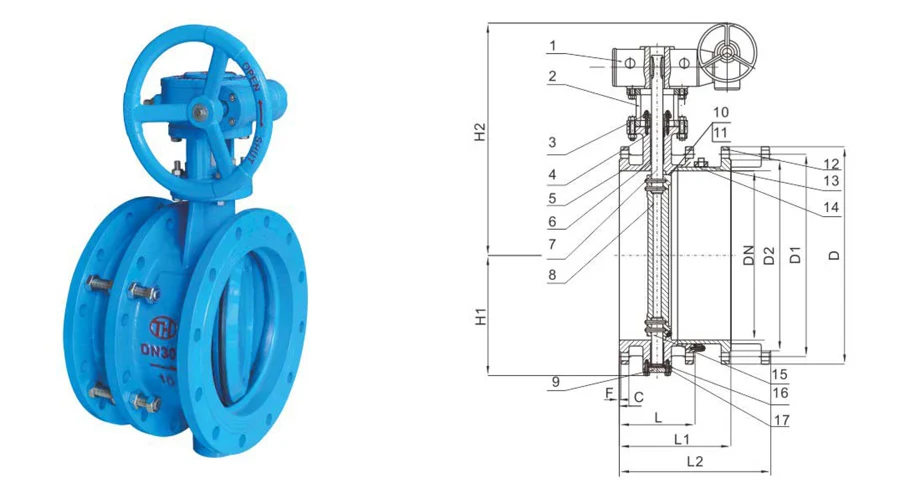
Why Do So Many Pipeline Systems Fail at the Connection Points?
I often find that the weakest part of an otherwise solid piping system is not always the main pipe itself. The real problem frequently appears at the connection points, especially where pipelines are exposed to thermal expansion, pump vibration, equipment movement, or installation deviation. If these forces are ignored, the result can be leakage, misalignment, repeated repairs, and unplanned downtime.
In practical industrial environments, pipeline systems rarely remain perfectly static. They expand during heat cycles, contract when temperatures drop, and shift under changing internal loads. In those conditions, rigid connections can transfer stress rather than absorb it. This is why a properly selected Expansion Valve becomes so important. It helps create a more flexible connection that can accommodate movement while maintaining functional integrity.
- I see thermal movement as one of the most underestimated pipeline risks in continuous-operation plants.
- I also see vibration damage appear faster in systems connected to pumps, compressors, and rotating machinery.
- I have noticed that minor alignment errors during installation can grow into costly maintenance problems over time.
- I believe many buyers reduce risk significantly when they treat flexibility and compensation as design priorities rather than afterthoughts.
How Can an Expansion Valve Help Reduce Stress and Improve Stability?
To me, the main value of an Expansion Valve lies in its ability to connect pipelines while allowing controlled flexibility. Instead of forcing the system to resist every movement with rigid stress transfer, it provides a buffer zone that can absorb vibration, accommodate displacement, and support more stable pipeline operation.
This matters because industrial systems are rarely exposed to one single challenge. A valve may need to perform in a line that sees pressure change, mechanical vibration, corrosive media, and fluctuating temperature at the same time. In that context, the right design is not just about connection. It is about compensation, protection, and durability working together.
From a purchasing perspective, I would describe the value in simple terms. A good Expansion Valve helps buyers lower the hidden costs that come after installation. Those costs include emergency labor, production interruptions, sealing failures, and early replacement.
| System Challenge | What Usually Happens Without Compensation | How an Expansion Valve Helps |
| Thermal expansion and contraction | Stress concentration, joint fatigue, alignment shift | Allows controlled movement and reduces structural strain |
| Equipment vibration | Fastener loosening, wear, noise, sealing instability | Absorbs part of the vibration load and improves system smoothness |
| Installation deviation | Difficult fit-up and long-term mechanical tension | Provides flexibility that improves installation tolerance |
| Long operating cycles | Accelerated fatigue and rising maintenance frequency | Supports more reliable, long-term pipeline operation |
What Should I Look For When Choosing an Expansion Valve for Industrial Use?
I never recommend choosing only by price or appearance. A component that looks acceptable on paper may still perform poorly if it is mismatched to the actual application. When I assess a valve for industrial use, I focus on whether the design aligns with the working environment, medium characteristics, installation method, and service expectations.
For example, a buyer in petrochemical service may care more about resistance to operating stress and long-term connection security. A buyer in power generation may be more concerned with vibration management and thermal movement. A buyer in general industrial water systems may prioritize durability, installation practicality, and maintenance control.
- Application match — I first ask where the valve will be used and what kind of movement or stress the line experiences.
- Operating conditions — I review pressure, temperature range, frequency of cycling, and media properties.
- Connection reliability — I check whether the structure supports secure joining under real operating loads.
- Durability expectations — I consider whether the valve is intended for frequent service, harsh conditions, or long life with low intervention.
- Supplier capability — I pay close attention to manufacturing consistency, technical support, and quality control confidence.
In my view, one of the biggest mistakes buyers make is selecting a product that is theoretically acceptable but not practically optimized for the system. The better decision is usually the one that balances mechanical performance, installation convenience, and long-term maintenance savings.
Which Industries Benefit Most from a High-Quality Expansion Valve?
I see value across many sectors, but the strongest demand usually comes from industries where pipelines work hard every day under variable or demanding conditions. In those settings, flexibility and compensation are not optional. They are part of keeping the system dependable.
Oil and gas operations often rely on effective connection solutions because pipelines face complex routing conditions, equipment vibration, and long service distances. Chemical processing environments create another layer of challenge because temperature change and process conditions can place continuous stress on piping networks. Power generation systems also depend on stable connections, especially where pipelines link major equipment and face repeated thermal and mechanical loads.
| Industry | Typical Pain Point | Why the Valve Choice Matters |
| Petroleum and energy transport | Vibration, load fluctuation, demanding operating environments | Supports smoother pipeline performance and protects connection points |
| Chemical processing | Thermal movement and challenging process conditions | Helps compensate for expansion and contraction while preserving system stability |
| Power plants | Equipment vibration and temperature cycling | Improves pipeline adaptability around major machinery and auxiliary systems |
| General industrial utility lines | Long-term wear and maintenance pressure | Contributes to reliable service and lower interruption risk |
Why Is Long-Term Cost More Important Than Initial Purchase Price?
I understand why many procurement teams compare quotations first. That is normal. But in industrial projects, the lower upfront price is not always the lower total cost. If a connection component fails early, every saved dollar at the purchasing stage can disappear into maintenance labor, shutdown losses, spare part replacement, and schedule disruption.
That is why I like to evaluate value in terms of lifecycle impact. A durable Expansion Valve can reduce repeated intervention and support better continuity in service. Even if the initial purchasing cost is not the absolute lowest on the market, the overall operating return is often stronger when the product is better matched and better made.
- I prefer to compare total maintenance burden, not just unit cost.
- I look at the cost of downtime because it is often much higher than buyers first expect.
- I consider replacement frequency because repeated shutdowns hurt planning efficiency.
- I value supplier responsiveness because technical support can save a project when schedules are tight.
From that perspective, a buying decision becomes clearer. I am not simply paying for a component. I am paying for reduced risk, stronger consistency, and more confidence in the system after startup.
How Does a Reliable Manufacturer Improve My Buying Confidence?
I always say that product design and supplier capability should be evaluated together. Even a good concept can be weakened by inconsistent manufacturing, poor quality management, or limited technical communication. That is why buyers often prefer working with a manufacturer that understands industrial requirements, offers a broad valve product line, and can support practical application needs rather than just quoting a catalog number.
When I look at a supplier such as Tianhong Valve Technology (Quanzhou) Co., Ltd., I see the importance of choosing a company that is positioned around industrial valve solutions instead of treating the product as an isolated item. That gives buyers a more complete basis for communication, selection, and future cooperation.
In my experience, a dependable manufacturing partner should offer several advantages:
- Clear understanding of industrial working conditions
- Stable production capability for repeat orders
- Product consistency that supports project planning
- Communication efficiency during inquiry and selection
- Better confidence for distributors, contractors, and end users
This is especially important for overseas buyers who need more than a competitive quote. They need a supplier that can support long-term purchasing relationships with practical reliability.
What Buying Questions Should I Ask Before Placing an Order?
Before I move forward with any industrial valve purchase, I like to slow down and ask the questions that reveal whether the product is truly right for the job. Good procurement decisions are usually built on specifics, not assumptions.
- What type of pipeline movement does the system actually experience?
- What are the pressure and temperature conditions during normal and peak operation?
- How important is vibration control in this application?
- What service life am I expecting before major maintenance?
- How critical is installation flexibility for the project schedule?
- Can the supplier support future volume orders and technical communication?
These questions help me avoid buying based on generic claims. They also help me communicate clearly with the manufacturer and get a recommendation that matches the real operating environment.
Why Is This the Right Time to Upgrade the Way I Source Expansion Valve Solutions?
Industrial buyers today are under pressure from every direction. They need reliable products, predictable lead times, reasonable cost control, and fewer post-installation problems. Under those conditions, I believe it makes sense to choose solutions that are designed not only to connect pipelines, but to protect the whole system from movement-related stress.
A thoughtfully selected Expansion Valve can help improve operating reliability, reduce maintenance headaches, and support smoother long-term performance in petroleum, chemical, power, and general industrial applications. That is why I see it as a strategic purchasing decision rather than a routine accessory buy.
If you are evaluating pipeline compensation and connection solutions, now is a good time to speak with a supplier that understands industrial valve applications in real working conditions. If you want a more suitable product recommendation, detailed specifications, or project-based support, please contact us and send your inquiry to Tianhong Valve Technology (Quanzhou) Co., Ltd.. A professional conversation today can help you avoid costly pipeline problems tomorrow.