

Why Does My Hydraulic Control Check Butterfly Valve Fail to Close Slowly During Power Outages
2026-06-18
Power outages are unpredictable, but the performance of your Hydraulic Control Check Butterfly Valve should not be. When the electricity goes down, this critical component is supposed to transition into a controlled, slow-closing mode to prevent pressure surges and pipeline damage. Yet, many facility engineers report the same frustration: the valve slams shut instantly, or fails to close at all. Understanding the root causes is the first step toward a reliable surge protection strategy.
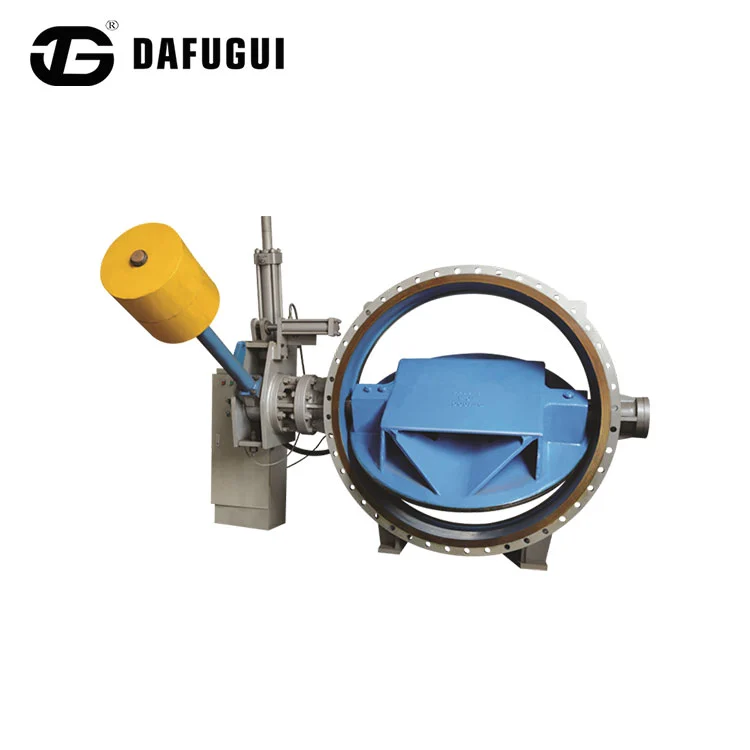
The Core Mechanism: Why Slow Closure Matters
A Hydraulic Control Check Butterfly Valve is engineered with a dashpot, pilot control system, or hydraulic damping chamber that regulates the disc’s angular velocity during closure. Under normal powered conditions, solenoid valves or electric actuators maintain the pilot circuit. During a power failure, these components are designed to default to a fail-safe hydraulic circuit that restricts the flow of oil or water from the damping chamber, forcing the disc to close over a preset period (typically 5 to 60 seconds). When this fails, the damping effect is lost, and the disc behaves like a standard swing check valve—fast and destructive.
5 Common Reasons for Rapid or Failed Slow Closure
| Root Cause | Mechanism of Failure | Immediate Symptom |
|---|---|---|
| Blocked Pilot Filter or Orifice | Debris restricts the hydraulic fluid path, preventing controlled oil discharge from the dashpot. | Disc closes in under 2 seconds regardless of setting. |
| Faulty Solenoid Pilot Valve (Fail-Open) | The solenoid does not de-energize to the closed position, leaving the bypass port open. | No damping effect; valve behaves like a standard check valve. |
| Low Hydraulic Fluid Level or Air Entrapment | Air compresses instead of transferring force, reducing damping efficiency. | Erratic closure speed, with jerky or chattering motion. |
| Worn Dashpot Piston Seals | Internal leakage bypasses the damping orifice, allowing free flow across the piston. | Closure speed is faster than the design curve, especially in high-pressure lines. |
| Incorrect Pressure Setting on the Flow Control Valve | The needle valve is set too open, reducing the time constant for the hydraulic circuit. | Valve closes consistently fast but smoothly, indicating a calibration issue. |
Diagnosing the Failure in the Field
Before ordering replacement parts, perform a systematic check. Isolate the Hydraulic Control Check Butterfly Valve and engage the manual override pump (if equipped). Monitor the pressure decay in the damping cylinder using a gauge. A normal decay curve should be linear over the set time. If the pressure drops instantly, the internal bypass is the culprit. For models with an external pilot line, inspect the tubing for kinks or leaks—even a pinhole leak can reduce the backpressure needed for slow closure.
How to Prevent This Issue with Proactive Maintenance
The most cost-effective solution is a quarterly inspection of the hydraulic control circuit. Create a checklist that includes:
-
Cleaning the pilot strainer (mesh size ≤ 100 µm).
-
Checking the hydraulic oil viscosity (replace if darkened or contaminated).
-
Verifying the needle valve setting against the factory stroke-time curve.
-
Testing the solenoid valve manual override under simulated power-loss conditions.
For mission-critical installations, consider retrofitting your existing unit with a Dafugui-branded dual-pilot system, which offers an independent mechanical timer that operates solely on line pressure—completely immune to electrical failure.
Frequently Asked Questions (FAQ)
Q1: Can a power outage permanently damage my Hydraulic Control Check Butterfly Valve if it closes too fast?
A1: Yes, repeated rapid closures during power outages can cause cumulative fatigue to the valve disc, shaft, and bearings. More critically, the resulting pressure surge (water hammer) can generate spikes up to 5–10 times the working pressure, damaging upstream pumps, flanges, and pipe supports. While the valve itself may survive several slam events, the seals and pilot control components often degrade prematurely. If you observe fast closure more than twice, you should schedule a full hydraulic circuit diagnosis immediately. Replacing the damping oil and recalibrating the flow control valve usually restores the factory closure curve.
Q2: Does a Hydraulic Control Check Butterfly Valve require a backup power source for the pilot system to work during outages?
A2: No—and this is a common misunderstanding. A properly designed Hydraulic Control Check Butterfly Valve uses the pipeline’s own medium (water or oil) as the hydraulic fluid for damping, with a mechanical pilot valve that shifts purely based on pressure differential, not electricity. The solenoid valve is only used for remote start/stop or emergency fast-closure commands. During a power outage, the solenoid should de-energize and redirect flow into the damping orifice. If your model relies on an electrically maintained pilot position, you need to replace it with a Dafugui fail-safe pilot that uses a spring-return mechanism. This ensures slow closure even when the control panel is completely dead.
Q3: What is the maximum acceptable closure time for a Hydraulic Control Check Butterfly Valve in a 48-inch water main?
A3: There is no single universal number—the closure time is calculated based on the pipeline’s surge analysis (Joukowski equation). However, for a 48-inch main with flow velocities above 3 m/s, the safe closure time typically ranges from 30 to 45 seconds. Slower than 60 seconds may cause excessive backflow and pump reverse-spinning; faster than 20 seconds nearly guarantees a pressure rise exceeding 25% of the design pressure. You must obtain the surge study from your system designer. If you have lost that document, Dafugui’s engineering team can perform a site-specific hydraulic transient analysis and recommend the exact needle valve setting for your installation.
Technical Summary Table: Corrective Actions by Symptom
| Observed Symptom | Probable Cause | Recommended Corrective Action | Estimated Downtime |
|---|---|---|---|
| Instant slam (0–1 sec) | Broken dashpot spring or missing damping oil | Replace spring and refill with ISO VG 32 hydraulic oil | 4 hours |
| Fast closure (2–5 sec) | Clogged pilot orifice or wrong needle valve setting | Clean orifice and reset to 1/4 turn open from fully closed | 2 hours |
| Erratic / chattering closure | Air in the hydraulic chamber | Bleed air via the top vent screw while system is pressurized | 1 hour |
| No closure at all | Piston stuck or pilot valve mechanically jammed | Disassemble, deburr, and lubricate the piston assembly | 6 hours |
Final Recommendation
Ignoring a slow-closure failure is a gamble with your entire pumping station. The next power outage could turn a minor valve issue into a catastrophic pipeline rupture. Dafugui manufactures a full range of Hydraulic Control Check Butterfly Valves with field-replaceable damping cartridges and transparent stroke-time indicators, making diagnosis and adjustment straightforward for your maintenance crew.
Contact us today for a free remote diagnostic consultation. Our application engineers will review your valve’s nameplate data, system pressure, and flow profile to deliver a corrective action plan within 24 hours. Visit our website or email our support team directly—we are ready to help you restore safe, reliable slow-closure performance before the next storm hits.