

Why Does My Hard Seal Metal-Seated Globe Valve Keep Chattering Under Low-Flow Conditions
2026-08-18
If you have ever heard a persistent, high-frequency vibration or rattling noise coming from your Hard Seal Globe Valve during low-flow operation, you are not alone. This phenomenon, known as valve chattering, is one of the most common yet misunderstood issues in industrial flow control. At Huadu, we have diagnosed and resolved hundreds of such cases across oil refining, chemical processing, and power generation plants. The short answer is that chattering under low flow usually points to improper sizing, excessive pressure drop per stage, or unstable hydraulic forces acting on the disc. However, the real solution requires a deep dive into valve dynamics, trim selection, and system behavior—which is exactly what this blog delivers.
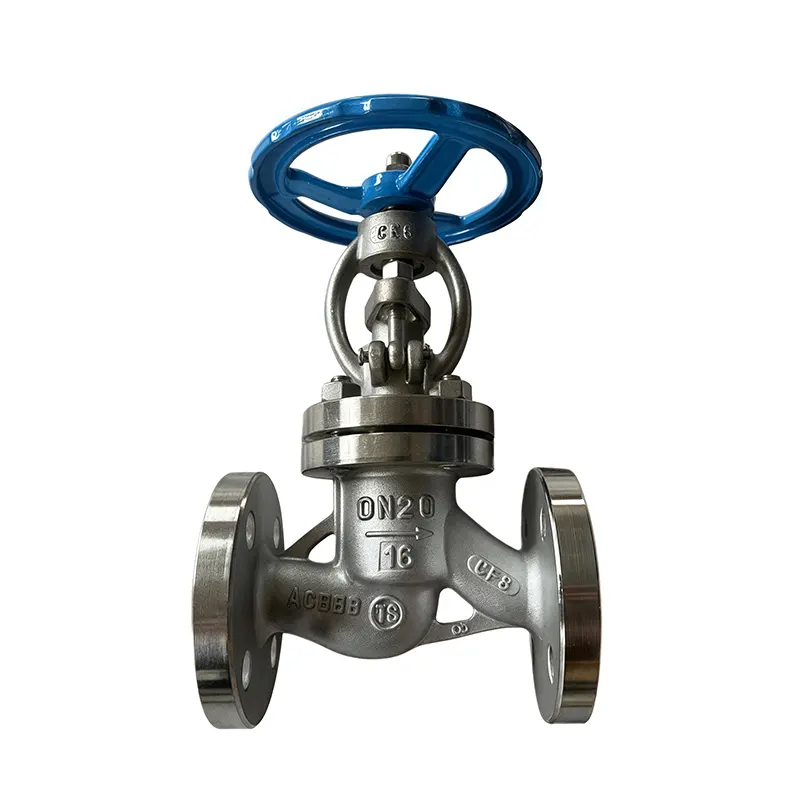
What Exactly Is Valve Chattering?
Chattering is not simple turbulence or flow noise. It is a rapid, uncontrolled oscillation of the disc and stem assembly against the seat, typically occurring at frequencies between 5 and 50 Hz. Unlike cavitation (which produces a crackling sound), chattering is mechanical—it physically pounds the metal sealing surfaces. Over time, this leads to premature wear, seat galling, stem bending, and ultimately, loss of shutoff capability in your Hard Seal Globe Valve.
The Root Causes – A Technical Breakdown
Based on our field data from Huadu installations, the following four factors account for over 90% of chattering events under low-flow conditions:
| Cause | Description | Impact Level |
|---|---|---|
| Oversized Valve | Valve Cv is far larger than required for the minimum flow rate, forcing the disc to operate near the closed position (<15% opening). | Critical |
| Excessive ΔP per Stage | Total system pressure drop is concentrated across a single seating interface rather than staged across multiple restrictions. | High |
| Insufficient Actuator Stiffness | Pneumatic or electric actuator lacks enough positioning torque to counteract fluid dynamic forces at low lift. | Moderate |
| Wrong Trim Characteristic | Using an equal-percentage trim instead of a linear or quick-opening trim for low-flow duty. | Moderate |
Among these, oversizing is the number-one culprit. When a Hard Seal Globe Valve operates at 5–10% travel, the fluid velocity under the disc becomes extremely high, creating negative pressure zones that alternately pull the disc toward and away from the seat. This unstable force balance triggers the chattering cycle.
How to Diagnose Chattering in 5 Steps
Before replacing any parts, Huadu recommends this systematic diagnostic process:
-
Record travel position – If the valve operates below 20% opening during normal low-flow periods, sizing is suspect.
-
Measure upstream and downstream pressures – Calculate the actual pressure drop. If it exceeds the valve’s rated max ΔP for the selected trim, you need multi-stage reduction.
-
Check actuator supply pressure – For pneumatic actuators, ensure the supply is stable and within the recommended range (typically 3–15 psi or 4–20 mA for I/P).
-
Inspect the seat and disc – Look for early galling or impact marks; these confirm mechanical pounding rather than fluid noise.
-
Review the process curve – If flow demand fluctuates rapidly, the valve may be hunting—this requires a positioner with faster response tuning.
Practical Solutions – What Works in the Field
Based on successful retrofits across more than 200 plants, here is a decision table for resolving chattering in a Hard Seal Globe Valve:
| Solution | When to Apply | Expected Outcome |
|---|---|---|
| Replace with a smaller Cv valve | Permanent low-flow duty below 30% of max capacity | Travel increases to 40–60%, stabilizing disc forces |
| Install a multi-hole cage trim | High ΔP (>50 bar) with low flow | Stages pressure drop over 3–4 restrictions, reducing velocity under the disc |
| Upgrade to a high-gain positioner | Fast-cycling process (changes >10% per minute) | Improves positioning accuracy and dampens hunting |
| Add a bypass line with a mini-valve | Occasional low-flow periods; main valve remains sized for peak flow | Diverts low flow to a dedicated small valve, keeping main valve closed or near fully open |
In many cases, Huadu engineers combine solutions 1 and 2—resizing the Hard Seal Globe Valve and upgrading to a cage-guided trim—which eliminates chattering permanently while extending seat life by 3–5 times.
Hard Seal Globe Valve FAQ – Common Questions Answered
Q1: Can chattering damage my Hard Seal Globe Valve beyond just the seat and disc?
A: Yes—and this is often underestimated. The repetitive impact transmits shock waves up the stem, which can loosen bonnet studs, deform packing, and even crack the stem-to-disc weld joint in severe cases. Over a 6-month period, unchecked chattering has been documented to reduce overall valve service life by 60–70%. The damage is not limited to the wetted parts; it also affects actuator bearings and positioner feedback linkages. That is why early intervention is critical. Huadu recommends quarterly travel signature tests (stroke vs. input signal) to catch developing instability before it becomes destructive.
Q2: Is there a minimum flow rate below which a Hard Seal Globe Valve should never be used?
A: Yes. As a rule of thumb, a standard Hard Seal Globe Valve should not be continuously operated below 10–15% of its rated Cv capacity for linear trim, or below 20% for equal-percentage trim. However, this is not a fixed number—it depends on the actual pressure drop and fluid density. For liquid services, the minimum stable flow can be calculated using the valve’s inherent rangeability (typically 30:1 for globe valves). If your process requires stable control below that threshold, Huadu offers reduced-port trims and anti-cavitation cages that safely extend usable rangeability to 50:1, allowing stable operation down to 5% travel without chattering.
Q3: How can I tell the difference between chattering and cavitation in my Hard Seal Globe Valve?
A: This is a critical distinction because the remedies are opposite. Chattering produces a sharp, metallic tapping or pounding sound at a steady rhythm, and the valve body feels hot near the packing due to friction. Cavitation, on the other hand, sounds like gravel or stones passing through the valve and is accompanied by high-frequency vibration that increases with pressure drop. Visually, chattering leaves bright impact marks on the disc sealing edge, whereas cavitation creates a roughened, sponge-like erosion pattern on the seat and downstream body. To confirm, reduce the downstream pressure (open a downstream valve slightly). If the noise increases, it is cavitation; if the noise stops, it is chattering. Huadu provides a free diagnostic checklist for customers to differentiate these two conditions accurately.
Final Recommendations from Huadu
Do not ignore chattering—it will not resolve itself. Start by collecting actual process data (flow, pressure, temperature, and valve position) over a full operating cycle. Then, compare that data against the original sizing sheet. In most cases, the solution is either resizing or upgrading to a multi-stage trim. For new projects, always specify a Hard Seal Globe Valve with a rangeability that matches your turndown ratio, and consider adding a positioner with adaptive gain control.
Contact Us
If your Hard Seal Globe Valve continues to chatter despite adjustments, or if you are planning a new installation and want to avoid this issue from the start, reach out to Huadu today. Our application engineers provide free sizing reviews, on-site diagnostic support, and custom trim designs tailored to your exact process conditions. Click here to contact our team – we respond within 4 business hours with a preliminary analysis and actionable next steps. Your reliable flow control starts with a conversation. Let us make your Hard Seal Globe Valve perform quietly, precisely, and durably—under every flow condition.