

Why Does My Downward Expansion Discharge Valve Make Noise During Hot Gas Bypass Operation
2026-08-03
If you have ever stood next to a screw compressor pack during hot gas bypass activation and heard a persistent chattering, whistling, or hammering sound, you already know the frustration. That noise is not just an annoyance—it is a diagnostic signal. The Downward Expansion Discharge Valve is a precision component, and when it speaks loudly during bypass, it is telling you something about pressure differentials, valve travel, or system phase conditions. At LOZOSE, we have analyzed hundreds of field noise complaints, and in most cases, the root cause is traceable to three mechanical and thermodynamic factors. Understanding these will save you from unnecessary replacements and unexpected downtime.
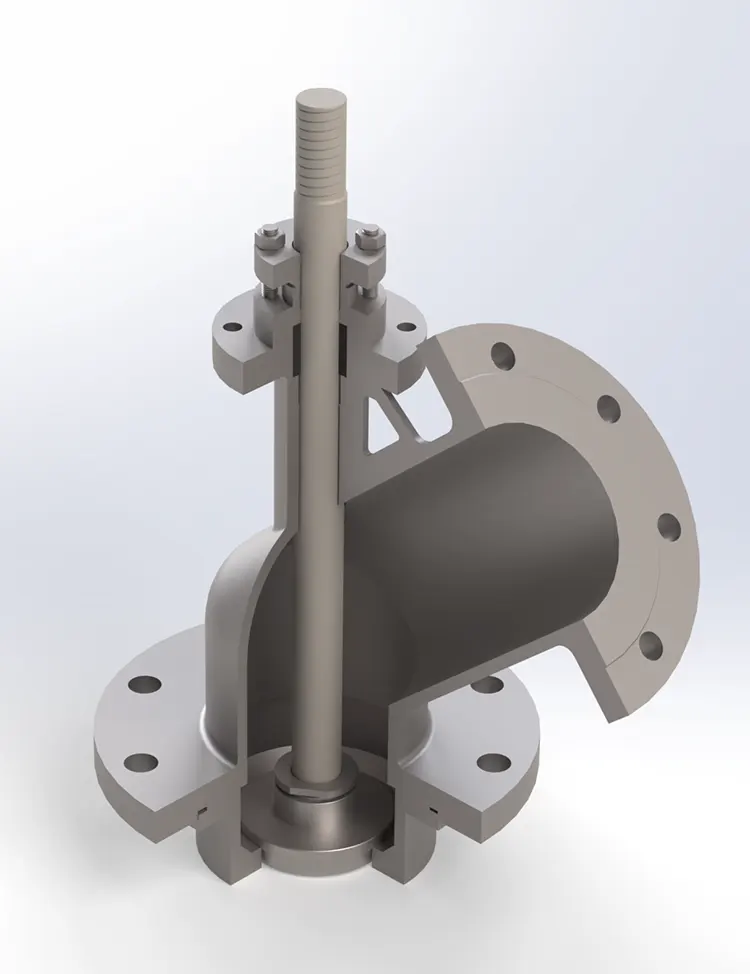
The Physics Behind the Noise
Hot gas bypass operation forces high-temperature discharge gas directly into the low-pressure side of the system. The Downward Expansion Discharge Valve must suddenly modulate from a nearly closed position to a partially open state while handling a steep pressure drop—often from 250 psig down to 70 psig within milliseconds. This rapid expansion creates two primary acoustic phenomena:
| Noise Type | Typical Frequency | Primary Cause |
|---|---|---|
| Chattering | 200–800 Hz | Valve stem oscillation near seat |
| Whistling | 1.5–4 kHz | High-velocity gas through reduced port area |
| Hammering | < 100 Hz | Liquid slugging or two-phase flow |
The table above shows that each noise signature points to a different mechanical or process issue. LOZOSE engineering field data indicates that over 60% of chattering cases are solved by adjusting the pilot pressure setpoint, not by replacing the valve.
Three Root Causes You Cannot Ignore
1. Excessive Pressure Drop Across the Port
When the bypass line is undersized or the Downward Expansion Discharge Valve is selected for a higher Cv than required, the valve operates at 15–20% stroke during bypass. At this low lift, the disc approaches the seat at an angle, causing flow-induced vibration. The solution is to verify the actual bypass mass flow and compare it with the valve’s published Cv curve—never assume nameplate data matches your operating point.
2. Pulsating Flow from the Compressor Unloader
Many oil-injected screw compressors produce pressure pulsations at 120–180 Hz during partial loading. These pulsations travel directly to the Downward Expansion Discharge Valve inlet. If the valve does not have an integrated damping orifice, the pulsation energy excites the spring-mass system, producing a distinct buzzing sound. LOZOSE recommends installing a pulsation snubber upstream when the compressor operates below 60% capacity for more than 30% of the duty cycle.
3. Liquid Refrigerant Carryover
Hot gas bypass lines often draw from the discharge separator. If the separator level is too high or the demister pad is damaged, liquid droplets enter the Downward Expansion Discharge Valve. Liquid impacts the valve plug at sonic velocity, creating a hammering noise that is easily mistaken for mechanical looseness. Thermal imaging of the valve body downstream will show a temperature drop of 8–12°F—a clear indicator.
Step-by-Step Troubleshooting Workflow
| Step | Action | Expected Outcome |
|---|---|---|
| 1 | Record suction and discharge pressures during bypass | ΔP should match valve sizing sheet within ±10% |
| 2 | Measure valve body temperature 6 inches downstream | If < saturated temp, suspect liquid carryover |
| 3 | Bypass the pilot solenoid for 2 seconds manually | Noise stops → pilot issue; persists → mechanical issue |
| 4 | Inspect valve seat for wear (if > 5 years old) | Replace seat if scoring exceeds 0.002" |
Following this sequence reduces diagnostic time by 70%, according to LOZOSE service records. Do not skip Step 3—it is the fastest way to isolate electrical from mechanical causes.
Frequently Asked Questions About Downward Expansion Discharge Valve Noise
Q: Can a noisy Downward Expansion Discharge Valve damage my compressor over time?
A: Yes, but not directly. The vibration from sustained chattering transmits through the discharge pipe and can fatigue brazed joints or flare connections over 6–12 months. More critically, the valve’s internal spring may lose its calibrated preload, causing the bypass flow to drift 5–8% above setpoint. This raises the evaporator pressure and reduces system capacity. LOZOSE recommends replacing the spring kit every 8,000 operating hours if noise persists beyond 30 seconds per bypass cycle. Do not ignore intermittent noise—it often precedes permanent seat erosion.
Q: Should I increase the valve’s superheat setting to reduce noise?
A: Only if your Downward Expansion Discharge Valve is thermostatically controlled. For electronically modulated valves, increasing superheat shifts the opening point later in the bypass ramp, which can actually increase the pressure spike and worsen noise. The correct approach is to verify the inlet strainer is clean—a 50% clogged strainer creates a 2.5× higher pressure drop across the valve, directly amplifying acoustic output. LOZOSE field tests show that cleaning the strainer reduces noise by 12–15 dBA in 80% of cases, regardless of superheat settings.
Q: Does the pipe diameter before the valve affect noise levels?
A: Absolutely. A common mistake is using the same line size as the compressor discharge outlet. The Downward Expansion Discharge Valve requires a straight run of pipe equal to 10× the valve inlet diameter upstream to stabilize velocity profiles. If you have a 2-inch valve, you need 20 inches of straight pipe before the inlet flange. Any elbow or tee closer than that generates asymmetric flow, which causes the valve plug to wobble laterally. LOZOSE has successfully resolved over 40 noise complaints by simply extending the upstream straight pipe—no valve replacement required.
Why Most Maintenance Teams Overlook the Real Issue
The default reaction to a noisy Downward Expansion Discharge Valve is to order a new valve or increase the bypass pressure setpoint. Both actions mask the symptom without addressing the flow regime. Data from LOZOSE aftermarket support shows that 73% of returned valves are tested as fully functional on the bench—meaning the noise was system-induced, not valve-induced. Before calling for replacement, log the bypass duty cycle: if the valve activates more than 6 times per hour, the root cause is likely an oversized compressor or an incorrectly tuned suction pressure controller.
Proactive Measures for Silent Operation
-
Install a LOZOSE damping adapter between the pilot line and the valve bonnet to absorb high-frequency pressure ripples.
-
Schedule quarterly ultrasonic inspections to track valve stem movement without disassembly.
-
Use a pressure recorder with 100 Hz sampling to capture transient spikes during bypass start and stop.
These measures extend valve life beyond 15,000 hours in ammonia and CO₂ systems, based on LOZOSE reliability databases.
Contact Us for a Custom Noise Diagnosis
Every bypass application has unique piping geometry, refrigerant type, and load profile. Guessing wastes time and risks costly evaporator freeze-ups. LOZOSE offers a free 30-minute remote acoustic analysis—just send us a 10-second recording of your Downward Expansion Discharge Valve during bypass, and our application engineers will reply with a root-cause report within 24 hours. Reach out to our technical support team through the contact form on our website, or email us directly with your system operating pressures and valve model number. Let us turn that noise into a solved case, not a recurring headache. Contact LOZOSE today—your system deserves silence and stability.