

Why Does My Accumulator Charging Valve Keep Losing Nitrogen Pressure
2026-08-27
If you work with hydraulic systems, few frustrations match the repeated discovery that your Accumulator Charging Valve has lost its precharge pressure. This isn't just an inconvenience—it directly affects system response, pump cycle times, and energy efficiency. At Difon, we have spent years diagnosing this exact complaint across industries from offshore drilling to mobile equipment. The truth is that pressure loss rarely happens without a clear root cause, and most cases can be resolved without replacing the entire valve assembly.
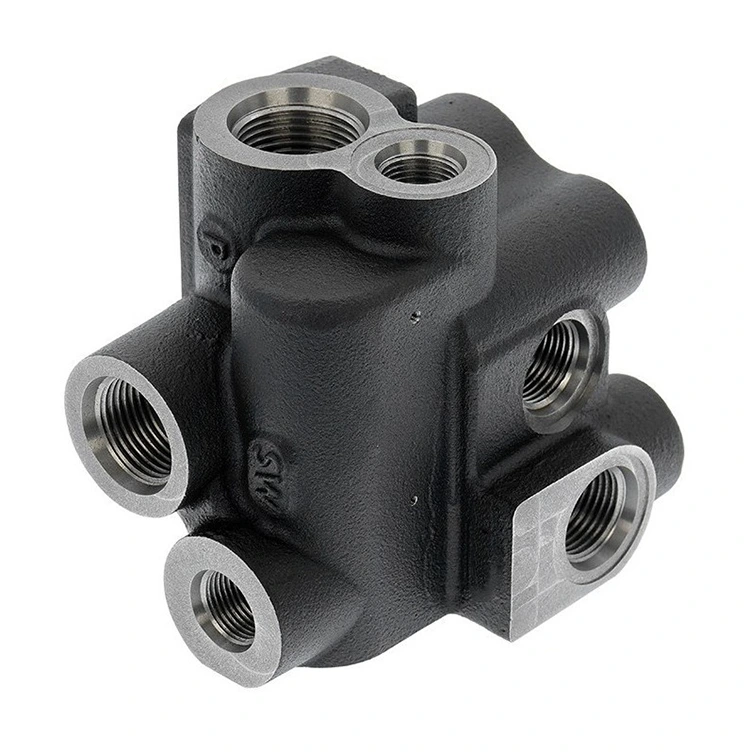
The Physics Behind Nitrogen Loss
Nitrogen is used in accumulators because it is inert, dry, and stable under temperature changes. However, the Accumulator Charging Valve acts as the sealed interface between the nitrogen side and the hydraulic fluid side. Any breach in this interface allows gas to migrate. The most overlooked factor is permeation—nitrogen molecules are small enough to diffuse through certain elastomeric seals over time. But permeation accounts for only about 2–3% annual loss in a healthy system. If you are topping up weekly, the problem is mechanical, not molecular.
Top 5 Root Causes (With Diagnostic Clues)
| Cause | Typical Symptom | Quick Check |
|---|---|---|
| Damaged poppet seat | Pressure drops within hours | Listen for hissing at the charge port |
| Worn O-ring on the piston rod | Oil found in the gas side | Crack the gas valve briefly—oil mist escapes |
| Loose Schrader core | Slow, steady loss over days | Apply soapy water; bubbles form at the core |
| Cracked diaphragm (bladder type) | Rapid loss with system shock | Precharge falls to zero after a high-pressure cycle |
| Incorrect torque on the valve body | Intermittent loss | Retorque to manufacturer spec; re-test |
Step-by-Step Troubleshooting Protocol
-
Isolate the accumulator from the hydraulic circuit.
-
Depressurize the hydraulic side completely.
-
Connect a calibrated nitrogen gauge to your Accumulator Charging Valve.
-
Record the pressure and wait 15 minutes—if it drops more than 2%, proceed to leak test.
-
Apply leak-detection fluid around the valve stem, Schrader core, and body threads.
-
If no external bubbles appear, the internal piston seal is your prime suspect.
Difon recommends using a digital pressure logger for at least one full duty cycle. This captures whether the loss coincides with pressure spikes, temperature shifts, or pump starts.
Why Temperature Misleads Technicians
A 10°C drop in ambient temperature reduces nitrogen pressure by roughly 3–4% in a closed volume. Many technicians mistakenly believe their Accumulator Charging Valve is failing when the real issue is seasonal temperature variation. Always correct your readings to a reference temperature (e.g., 20°C) before concluding a leak. If the corrected pressure remains stable, your valve is healthy—you only need to adjust precharge seasonally.
When to Rebuild vs. Replace
| Condition | Rebuild | Replace |
|---|---|---|
| Worn O-rings / seals | ✅ Yes | ❌ No |
| Scored poppet seat | ❌ No (requires lapping, rarely successful) | ✅ Yes |
| Corroded valve body | ❌ No | ✅ Yes |
| Damaged threads on charge port | ❌ No | ✅ Yes |
| Normal permeation (≤5% per year) | ✅ Adjust schedule | ❌ No |
For most field conditions, Difon offers factory-matched seal kits that restore OEM performance without the cost of a new valve. However, if the poppet seat shows visible grooving, replacement is the only reliable path.
Accumulator Charging Valve FAQ
Q: Can I use compressed air instead of nitrogen in my Accumulator Charging Valve?
A: Absolutely not. Compressed air contains oxygen and moisture, which accelerate corrosion of the internal piston and degrade elastomeric seals. More critically, air supports combustion—if a seal fails and hydraulic oil enters the gas side, adiabatic compression can cause a diesel effect, leading to explosion. Nitrogen is specified because it is inert, dry, and does not react with hydraulic fluids. Never substitute.
Q: How often should I check the precharge pressure on my Accumulator Charging Valve?
A: For standard industrial applications, Difon recommends a monthly visual check and a quarterly precision gauge test. In high-vibration environments (e.g., excavators, forging presses), move to bi-weekly checks. Always check after any major pressure spike or relief-valve event. Document every reading—trends reveal seal wear before catastrophic failure occurs.
Q: Why does my Accumulator Charging Valve hold pressure when static but lose it under dynamic operation?
A: This is a classic symptom of a worn piston seal that only deforms under flow-induced pressure differentials. Static tests pass because the seal sits flush. Under dynamic cycling, the pressure gradient forces the seal to tilt, creating a micro-gap. The fix is to replace the piston seal and inspect the cylinder bore for scoring. Do not simply tighten the valve—that will not address the seal-to-bore clearance issue.
Preventive Maintenance That Pays Off
-
Always use a dry nitrogen source with a dew point below -40°C.
-
Lubricate the Schrader core threads with a small amount of silicone grease during recharging—this reduces wear on the seat.
-
Maintain a logbook that tracks precharge pressure, date, ambient temperature, and system operating hours.
-
Train your team to recognize that a Accumulator Charging Valve is a precision component, not a generic fitting.
Difon provides training materials and on-site support to help your maintenance crew build consistent recharging habits. Over 70% of nitrogen loss complaints we investigate turn out to be procedural errors—not hardware defects.
Ready to Stop Wasting Nitrogen and Downtime?
Pressure loss is not a mystery—it is a solvable engineering problem. Whether you need a replacement Accumulator Charging Valve, a custom seal kit, or a digital pressure monitor for continuous tracking, Difon has the expertise to match your application. Our technical team responds within 24 hours with diagnostic support and part recommendations.
Contact us today with your valve model and system pressure—we will send you a tailored troubleshooting checklist and a free quote for any required components. Your hydraulic system deserves reliability, and we are here to deliver it.