

Why Does a Pressure Sealed Check Valve Fail to Close Tightly Under High-Temperature Service
2026-07-08
High-temperature service presents one of the most demanding operational environments for industrial flow control equipment. Among the various components challenged by extreme heat, the Pressure Sealed Check Valve frequently encounters a specific and potentially dangerous issue: failure to close tightly. This problem can lead to reverse flow, system pressure loss, equipment damage, and even catastrophic plant shutdowns. Understanding the root causes is not just a technical exercise—it is a critical safety and reliability imperative.
Operators at facilities using Baoyi Pressure Sealed Check Valve solutions have observed that thermal expansion, material creep, and seal degradation are the primary culprits behind incomplete disc seating. Unlike bolted bonnet designs, the Pressure Sealed Check Valve relies on internal pressure to energize its bonnet seal. While this design excels at high pressures, elevated temperatures fundamentally alter the mechanical behavior of both the valve body and its internal trim components.
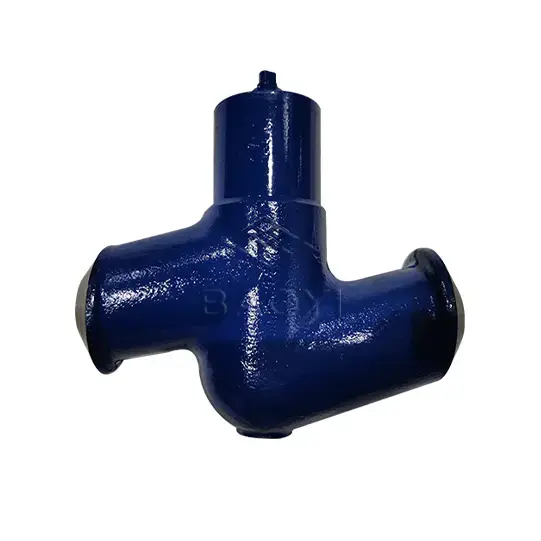
Thermal Expansion Mismatch Between Components
At temperatures exceeding 400°C (752°F), the coefficient of thermal expansion (CTE) differences between the valve body, disc, seat ring, and bonnet become highly pronounced. A Pressure Sealed Check Valve typically uses carbon steel or low-alloy steel for the body, while the seat and disc may feature Stellite hardfacing or austenitic stainless steel overlays. These materials expand at different rates, reducing the clearance margins required for proper seating alignment.
| Component | Material | CTE (10⁻⁶/°C) | Expansion at 500°C (per 100mm) |
|---|---|---|---|
| Body | ASTM A216 WCB | 12.5 | 0.60 mm |
| Seat Ring | Stellite 6 | 10.8 | 0.52 mm |
| Disc | F316 Stainless | 16.0 | 0.77 mm |
| Bonnet | A105 Forged | 13.0 | 0.63 mm |
The table above illustrates that the disc (F316) expands significantly more than the seat ring (Stellite 6). This differential causes the disc to "grow" radially, potentially misaligning with the seat and preventing a metal-to-metal sealing contact. Baoyi engineers address this by designing matched CTE material pairs and incorporating controlled clearances that account for thermal growth at the maximum service temperature.
Creep Relaxation and Loss of Seating Force
Under sustained high-temperature operation, the spring or weight mechanism that normally provides the closing force in a Pressure Sealed Check Valve can lose its preload due to creep relaxation. When the valve closes, the disc must overcome reverse flow pressure and settle firmly onto the seat. If the spring constant degrades over time—a phenomenon accelerated by temperatures above 450°C—the available closing force diminishes.
Furthermore, the pressure-sealing bonnet gasket, often a flexible graphite or metallic spiral-wound type, undergoes compression set. Once the gasket relaxes, the bonnet loses its pressure-assisted sealing effect. This subtle movement shifts the internal geometry, causing the disc to land off-center. In Baoyi valves, advanced Inconel-overlay gaskets and Belleville spring washers are used to maintain consistent loading across thermal cycles, significantly reducing creep-related failures.
Oxidation, Erosion, and Seat Surface Degradation
High-temperature steam or hydrocarbon service promotes oxidation on the seat and disc sealing surfaces. The oxide layer, though microscopic, creates a rough, uneven surface that prevents a tight shut-off. Particulates in the flow stream—such as scale or catalyst fines—become embedded in these oxide films, acting as abrasives that erode the seating surfaces each time the Pressure Sealed Check Valve cycles.
This erosion mechanism is particularly aggressive during partial opening conditions, where high-velocity flow jetting attacks the seat corner. Over 500 thermal cycles, the sealing profile can lose up to 0.2 mm of material—enough to cause a measurable leakage rate. Baoyi mitigates this through precision hardfacing application (Stellite 21 or Colmonoy) and post-weld heat treatment that ensures uniform hardness across the sealing faces.
FAQ: Common Questions About Pressure Sealed Check Valve High-Temperature Failures
Q1: What is the maximum operating temperature for a standard Pressure Sealed Check Valve, and when should I upgrade to a special design?
A1: A standard Pressure Sealed Check Valve with carbon steel body and conventional graphite gaskets is typically rated up to 538°C (1000°F) per ASME B16.34. However, reliable tight shut-off is generally guaranteed only up to 425°C (797°F). Above this threshold, you should upgrade to a design with Inconel 625 springs, Stellite 21 hardfacing, and a controlled thermal expansion stem guide. For services above 560°C, a fully austenitic stainless steel or nickel-alloy body is recommended. Baoyi offers temperature-specific trim packages that are validated through finite element analysis (FEA) and prototype thermal cycling tests to ensure zero-leakage performance at up to 620°C.
Q2: How can I distinguish between leakage caused by thermal distortion versus leakage caused by erosion in my Pressure Sealed Check Valve?
A2: Thermal distortion typically presents as a consistent, low-level leakage that increases gradually as the valve reaches steady-state temperature and decreases during cooldown. The leakage pattern is often uniform around the seat circumference. Erosion-related leakage, on the other hand, shows localized flow marks, pitting, or a crescent-shaped wear pattern on the seat face, and it tends to worsen with each subsequent cycle regardless of temperature. To diagnose correctly, perform a dye-penetrant inspection on the seat after disassembly. If distortion is suspected, measure the out-of-roundness of the seat bore at ambient and at operating temperature using a bore gauge. Baoyi provides a detailed thermal distortion calculation sheet with every valve, allowing maintenance teams to predict and monitor this parameter over the valve’s service life.
Q3: What maintenance practices can extend the tight-shutoff life of a Pressure Sealed Check Valve in high-temperature applications?
A3: Three critical practices yield the best results. First, implement a cold-set torque procedure for the bonnet pressure seal—retorque after the first thermal cycle and again after 100 hours of stable operation, following the Baoyi-supplied torque-temperature curve. Second, install upstream strainers to remove hard particulates larger than 50 microns, as these are the primary erosive agents. Third, conduct quarterly seat leakage tests using a pressure-decay method at 50% of design pressure, not at full pressure, to avoid damaging the seating surfaces during testing. Record the leakage rate in mL/min and trend it over time—a sudden increase of more than 30% warrants immediate inspection. Additionally, always use the manufacturer’s recommended gasket replacement interval; for Baoyi valves, this is typically 36 months or 2000 thermal cycles, whichever comes first.
Summary of Failure Modes and Mitigation Strategies
| Failure Mode | Root Cause | Mitigation Strategy |
|---|---|---|
| Misalignment due to thermal growth | CTE mismatch between disc and seat | Matched CTE trim; controlled radial clearance |
| Loss of closing force | Spring creep relaxation and gasket compression set | Belleville washers; Inconel springs |
| Surface oxidation | High-temperature steam/oxygen reaction | Stellite 21 hardfacing; oxide-resistant coating |
| Erosive wear | Particulate impingement at high velocity | Upstream filtration; hardened seat corners |
| Bonnet seal relaxation | Gasket creep and pressure seal slip | Retorque schedule; spiral-wound with mica filler |
Understanding the interplay between thermal expansion, material creep, and surface degradation is essential for diagnosing why a Pressure Sealed Check Valve fails to close tightly under high-temperature service. A proactive approach—selecting the right material grade, following rigorous retorque schedules, and monitoring leakage trends—can extend valve life by years and prevent unplanned outages.
Baoyi has dedicated over two decades of engineering expertise to perfecting Pressure Sealed Check Valve designs for extreme thermal service. Every valve is delivered with a thermal performance guarantee, supported by full material traceability and cycle-test documentation.
For a site-specific assessment of your current high-temperature valve performance, or to request a customized trim solution for your next project, contact our technical sales team today. We offer free thermal FEA simulations and on-site installation guidance to ensure your Pressure Sealed Check Valve operates at peak reliability from startup through every thermal cycle.
Contact Us – Reach out to Baoyi via our website or email our engineering support desk for immediate assistance. Let us help you eliminate valve leakage and secure your plant’s uptime.