

Why Do API Globe Valves Have Higher Pressure Drops Compared to Other Isolation Valves in Pipeline Systems
2026-08-17
For engineers and procurement specialists, the pressure drop characteristic of API Globe Valves is a recurring discussion point during system design. While Hanno provides a full spectrum of industrial flow control solutions, the fluid dynamics inside a globe valve inherently create a more significant pressure loss than gate, ball, or butterfly valves. This is not a design flaw but a direct consequence of the valve’s internal geometry, which prioritizes precise throttling and seat protection over straight-through flow. Understanding this trade-off is critical for selecting the right valve for your specific pipeline application.
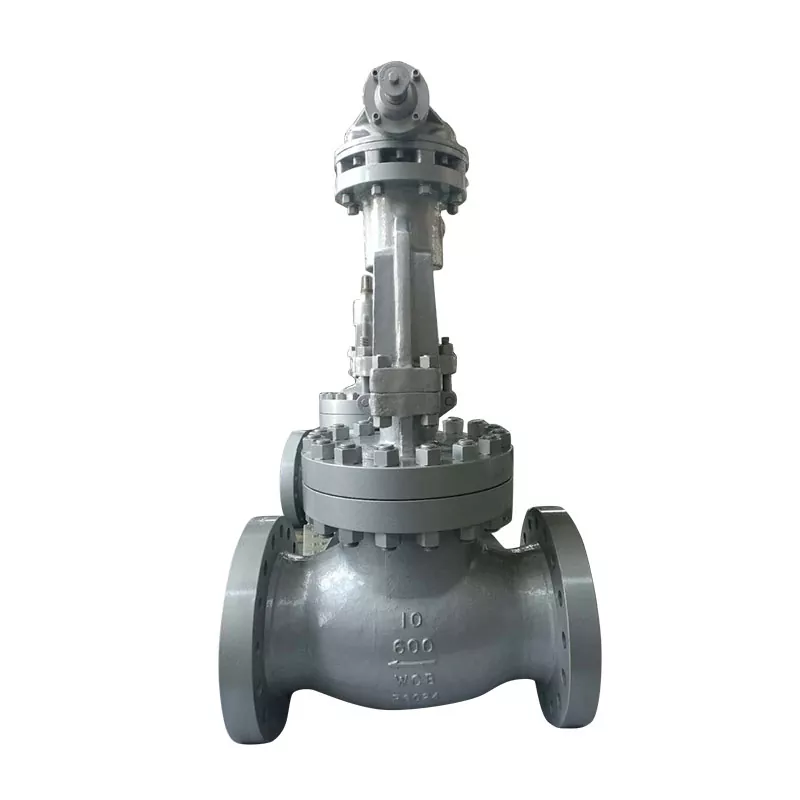
The Fluid Dynamics Behind the Pressure Drop
The primary reason API Globe Valves exhibit higher pressure drops lies in their flow path. Unlike gate valves where the disc retracts completely into the bonnet, or ball valves with a full-bore opening, a globe valve forces the fluid to change direction multiple times. The fluid enters the body, turns downward to pass through the seat orifice, then turns upward again to exit the body. Each directional change creates turbulence and eddy currents, which dissipate kinetic energy and translate into a measurable pressure loss.
Key Contributing Factors:
-
Tortuous Flow Path: The S-shaped or Z-shaped passage increases fluid velocity at the seat, reducing static pressure.
-
Seat Orifice Restriction: The disc and seat ring form a variable annular opening, which acts as a deliberate flow restriction.
-
Turbulence Generation: High-velocity fluid impinging on the disc surface creates recirculation zones, adding to the total head loss.
Quantitative Comparison: Pressure Drop Across Valve Types
To put this into perspective, consider a 6-inch pipeline operating with water at 200 GPM. The following table illustrates the typical pressure drop (in psi) for different isolation valve types under identical conditions:
| Valve Type | Flow Coefficient (Cv) | Pressure Drop (ΔP) at 200 GPM | Relative Energy Loss |
|---|---|---|---|
| Gate Valve (Full Port) | 950 | 1.2 psi | Baseline (Lowest) |
| Ball Valve (Full Bore) | 900 | 1.4 psi | Slightly Higher |
| Butterfly Valve (Concentric) | 750 | 2.0 psi | Moderate |
| API Globe Valve (Standard Port) | 280 | 14.5 psi | Significantly Higher |
Calculated using the standard formula: ΔP = (GPM / Cv)² × Specific Gravity
As shown, the API Globe Valve can have a pressure drop nearly 10 to 12 times greater than a full-port gate valve. This is why engineers at Hanno frequently advise clients to reserve globe valves exclusively for services where throttling or frequent operation is required, rather than for general on/off isolation.
Why This Trade-Off Is Acceptable – And Even Desirable
Despite the higher energy cost, API Globe Valves offer distinct advantages that justify their use in many critical systems:
-
Superior Throttling Accuracy – The linear or equal-percentage flow characteristic allows for fine control over flow rate.
-
Better Seat Protection – The disc moves perpendicular to the seat, reducing wear from high-velocity particulates.
-
Easier Maintenance – The seat ring and disc are typically replaceable without removing the entire valve from the pipeline.
-
Tighter Shutoff – Metal-to-metal or soft-seat designs in API Globe Valves provide Class VI shutoff capability when required.
Mitigating Pressure Drop in System Design
When a high pressure drop is undesirable, Hanno recommends the following engineering strategies:
-
Oversize the Valve: Selecting a one- or two-size larger globe valve can increase the Cv and reduce ΔP.
-
Use Angle Pattern Designs: Angle-style globe valves offer a straighter flow path, reducing turbulence.
-
Consider Dual-Valve Arrangements: Parallel installation allows one valve to handle isolation while the other manages throttling.
-
Evaluate Pressure Drop Budget: Always calculate total system pressure drop early in the P&ID development phase.
Frequently Asked Questions About API Globe Valves
Q: Can I use an API Globe Valve as a standard isolation valve in a main transmission pipeline?
A: Technically yes, but it is rarely economical. API Globe Valves create a permanent pressure loss that increases pumping or compressor energy costs over time. For main transmission lines where full-bore, minimal-restriction flow is essential, gate or ball valves are the preferred choice. Only consider a globe valve if your system has excess pressure head that you need to dissipate, or if you require moderate throttling during start-up and shutdown sequences. Hanno typically advises clients to reserve globe valves for branch lines, bypass loops, or control valve stations.
Q: How does the pressure drop in an API Globe Valve affect pump sizing and overall system efficiency?
A: The additional ΔP directly increases the total dynamic head (TDH) that the pump must overcome. For a system with a single API Globe Valve contributing 15 psi of loss, you may need to upsize the pump motor by 5–10 HP, depending on the flow rate. Over a 20-year lifecycle, this can translate into tens of thousands of dollars in excess electricity consumption. However, if the globe valve provides precise flow regulation that prevents cavitation or water hammer, the protective benefit often outweighs the energy penalty. Hanno offers detailed hydraulic modeling services to help you quantify this trade-off for your specific operating conditions.
Q: Are there low-pressure-drop designs available within the API Globe Valve category?
A: Yes. The API 623 standard does not mandate a specific flow path, so manufacturers like Hanno produce Y-pattern and angle-pattern API Globe Valves that reduce the number of directional changes. A Y-pattern design can lower the ΔP by approximately 25–30% compared to a conventional T-pattern globe valve. Additionally, selecting a larger port diameter or a streamlined disc contour can further improve the Cv value. For applications where pressure drop is a critical constraint, we strongly recommend requesting a Cv curve from Hanno during the bid phase to ensure your chosen valve meets both throttling and energy-efficiency requirements.
Conclusion
The higher pressure drop across API Globe Valves is an inherent characteristic of their design, driven by the need for precise flow modulation and durable shutoff. While this makes them unsuitable for main pipeline isolation, they remain indispensable for control loops, bypass systems, and high-cycle services. The key to successful application lies in accurate system modeling, proper valve sizing, and understanding when to accept a higher ΔP for the benefit of superior control.
At Hanno, we engineer our API Globe Valves with optimized trim profiles and multiple pattern options to minimize unnecessary losses while maintaining full compliance with API 598 and API 623 standards. Our technical team is ready to review your pipeline hydraulics and recommend the most cost-effective solution.
Ready to optimize your valve selection?
Contact Hanno today for a comprehensive pressure drop analysis and customized valve quotation. Our engineers are available for site visits, virtual consultations, and immediate technical support. Reach out via our website or call your local Hanno representative – let us help you achieve the perfect balance between control and efficiency.