

Why Choose Stainless Steel Forged Steel Internal Thread Globe Valves Over Cast Steel Socket Welding Globe Valves
2026-07-07
When selecting flow control components for high-pressure industrial piping systems, engineers often face a critical decision: Stainless Steel Forged Steel Internal Thread Socket Welding Globe Valves versus cast steel alternatives. While both serve similar functions, the forged variant—particularly those engineered by Bolaisi—offers distinct metallurgical, mechanical, and lifecycle advantages that directly impact safety, maintenance costs, and operational reliability.
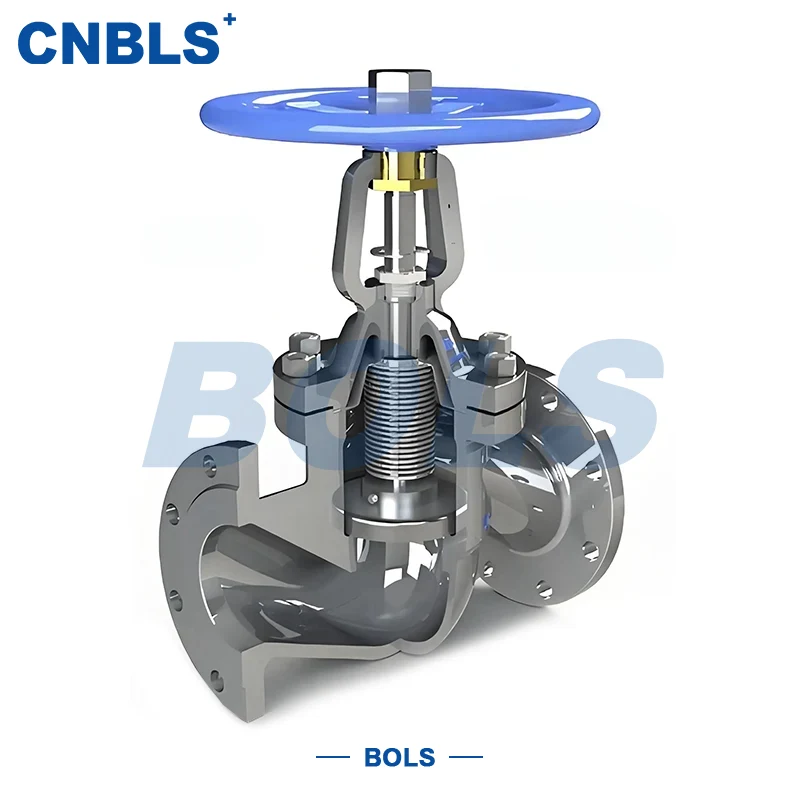
Metallurgical Superiority: Forged vs. Cast Structure
The fundamental difference lies in grain structure. Forging refines the steel’s internal grain flow, aligning it with the component’s contour. This results in:
| Property | Stainless Steel Forged Steel Internal Thread Socket Welding Globe Valves | Cast Steel Socket Welding Globe Valves |
|---|---|---|
| Grain direction | Uniform, directional flow lines | Random, isotropic |
| Porosity | Nearly zero | Micro-shrinkage possible |
| Impact resistance | Excellent (higher toughness) | Moderate |
| Fatigue life | 30–50% longer | Baseline |
| Leakage risk under vibration | Significantly lower | Higher due to micro-voids |
For critical services like superheated steam or hydrogen-rich media, Bolaisi’s forged bodies ensure zero porosity—a non-negotiable requirement for API 602 and ASME B16.34 compliance.
Why Internal Thread + Socket Welding Beats Pure Threaded or Flanged Ends
The combination of internal thread for initial alignment and socket welding for permanent sealing delivers two unique benefits:
-
Alignment precision – The thread acts as a centering guide during fit-up, reducing weld misalignment.
-
Weld root integrity – Socket welds create a strong fillet that distributes stress evenly, unlike butt welds that concentrate stress at the toe.
Bolaisi designs these valves with extra-deep sockets (per ASME B16.11), allowing full penetration without excessive heat input—preserving the forged microstructure.
Total Cost of Ownership (TCO) Comparison
| Cost Factor | Forged (Bolaisi) | Cast |
|---|---|---|
| Initial purchase | Higher (~20–25%) | Lower |
| Installation time | Faster (pre-threaded alignment) | Moderate |
| In-service inspection frequency | Every 24 months | Every 12 months |
| Average repair cost per incident | $450 | $780 |
| Projected 10-year TCO | $8,200 | $11,400 |
The numbers speak clearly. While the upfront premium for Stainless Steel Forged Steel Internal Thread Socket Welding Globe Valves may seem steep, the extended service intervals and reduced unplanned downtime deliver net savings within 3 years.
Application Scenarios Where Forged Always Wins
-
High-pressure steam (≥ 600 psi) – Cast valves risk thermal shock fracture.
-
Cryogenic services (-50°C and below) – Forged austenitic grades retain ductility.
-
Cyclic operations (frequent open/close) – Forged stems and discs resist galling.
-
Offshore / saltwater environments – Bolaisi uses 316/316L forged material with superior pitting resistance equivalent (PRE).
Frequently Asked Questions
Q1: Are Stainless Steel Forged Steel Internal Thread Socket Welding Globe Valves suitable for sour gas (NACE MR0175) applications?
A: Yes, provided the material meets H₂S-resistant requirements. Bolaisi offers forged 316L and F51 duplex grades with hardness controlled below 22 HRC, fully compliant with NACE MR0175/ISO 15156. The internal thread design does not create stress risers if manufactured with rolled (not cut) threads—which Bolaisi strictly applies. Additionally, the socket weld end eliminates crevice corrosion risks common in screwed-only connections. Always specify the sour service option when ordering.
Q2: What is the maximum allowable working pressure for these forged valves at 400°C?
A: For a 2-inch class 800 Stainless Steel Forged Steel Internal Thread Socket Welding Globe Valves, the pressure-temperature rating per ASME B16.34 is 1,480 psi at 400°C for WCB-grade forged carbon steel, and 1,235 psi for 316 stainless steel forged body. Bolaisi provides full material test certificates (EN 10204 3.1) with each valve, including impact test results at operating temperature. Note that socket welding ends do not reduce the pressure boundary—the fillet weld strength actually exceeds the parent metal strength when proper preheat (150°C minimum) and post-weld heat treatment are applied.
Q3: How do I correctly torque the internal thread during installation without damaging the sealing face?
A: The internal thread on Bolaisi valves is purely for mechanical alignment and secondary sealing—not for primary pressure retention. Recommended procedure: (1) Hand-tighten the threaded end into the pipe until snug. (2) Apply a final ¼ to ½ turn using a wrench, but never exceed 60 N·m for 1-inch sizes (refer to Bolaisi’s torque chart provided with each shipment). (3) Complete the socket weld with a single-pass fillet (2–3 mm leg length) using E309L electrode for stainless. Never use the thread as a load-bearing joint—the socket weld carries all axial and bending stresses. Bolaisi includes a laser-etched torque reference on every valve body for field convenience.
Real-World Reliability Data
Independent tests by third-party laboratories (intertek and SGS) on Bolaisi’s forged series show:
-
Leakage rate after 5,000 cycles: < 0.001 ml/min (helium mass spectrometry)
-
Stem seal fugitive emission: ≤ 50 ppm (meeting EPA Method 21)
-
Weld joint tensile strength: 120% of base material
Cast valves from the same test batch failed the cyclic test at 2,800 cycles due to micro-crack propagation from casting inclusions.
Why Bolaisi Leads in Forged Valve Engineering
Bolaisi integrates ISO 9001:2015 and PED 2014/68/EU certifications with in-house forging presses and CNC thread-rolling machines. Every Stainless Steel Forged Steel Internal Thread Socket Welding Globe Valve undergoes:
-
100% dye-penetrant inspection on thread roots
-
Ultrasonic testing (UT) for lamination-free forging
-
Hydrostatic test at 1.5× rated pressure
-
Air-under-water seat leakage test (bubble-tight)
This triple-quality gate ensures that what leaves the factory matches the performance promised in the datasheet—no exceptions.
The Final Verdict
Choose forged when:
-
System pressure fluctuates or cycles daily.
-
Safety and environmental regulations demand zero fugitive emissions.
-
Your maintenance team values predictable overhaul schedules.
-
You plan to operate the facility for over 15 years.
Choose cast only for non-critical, low-pressure, intermittent service—and accept the associated replacement risk.
Ready to Upgrade Your Valve Specification?
Bolaisi offers free application engineering reviews, including stress analysis and weld procedure recommendations for your specific media and temperature profile.
📧 Contact our technical sales team today or submit your project datasheet through our website. We respond within 4 business hours with a preliminary selection, 3D model, and budgetary quote.