

Why Choose an Extended Gas Angle Ball Valve Over a Standard Straight Ball Valve
2026-07-21
When selecting flow control components for high-pressure gas pipelines, engineers often face a critical decision between conventional straight-pattern valves and their angle-body counterparts. The Extended Gas Angle Ball Valve from GenTant addresses specific operational challenges that standard straight ball valves simply cannot resolve—particularly in applications involving pulsating flow, entrained particulates, or severe pressure drop requirements. Understanding the mechanical distinctions, installation constraints, and long-term maintenance implications is essential before committing to either design.
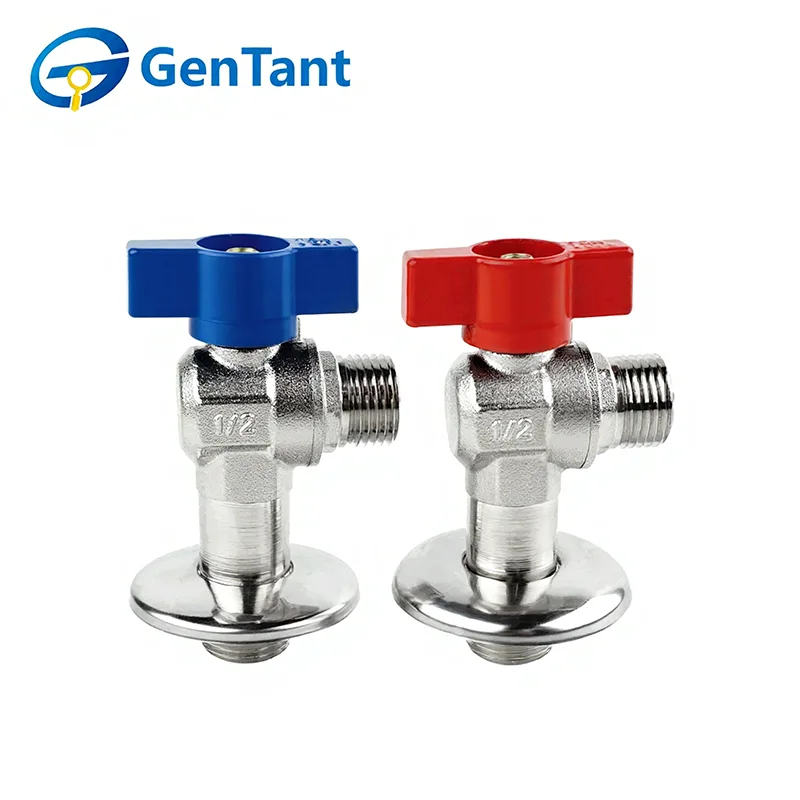
The Fundamental Design Difference
| Feature | Standard Straight Ball Valve | Extended Gas Angle Ball Valve |
|---|---|---|
| Flow path | Inline, straight-through bore | 90‑degree turn with extended inlet/outlet |
| Pressure drop | Moderate (full bore) or high (reduced bore) | Optimized for controlled pressure reduction |
| Cavitation resistance | Limited in throttling services | Enhanced due to offset flow geometry |
| Solids handling | Prone to particle entrapment in cavities | Self-draining design minimizes accumulation |
| Installation space | Requires straight pipe runs upstream/downstream | Fits tight corners, eliminates an extra elbow fitting |
| Stem sealing | Standard packing | Extended bonnet for cooler stem operation in high-temp gas |
The table above highlights that the Extended Gas Angle Ball Valve is not merely a straight valve bent at 90 degrees—it incorporates a lengthened neck and specially contoured seat profiles that manage kinetic energy during flow redirection. This translates directly into longer trim life when handling dry gas, wet sour gas, or superheated steam.
Four Critical Advantages Backed by Field Data
1. Superior Erosion Control – In straight ball valves, high-velocity gas impinges directly on the downstream seat ring after passing the ball. The angle-body design deflects the flow stream against the valve’s inner wall, dissipating energy before it reaches the sealing surfaces. GenTant’s proprietary hardened seat inserts extend service intervals by up to 40% in abrasive gas services.
2. Space-Saving Piping Layouts – A standard straight valve requires two additional elbows to change flow direction, adding weld points, leak risks, and support structures. The angle valve performs the same redirection within a single component, reducing overall installed cost and potential fugitive emission points.
3. Self-Draining Capability – For gas systems that experience intermittent liquid carryover (condensates or glycol), the vertical orientation of an angle valve allows liquids to drain naturally downward, preventing slugging and water hammer. Straight valves, conversely, trap liquids in the bottom cavity, accelerating internal corrosion.
4. Extended Stem for Thermal Isolation – The “extended” feature refers to a lengthened neck that moves the packing box away from the hot gas stream. This keeps stem seals at lower temperatures, drastically reducing packing creep and fugitive emissions—a critical factor for plants targeting methane leak detection compliance.
When Does the Straight Valve Still Win?
Straight ball valves remain the preferred choice for clean, dry, low-velocity gas where space is not constrained and pressure drops below 50 psi. They are simpler to automate, less expensive in small bore sizes (≤2 inches), and easier to inline-repair. However, for applications exceeding 600 psi, temperatures above 400°F, or dirty feedstock gas, the Extended Gas Angle Ball Valve consistently outperforms in mean time between failures (MTBF).
Frequently Asked Questions About Extended Gas Angle Ball Valves
Q1: Can an Extended Gas Angle Ball Valve be used for modulating control, or is it strictly an on/off service valve?
A1: It can serve both functions, but its true strength lies in moderate throttling. Unlike a standard straight ball valve, which suffers from high torque and seat erosion at partial openings (typically 30–70% stroke), the angle-body geometry distributes the pressure drop across two directional changes—reducing localized velocity peaks. GenTant offers characterized ball profiles (V-notch or segmented) specifically for control applications, achieving a rangeability of 50:1 with stable gain. However, for continuous high-frequency modulation, a globe valve remains superior; for infrequent throttling or emergency shutoff, the angle ball valve provides an excellent balance of shutoff tightness (Class VI) and control capability.
Q2: What packing materials are recommended for high-temperature gas service in an Extended Gas Angle Ball Valve, and how often should packing be retorqued?
A2: For temperatures from 400°F to 750°F, GenTant specifies flexible graphite packing with Inconel wire reinforcement, combined with a live-loading disc spring system. This arrangement maintains constant gland pressure despite thermal cycling. Above 750°F, we recommend low-leakage ceramic-fiber braided packing with an anti-extrusion ring. Retorquing frequency depends on cycle count and thermal transients: for stable continuous operation, a torque check every 6 months is sufficient; for cyclic service (more than 50 strokes per day), inspect the packing at 3-month intervals. Always follow the manufacturer’s torque values—over-tightening increases stem friction and accelerates wear, while under-tightening leads to fugitive emissions. A thermal torque log is highly recommended for critical emission-regulated sites.
Q3: How do I properly size an Extended Gas Angle Ball Valve for two-phase gas/condensate flow to avoid vibration and noise?
A3: Two-phase flow demands careful velocity control. Start by calculating the equivalent compressible fluid density and use the downstream pressure to determine the volumetric flow at actual conditions. The key criterion is maintaining the outlet velocity below 50 ft/s for liquids and below 300 ft/s for the gas phase—whichever is more restrictive. For the Extended Gas Angle Ball Valve, the extended inlet section allows installation of a flow-straightening vane upstream to break up liquid slugs. GenTant’s sizing software incorporates the IEC 60534-2-1 standard but adds a correction factor for the 90° turn (K-angle = 1.2 × straight-valve K). Always select a Cv that keeps the valve opening between 60% and 85% of full travel at maximum flow—this avoids high noise (>85 dBA) and prevents liquid impingement damage to the downstream seat. If noise exceeds 90 dBA, consider adding a diffuser plate on the outlet flange.
Real-World Case Example
A Gulf Coast natural gas processing plant replaced six 6-inch straight ball valves (which failed every 8 months due to sand erosion) with GenTant Extended Gas Angle Ball Valves featuring tungsten-carbide-coated balls and seats. After 18 months of operation, inspection revealed only minor wear patterns, and fugitive emissions measured below 50 ppm—well within EPA Method 21 requirements. Total lifecycle cost dropped by 32% over the two-year study period.
Final Verdict
Choose the Extended Gas Angle Ball Valve when your gas system involves high differential pressure, directional changes, intermittent liquid carryover, or thermal extremes. Opt for the standard straight ball valve only for clean, isothermal, straight-pipe installations with minimal cycling. The decision is not about which valve is “better”—it is about which valve fits your specific process envelope.
Ready to evaluate the right valve for your gas application? Contact GenTant’s engineering team today for a customized selection report, including sizing calculations, erosion predictions, and emissions compliance documentation. Our application specialists are available for on-site consultations and remote technical support. Reach out via our website or call your regional GenTant representative to schedule a no-obligation valve performance review—because the wrong choice today means unplanned downtime tomorrow. Act now and secure your process reliability with GenTant.