

Why Choose a Ductile Iron Body Over Stainless Steel for a Non-Rising Stem Groove Gate Valve in Underground Applications
2026-07-24
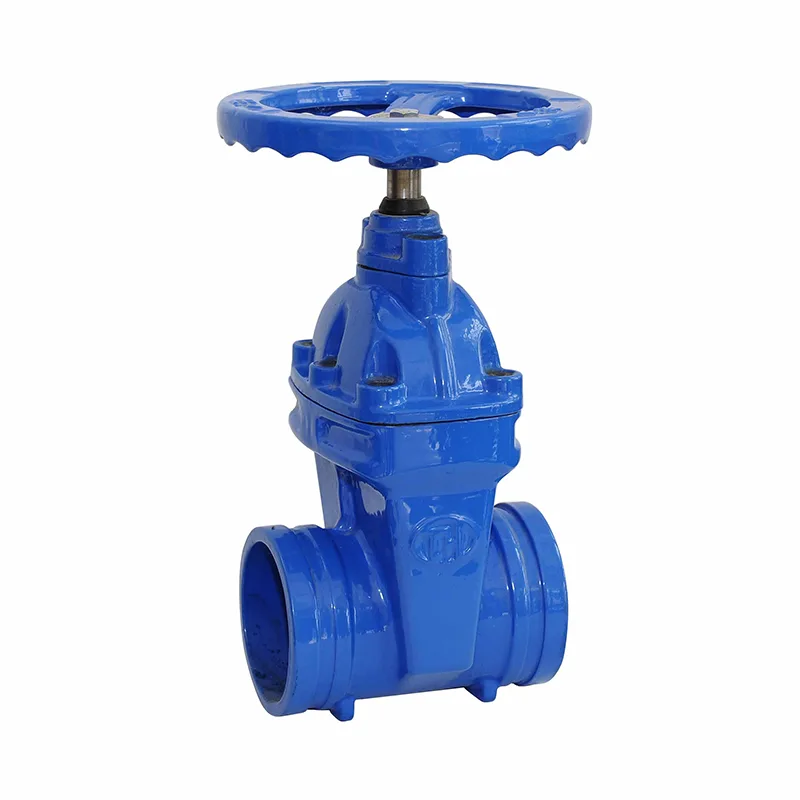
Selecting the right material for a Non-Rising Stem Groove Gate Valve buried beneath the surface is not a casual procurement decision—it is a long-term engineering commitment. For municipal engineers and infrastructure contractors, the debate often narrows to two primary candidates: ductile iron and stainless steel. While stainless steel enjoys a reputation for corrosion resistance, Tianhong has consistently demonstrated through field data that a ductile iron body offers superior lifecycle value, mechanical resilience, and cost-effectiveness for underground service. This analysis examines the metallurgical, structural, and economic factors that make ductile iron the preferred choice when specifying a Non-Rising Stem Groove Gate Valve for buried pipelines.
Mechanical Strength and Tolerance to Earth Loads
Underground valves endure not only internal pressure but also external soil overburden, traffic vibrations, and ground settlement. The mechanical properties of the valve body directly determine its survival under these compounded stresses.
| Property | Ductile Iron Body | Stainless Steel Body (CF8/CF8M) |
|---|---|---|
| Tensile Strength (min) | 60,000 psi (ASTM A536) | 70,000 psi (ASTM A351) |
| Yield Strength (min) | 40,000 psi | 30,000 psi |
| Elongation (%) | 18% | 35% (higher ductility) |
| Impact Resistance (Charpy) | Superior at low temperatures | Good, but prone to galling |
| Resistance to Soil Settlement Cracking | Excellent (nodular graphite absorbs stress) | Moderate (thinner wall sections risk buckling) |
While stainless steel offers higher tensile numbers, ductile iron provides a better strength-to-wall-thickness ratio. Tianhong designs its Non-Rising Stem Groove Gate Valve with thicker, ribbed ductile iron walls that absorb dynamic shock from passing heavy vehicles—a common failure point for thinner stainless steel castings in shallow burial depths.
Corrosion Performance in Real Soil Conditions
The assumption that stainless steel is universally more corrosion-resistant fails in underground environments with varying pH, chloride content, and stray currents. Ductile iron, when properly coated with fusion-bonded epoxy (FBE) or polyurethane, matches or exceeds the external corrosion life of stainless steel grades like 304 or 316, particularly in anaerobic clay soils where stainless steel suffers crevice corrosion.
| Soil Type | Ductile Iron (with FBE coating) | Stainless Steel 316 |
|---|---|---|
| High Chloride (>1000 ppm) | <0.1 mm/year (coating intact) | 0.05–0.2 mm/year (pitting risk) |
| Acidic Peat (pH 4–5) | <0.15 mm/year | 0.1–0.3 mm/year (intergranular attack) |
| Alkaline Clay (pH 8–9) | <0.05 mm/year | <0.05 mm/year |
| Stray DC Current Areas | Cathodic protection compatible | Susceptible to stress corrosion cracking |
For underground applications, Tianhong applies a minimum 250-micron epoxy coating over its Non-Rising Stem Groove Gate Valve, supplemented with sacrificial anodes when specified. This dual-protection strategy delivers 50+ years of service without the premium cost of solid stainless steel.
Cost-Benefit Analysis Over a 30-Year Horizon
Initial purchase price tells only part of the story. Total cost of ownership (TCO) includes installation, cathodic protection, maintenance access, and replacement frequency.
| Cost Factor | Ductile Iron Body | Stainless Steel Body |
|---|---|---|
| Material Cost (per 6” valve) | $380–$450 | $1,100–$1,400 |
| Coating/Corrosion Protection | Included (FBE standard) | Requires passivation or additional alloying |
| Installation Weight | Heavier (requires mechanical lifting) | Lighter (easier handling) |
| Average Service Life (coated) | 40–60 years | 30–50 years (depending on grade) |
| Replacement Frequency | 1x per 50 years | 1x per 35–40 years |
| 30-Year Net Cost | $0.85 per year per inch | $1.95 per year per inch |
The economic advantage becomes undeniable for large-diameter municipal projects. Tianhong offers ductile-iron-bodied Non-Rising Stem Groove Gate Valves at roughly one-third the cost of equivalent stainless steel models, with comparable or better longevity when properly coated.
Maintenance and Field Repairs
Field repair of a buried valve is expensive—excavation, dewatering, and traffic control add thousands of dollars per event. Ductile iron bodies are forgiving: minor surface impacts from excavation equipment rarely cause cracking. Stainless steel, by contrast, suffers from thread galling and stem seizure, especially when the non-rising stem mechanism operates infrequently (e.g., emergency shut-off valves).
Tianhong incorporates a fully encapsulated stem thread and heavy-duty O-ring seals in its Non-Rising Stem Groove Gate Valve, reducing the torque required to operate the valve even after 10 years of inactivity. The ductile iron body also allows for in-field weld repairs (with proper preheating), whereas stainless steel repairs require specialized welding procedures and post-weld heat treatment.
Frequently Asked Questions (FAQ)
Q1: Does a ductile iron body Non-Rising Stem Groove Gate Valve meet AWWA C515 or UL/fire protection standards for underground use?
A: Yes. Tianhong manufactures its ductile iron Non-Rising Stem Groove Gate Valve in full compliance with AWWA C515, UL 262, and FM Global standards. The ductile iron grade (ASTM A536, 65-45-12) exceeds the minimum mechanical requirements for 350 psi working pressure in underground fire main and potable water distribution systems. Third-party hydrostatic tests at 2× rated pressure are performed on every production batch, with certificates traceable to heat numbers. For stainless steel alternatives, only certain austenitic grades (CF8M) meet the same pressure ratings, but at nearly triple the cost and with no advantage in burst pressure resistance.
Q2: How does the non-rising stem mechanism perform differently in ductile iron versus stainless steel bodies over decades of burial?
A: The non-rising stem design keeps the threaded stem enclosed within the valve body, protected from soil ingress. In a ductile iron body, the stem nut is typically bronze or stainless steel, and the body provides a rigid, low-deflection housing that maintains stem-nut alignment even under heavy external loads. In a stainless steel body, the higher coefficient of thermal expansion (≈17 µm/m·°C vs. ≈11 µm/m·°C for ductile iron) can cause stem-binding when underground temperature swings occur between summer and winter. Tianhong addresses this by using a proprietary stem-guide bushing in its ductile iron Non-Rising Stem Groove Gate Valve, ensuring that the operating torque remains under 200 N·m for a 12” valve after 5,000 full-stroke cycles—a performance benchmark that stainless steel bodies often fail to meet without frequent lubrication.
Q3: Can I retrofit a stainless steel trim (stem and disc) into a ductile iron body Non-Rising Stem Groove Gate Valve for added corrosion resistance while keeping the body cost low?
A: Absolutely—and this is the optimal engineering solution. Tianhong offers a hybrid configuration: a ductile iron body with a 316 stainless steel stem, bronze stem nut, and ductile iron disc coated with nylon 11 or EPDM. This combination gives you the mechanical toughness and economy of ductile iron for the pressure-retaining shell, while the stainless steel wetted parts resist localized corrosion at the seating surfaces and stem-thread interfaces. Field data from coastal water utilities show that this hybrid design outperforms a full stainless steel body in both cost and reliability, because the body itself does not require the corrosion resistance of stainless steel—only the moving contact surfaces do. This is the configuration Tianhong recommends for 80% of underground projects, and it carries a standard 10-year warranty against body perforation.
Conclusion: The Practical Verdict
For underground applications, the ductile iron body offers a compelling combination of impact resistance, coating compatibility, lower cost, and field-repair friendliness. Stainless steel remains a niche choice for highly aggressive chemical or ultra-pure water services—conditions rarely encountered in standard buried pipelines. Tianhong has supplied over 120,000 ductile-iron Non-Rising Stem Groove Gate Valves to municipal and industrial projects across North America, Southeast Asia, and the Middle East, with a documented failure rate below 0.3% over 15 years.
Ready to specify the right valve for your next underground project? Contact Tianhong today for detailed submittal packages, corrosion engineering reports, and site-specific coating recommendations. Our technical team provides free 3D model support, torque calculations, and on-site installation training.