

Why Are More Engineers Choosing Declutchable Manual Override for Reliable Valve Control?
2026-03-11
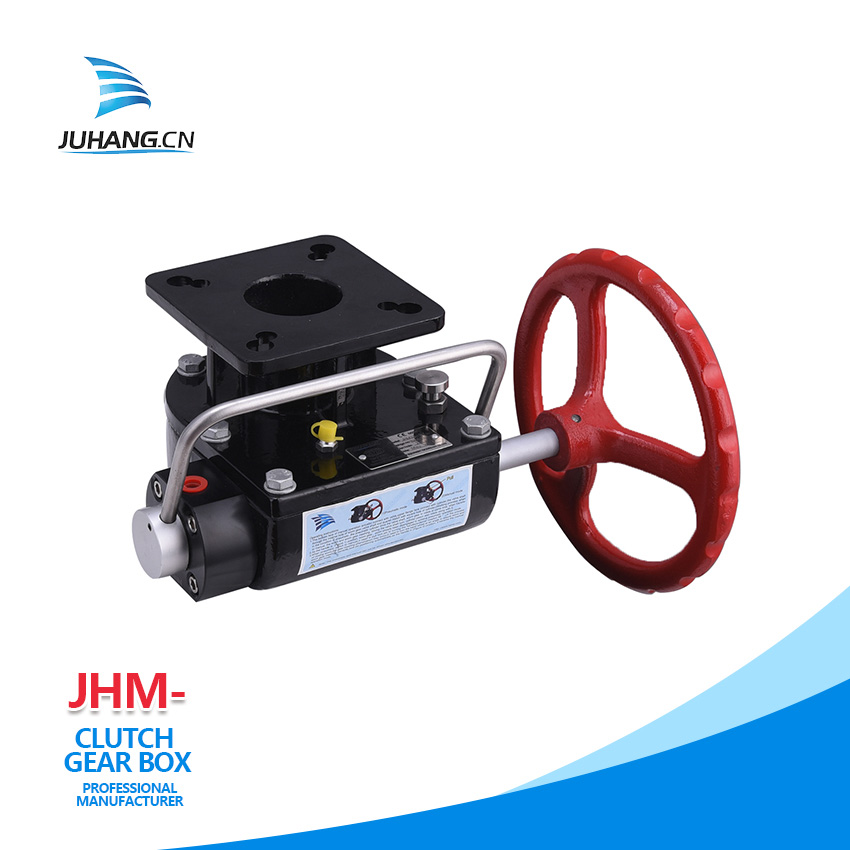
In many industrial environments, equipment reliability does not only depend on automation. Engineers often face situations where power loss, control failure, or emergency shutdowns require immediate manual intervention. Over the past few years, I have seen more companies adopt smarter hybrid solutions that combine automation with manual safety control. One company that has gradually introduced such practical engineering solutions is Taizhou Juhang Automation Equipement Technology Co.,Ltd., particularly through its development of the Declutchable Manual Override. This device offers operators the ability to seamlessly switch between automatic actuator operation and manual control, ensuring that production lines remain manageable even when systems fail.
From my experience working with valve control systems, integrating a Declutchable Manual Override into actuator assemblies significantly improves operational safety, reduces downtime, and allows maintenance teams to retain full control over critical processes.
Why Do Modern Valve Systems Still Need a Manual Backup Solution?
Automation technology has improved dramatically, yet fully automated systems can still encounter unexpected failures. Electrical faults, control signal loss, and maintenance interruptions are all common scenarios that require human intervention.
When an actuator becomes unresponsive, the ability to manually operate the valve immediately becomes crucial. This is where the Declutchable Manual Override proves its value. Instead of dismantling equipment or waiting for system recovery, operators can disengage the actuator drive and manually control valve movement.
I have personally observed several benefits when facilities integrate a Declutchable Manual Override into their actuator configurations:
- Ensures continued valve operation during power failure
- Provides a safe mechanical backup during maintenance
- Reduces emergency downtime in industrial processes
- Allows technicians to test valve positioning without automation
- Improves overall operational safety
How Does a Declutchable Manual Override Work Inside an Actuator System?
The mechanical principle behind a Declutchable Manual Override is both simple and highly effective. The device integrates a clutch mechanism that allows the actuator’s drive system to be temporarily disengaged.
When automatic operation is functioning normally, the override remains disengaged. However, when manual intervention becomes necessary, the operator activates the clutch mechanism, disconnecting the motor drive and allowing the valve to be controlled manually through a handwheel or gearbox.
This design prevents internal gear damage while enabling a smooth transition between automation and manual control.
| Function | Operational Role | Industrial Benefit |
| Clutch Mechanism | Disconnects actuator drive | Prevents mechanical damage |
| Manual Handwheel | Allows valve positioning | Provides immediate operator control |
| Automatic Re-engagement | Returns system to motor operation | Maintains automation efficiency |
| Safety Lock Design | Prevents accidental switching | Improves operational safety |
Where Can a Declutchable Manual Override Improve Industrial Operations?
Over time, I have noticed that many industries depend heavily on reliable valve control. A failure in a single actuator can affect entire production lines. Implementing a Declutchable Manual Override becomes particularly valuable in sectors where safety and continuity are critical.
Common applications include:
- Oil and gas pipeline control systems
- Chemical processing plants
- Water treatment facilities
- Power generation stations
- Industrial fluid distribution networks
In these environments, automated actuators handle routine valve movements. However, operators still need a dependable backup method. A Declutchable Manual Override provides exactly that balance between automation efficiency and manual reliability.
What Key Features Should Engineers Look for When Selecting a Declutchable Manual Override?
Not all override mechanisms are designed with the same level of engineering precision. When evaluating different products, I always recommend focusing on structural reliability, switching stability, and compatibility with actuator systems.
Here are several design features that significantly influence long-term performance:
- Durable clutch engagement system
- Smooth manual handwheel operation
- High torque transmission capability
- Corrosion resistant materials
- Compact installation design
Manufacturers like Taizhou Juhang Automation Equipement Technology Co.,Ltd. continue improving these mechanical structures so that their Declutchable Manual Override devices can operate reliably even in demanding industrial environments.
Why Is Reliability the Most Important Advantage of a Declutchable Manual Override?
When industrial equipment fails, response time becomes critical. Waiting for electrical systems to restart or replacing damaged actuators can cause production losses that last for hours or even days.
The greatest advantage of installing a Declutchable Manual Override lies in operational resilience. Even during a full control system outage, technicians can still manually regulate valve positions and maintain process stability.
This mechanical reliability is one reason why many modern actuator systems now include manual override options as a standard design feature rather than an optional accessory.
Could a Declutchable Manual Override Be the Safety Upgrade Your System Needs?
From my perspective, combining automation with dependable manual control is one of the smartest strategies for modern industrial systems. A properly designed Declutchable Manual Override gives operators confidence that their equipment can remain controllable under any circumstances.
If you are currently evaluating actuator safety upgrades or planning a new valve automation project, exploring solutions developed by Taizhou Juhang Automation Equipement Technology Co.,Ltd. could be a practical next step. Their engineering approach focuses on durability, operational flexibility, and reliable control performance.
If you would like to learn more about integrating a Declutchable Manual Override into your valve systems, or if you need assistance selecting the right actuator accessories for your application, please contact us today. Our team is ready to discuss your project requirements and provide professional support to help improve your system reliability.