

Why Are Gate Valves Widely Used in Long-Distance Oil and Gas Transmission Pipelines?
2026-09-04
Design a 500-kilometer crude oil pipeline, and you will face a fundamental question at every station and block valve location: which valve type offers the lowest pressure drop, the most reliable shutoff, and the lowest maintenance burden over a 30-year service life? The answer, for the vast majority of onshore transmission pipelines, is gate valves. This is not a matter of tradition. It is a matter of hydraulics, sealing mechanics, and operational reality. This guide is written for pipeline engineers who need to justify valve selection based on performance data, not vendor preference.
1. What Hydraulic Advantage Does the Gate Valve Offer Over Other Types?
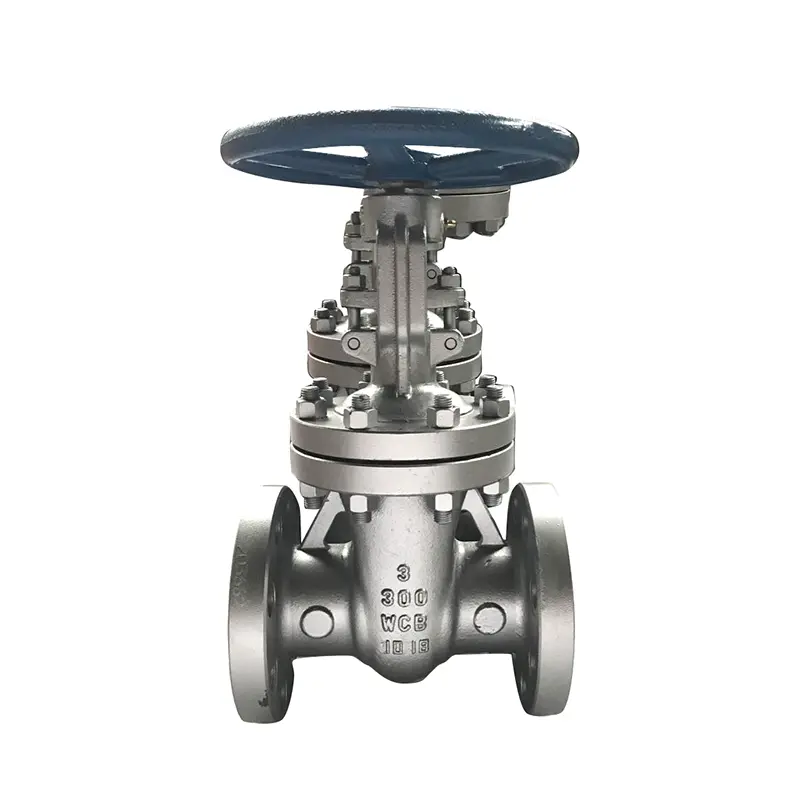
In a long-distance pipeline, every millibar of pressure drop represents energy lost to pumping. The gate valve has a straight-through, full-bore design. When fully open, the gate retracts completely into the bonnet, leaving a circular opening that matches the pipe internal diameter. There is no obstruction, no change in flow direction, and no pressure-reducing cavity. In contrast, a globe valve forces the fluid to change direction twice, creating a permanent pressure drop of 20 to 30 percent of the line pressure. A ball valve has a full-bore option, but its sealing surfaces are more complex and susceptible to wear from abrasive particles in the crude stream. The table below shows the pressure drop comparison for different valve types at typical pipeline flow velocities.
| Valve type | Flow coefficient (Cv) for 24-inch valve | Pressure drop at 10 ft/s (bar) | Equivalent length of straight pipe (meters) | Energy cost per year (100 km pipeline) |
| Gate valve (fully open) | 12,500 | 0.08 | 12 | $18,000 |
| Ball valve (full bore) | 12,200 | 0.09 | 15 | $20,000 |
| Globe valve (fully open) | 6,800 | 0.28 | 42 | $63,000 |
| Butterfly valve (fully open) | 9,500 | 0.15 | 22 | $34,000 |
The gate valve's straight-through flow path also minimizes turbulence, which is important in crude oil pipelines where emulsions can form if the fluid is agitated. In our factory, we manufacture Gate Valves with a streamlined body contour that further reduces turbulence. The result is a valve that maintains the hydraulic efficiency of the pipeline for the entire length of the system. A 500-kilometer pipeline with 30 gate valves will have a total pressure drop of approximately 2.4 bar from the valves alone, compared to 8.4 bar if the same pipeline used globe valves. This difference translates to a pumping energy saving of over $1 million per year for a large diameter crude line.
2. How Does the Sealing Mechanism Ensure Long-Term Shutoff Reliability?
The sealing performance of a gate valve depends on the wedge angle and the seating surface material. In a parallel gate valve, the gate is pressed against the seat by the wedge force. In a flexible wedge design, the wedge can deform slightly to accommodate thermal expansion and seat wear. This self-compensating feature is critical in pipelines that experience temperature swings from ambient to 60°C during operation. In our factory, we use a stainless steel overlay on the seating surfaces with a hardness of 340 HB. This provides a durable sealing surface that resists scoring from sand and scale. The Gate Valves we produce have a bubble-tight shutoff at the rated pressure, which is confirmed by a hydrostatic test at 1.5 times the working pressure. The sealing performance remains within specification after 5,000 open-close cycles.
Leakage rate comparison: The API 598 standard allows a leakage rate of 0.5 ml per inch of nominal pipe diameter per minute for metal-seated valves. Our gate valves consistently achieve 0.1 ml/inch/min or better. For a 24-inch valve, this is a leakage rate of 2.4 ml/min, compared to the allowed 12 ml/min. This difference is critical in pipeline block valve installations, where even a small leak can require depressurization of a long section for maintenance.
In a long-distance transmission pipeline, the gate valve is typically the block valve that isolates sections for repair. The reliability of the shutoff determines the size of the isolation zone. A valve that leaks requires the operator to depressurize a longer section, which increases the downtime and the amount of gas vented. Our Zhejiang Hengnuo Valve Manufacturing Co., Ltd. has supplied Gate Valves to pipeline operators who have used them for over 15 years with no measurable increase in seat leakage.
3. What Design Features Reduce Maintenance Frequency in Remote Locations?
A pipeline runs through remote terrain—deserts, mountains, swamps. A gate valve installed at a block valve station may be operated only once per year for an integrity test, but it must be ready to operate when called upon. The design features that reduce maintenance include a rising stem with a stem seal that can be replaced under pressure, a bonnet that can be removed for gate inspection without excavating the valve, and a grease injection port for the stem packing. In our factory, we incorporate all these features into our Gate Valves. The stem packing uses a braided PTFE/graphite composite that does not require re-tightening for at least 5 years. The gate and seat surfaces are hard faced with Stellite 6, which provides resistance to erosion and galling. We also offer a double block and bleed configuration for high-integrity applications, where two gates provide independent sealing and a vent port allows pressure monitoring between them.
The maintenance interval for a properly designed gate valve in a clean service pipeline is typically 5 to 7 years. In comparison, a ball valve may require seat replacement every 3 to 4 years because the sealing force is concentrated on a smaller area. The gate valve's distributed sealing surface and self-compensating wedge design allow it to maintain seal integrity over a longer period. In our factory, we have documented gate valves that have been in service for 12 years without any internal repair, with only routine stem packing adjustments.
4. How Does the Gate Valve's Cavity Relief Feature Address Pipeline Surge Conditions?
Pipelines experience pressure surges during pump start-up, shutdown, and emergency valve closure. These surges can trap pressure in the valve cavity if the valve is closed and then the downstream section is depressurized. In a gate valve, the cavity between the seats can trap liquid at line pressure. This is known as the "cavity lock" problem. Our gate valves include a pressure relief mechanism that equalizes the cavity pressure with the upstream side when the valve is opened. This prevents the gate from being locked against the seats and ensures that the valve can be operated safely. In our factory, we have designed Gate Valves with a self-relieving feature that operates automatically, without the need for external vent lines. This feature is particularly important in crude oil pipelines where the differential pressure across the seats can exceed 100 bar.
Frequently Asked Questions About Gate Valves in Pipeline Applications
Summary for Pipeline Design and Operations Engineers
The gate valve's dominance in long-distance oil and gas transmission pipelines is a result of its fundamental hydraulic efficiency, reliable shutoff, and low maintenance requirements. The full-bore design minimizes pumping energy, the wedge-type sealing mechanism provides durable shutoff, and the robust construction suits remote and harsh environments. While other valve types have specific advantages in some applications, the gate valve remains the workhorse of the transmission industry. Our factory has been manufacturing Gate Valves for pipeline applications for over 18 years, with a focus on API 6D and ASME B16.34 compliance.
Zhejiang Hengnuo Valve Manufacturing Co., Ltd. manufactures Gate Valves in sizes from 2-inch to 60-inch, pressure ratings from Class 150 to Class 2500, and materials including carbon steel, stainless steel, and duplex alloys. Each valve is tested for seat leakage, shell integrity, and operational torque before shipment. We provide full documentation, including material test reports, NDE reports, and test certificates.