

Why Are Butterfly Valves with Bypass Systems Used for Large Hydro Turbine Startups?
2026-10-09
A 300 MW Francis turbine has a spiral case that holds 180 cubic meters of water. The main inlet Butterfly Valve is 3.2 meters in diameter and operates at 120 meters of head. If the operator attempts to open this valve directly against the full head, the torque required exceeds the capacity of the servomotor, and the seal is subjected to a pressure differential that can tear it within seconds. This is why every large hydro turbine startup procedure includes a bypass system. The bypass fills the spiral case and equalizes the pressure across the main valve before it is opened. This guide explains the engineering rationale and the design parameters of the bypass system.
1. What Happens If the Main Butterfly Valve Is Opened Without Bypass?
The main inlet Butterfly Valve in a hydro plant is designed to isolate the turbine from the penstock. It is not designed to open against full differential pressure. When the valve is closed, the upstream side is at penstock pressure, and the downstream side is at atmospheric pressure. The pressure differential across the valve disc creates a force that pushes the disc against the seat. For a 3.2 meter valve at 120 meters of head, the force on the disc is approximately 9,600 kN. The servomotor must overcome this force plus the friction of the seal. If the valve is opened without equalizing the pressure, the seal is subjected to high velocity flow through a narrow gap, which causes erosion and tearing. The table below shows the pressure differential and the resulting force for different valve sizes.
| Valve diameter (m) | Head (m) | Pressure differential (bar) | Force on disc (kN) | Seal damage risk |
| 1.0 | 80 | 7.8 | 613 | Moderate |
| 1.6 | 100 | 9.8 | 1,970 | High |
| 2.4 | 120 | 11.8 | 5,340 | Very high |
| 3.2 | 120 | 11.8 | 9,600 | Severe |
| 4.0 | 150 | 14.7 | 18,500 | Extreme |
The force on a 3.2 meter valve at 120 meters of head is 9,600 kN. This is equivalent to the weight of 980 tonnes. No standard servomotor can generate this force. Even if a larger servomotor were used, the seal would be destroyed by the high velocity flow before the valve reached the open position. In our factory, we design Butterfly Valve units for hydro applications with a bypass connection that allows the pressure to be equalized before the main valve is opened. Dafugui Pipe Valve Co., Ltd. has been supplying these valves for over 15 years.
2. How Does the Bypass System Equalize Pressure?
The bypass system consists of a smaller Butterfly Valve or a globe valve that connects the upstream side of the main valve to the downstream side. When the bypass valve is opened, water flows through the bypass line and fills the spiral case. The air in the spiral case is vented through a dedicated vent. As the spiral case fills, the pressure on the downstream side of the main valve rises. When the pressure on both sides is equal, the main valve can be opened with minimal torque. The table below shows the bypass valve size and filling time for different main valve sizes.
| Main valve diameter (m) | Spiral case volume (m³) | Bypass valve diameter (mm) | Filling time (minutes) |
| 1.0 | 15 | 80 | 3 – 5 |
| 1.6 | 45 | 100 | 5 – 8 |
| 2.4 | 100 | 150 | 8 – 12 |
| 3.2 | 180 | 200 | 12 – 18 |
| 4.0 | 300 | 250 | 18 – 25 |
The bypass valve diameter is sized to fill the spiral case within a reasonable time without causing water hammer. If the bypass is too small, the filling time is excessive, and the startup is delayed. If the bypass is too large, the flow velocity in the bypass line is high, and the pressure surge at the end of filling can damage the penstock. In our factory, we calculate the bypass size based on the spiral case volume, the available head, and the allowable pressure surge. Dafugui Pipe Valve Co., Ltd. provides this calculation as part of our engineering support.
3. What Are the Design Features of a Hydro Butterfly Valve with Bypass?
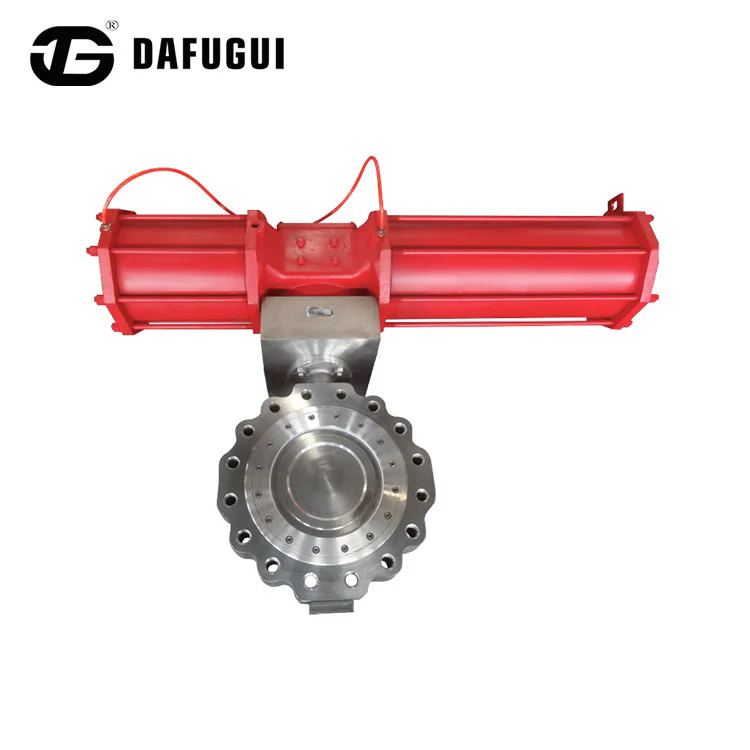
A Butterfly Valve for hydro turbine startup has several design features that distinguish it from a standard valve. The first is a double-offset or triple-offset disc design that provides a metal-to-metal seal with zero leakage. The second is a robust servomotor that can operate the valve under the maximum differential pressure that might occur if the bypass fails. The third is a bypass connection with a flanged interface for the bypass valve. The fourth is a vent connection on the downstream side to release air during filling. The fifth is a position indicator and a limit switch for remote monitoring. The table below summarizes these features.
| Feature | Specification | Function |
| Disc design | Double-offset or triple-offset | Zero leakage metal seal |
| Seal material | Stainless steel or Stellite | Erosion resistance |
| Servomotor | Double-acting hydraulic cylinder | Opens against residual differential |
| Bypass connection | Flanged, DN80 to DN250 | Pressure equalization |
| Vent connection | Flanged, DN50 to DN100 | Air release during filling |
| Position feedback | 4-20 mA or digital | Remote monitoring |
In our factory, we manufacture Butterfly Valve units with these features for hydro applications. The disc is machined from cast steel or stainless steel and is balanced to reduce the operating torque. The seal is replaceable without removing the valve from the line. Dafugui Pipe Valve Co., Ltd. provides full material certificates and pressure test reports for all of our hydro valves.
4. How Is the Bypass Startup Sequence Controlled?
The startup sequence is controlled by the plant's automation system. The sequence begins with a check that the main valve is closed and the bypass valve is closed. The bypass valve is then opened at a controlled rate to avoid water hammer. The filling time is monitored, and the vent is opened to release air. When the pressure on both sides of the main valve is equal within a tolerance of 0.5 bar, the main valve is opened. The bypass valve is then closed. The table below shows the typical sequence and the parameters that are monitored.
| Step | Action | Monitored parameter | Acceptance criteria |
| 1 | Open bypass valve | Bypass flow rate | Ramp over 30 seconds |
| 2 | Fill spiral case | Downstream pressure | Rise to 95% of upstream |
| 3 | Vent air | Air flow at vent | Air flow stops |
| 4 | Equalize pressure | Differential pressure | < 0.5 bar |
| 5 | Open main valve | Valve position | Full open in 60 seconds |
| 6 | Close bypass valve | Bypass position | Full closed |
Commissioning tip: During the first startup, manually verify that the bypass valve opens smoothly and that the pressure equalizes within the expected time. If the filling time is longer than calculated, check for a blocked vent or a partially closed bypass valve. If the differential pressure does not drop below 0.5 bar, the main valve should not be opened. Our factory provides a startup sequence template and a commissioning checklist with every Butterfly Valve order.
Frequently Asked Questions About Butterfly Valves with Bypass Systems for Hydro Turbines
Summary for Hydroelectric Engineers
Butterfly Valve units with bypass systems are essential for large hydro turbine startups because they allow the pressure to be equalized before the main valve is opened. Opening the main valve without equalizing the pressure would require an impossible servomotor force and would destroy the seal. The bypass system fills the spiral case, vents the air, and brings the downstream pressure up to the upstream pressure. The bypass valve size and the startup sequence are critical for avoiding water hammer and ensuring a smooth startup. Dafugui Pipe Valve Co., Ltd. has been manufacturing Butterfly Valve units for hydro applications for over 15 years and provides full engineering support for startup sequence design.
Dafugui Pipe Valve Co., Ltd. manufactures Butterfly Valve units with double-offset and triple-offset discs, bypass connections, and vent connections for hydro turbine applications. We provide bypass sizing calculations and startup sequence templates for all of our products.