

Why Are Automated Ball Valves with Actuators Preferred for Remote Control Applications?
2026-10-15
Automated Ball Valve systems combine a quarter-turn valve with an electric or pneumatic actuator to control fluid flow without requiring an operator to turn the valve manually at the installation point. This arrangement is useful in industrial plants where valves are distributed across large production areas, located in restricted-access equipment rooms, or integrated into automated process control systems. Remote operation can reduce routine manual intervention, improve response consistency, and provide clearer feedback on valve status when suitable control and monitoring components are installed. At Zhejiang Bolaisi Valve Co., Ltd., we consider operating pressure, media compatibility, connection standards, actuator torque, and control requirements when evaluating valve automation for industrial applications.
What Makes Actuated Valves Suitable for Remote Operation?
The main advantage of an actuated valve is the ability to operate the valve from a remote control station or an automated control system. Instead of sending personnel to each valve location, an operator can issue an open or close command through a control panel, programmable logic controller, or supervisory control and data acquisition system, commonly known as SCADA.
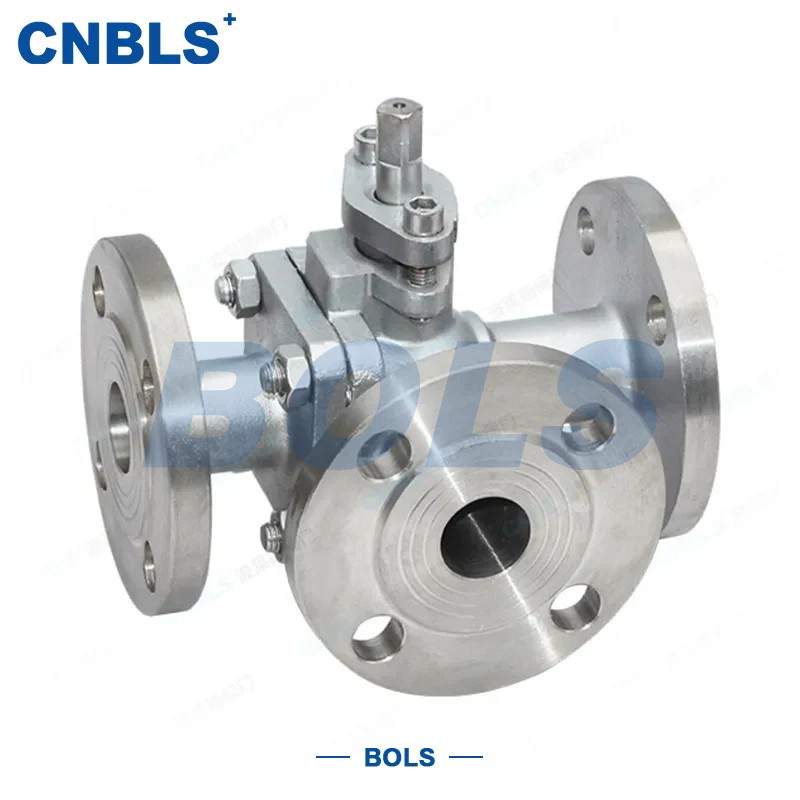
A typical assembly consists of a valve body, a rotating ball with a flow passage, seats, a stem, an actuator, and the necessary mounting hardware. Depending on the design, additional components may include solenoid valves, limit switches, position feedback devices, a local control box, and an actuator control module. These components work together to convert a control command into mechanical movement and, where specified, report the resulting valve position.
The quarter-turn operating principle is particularly useful for remote applications. A 90-degree rotation generally moves the valve between its fully open and fully closed positions. This simple motion is well suited to on-off service, although modulating control is also possible when the valve and actuator are specifically selected and configured for that duty.
Our approach to valve selection starts with the actual process requirement rather than automation alone. A valve controlling clean water in a utility line may have different material and sealing requirements from one handling oil, compressed air, or a chemically aggressive liquid. Pressure drop, operating frequency, temperature, and the consequences of a failed operation should all be considered before specifying the complete assembly.
Which Actuator Type Best Matches the Control System?
Electric and pneumatic actuators are the two common options for automated quarter-turn valve assemblies. Neither is universally better. The appropriate choice depends on the available utilities, required torque, operating speed, control accuracy, maintenance arrangements, and required response to power or air failure.
| Selection factor | Electric actuator | Pneumatic actuator |
| Energy source | Electrical power supply | Compressed instrument air or another approved pneumatic supply |
| Control interface | On-off wiring, relay control, or supported digital and analogue interfaces | Solenoid valve control, pneumatic switching, or electro-pneumatic positioning equipment |
| Operating characteristics | Suitable for controlled quarter-turn operation; speed depends on actuator design | Often provides rapid operation; speed depends on air pressure, valve sizing, and circuit configuration |
| Position feedback | Can use internal position indication, limit switches, or position transmitters | Can use mechanical limit switches or separate position sensing equipment |
| Utility considerations | Requires a suitable electrical supply and appropriate protection | Requires a reliable compressed-air supply and suitable air preparation where necessary |
| Failure response | Depends on actuator design, stored energy, and any fitted fail-safe mechanism | Depends on spring-return or other configured fail-safe arrangements and available stored energy |
| Typical applications | Water treatment, building services, process automation, and distributed equipment control | Industrial process lines, frequent switching duties, and installations with available instrument air |
Electric actuators are often suitable when electrical infrastructure is available and the control system needs convenient integration with plant automation. Depending on the model, they may support local controls, remote open and close commands, intermediate positioning, or communication interfaces. Buyers should verify the actual interface and control functions rather than assuming every electric actuator supports all of them.
Pneumatic actuators are frequently selected where compressed air is readily available and fast switching is required. Rack-and-pinion and scotch-yoke mechanisms are common designs, with torque characteristics varying by mechanism and position. A spring-return configuration can provide a defined response following loss of the driving air supply, provided the selected actuator and valve combination is designed for that function.
For our factory, the actuator selection process should include the valve's operating torque under the specified pressure and media conditions. The actuator must provide adequate torque across the full operating cycle, with an appropriate design margin established by the manufacturer and system designer. Excessive oversizing is not a substitute for engineering review, because unnecessarily high output torque may damage valve stems, seats, or other components.
What Technical Parameters Matter When Specifying an Automated Assembly?
Remote controllability is only useful when the valve and actuator match the mechanical and process requirements. A complete specification should cover the pressure boundary, wetted materials, sealing arrangement, actuator output, control method, electrical or pneumatic utilities, and environmental conditions. The figures below are typical selection considerations, not confirmed catalogue specifications for every model supplied by Zhejiang Bolaisi Valve Co., Ltd.
| Technical parameter | What buyers should specify | Why it matters |
| Nominal size | DN or NPS, together with the required flow capacity | Ensures the valve fits the pipeline and meets process flow requirements |
| Pressure rating | Design pressure and applicable rating standard | Confirms suitability for the maximum expected operating conditions |
| Temperature range | Minimum and maximum process and ambient temperatures | Determines whether body, seat, seal, and actuator materials are suitable |
| Body material | Specified grade, such as carbon steel or stainless steel, where available | Supports pressure integrity, corrosion resistance, and media compatibility |
| Seat and seal material | Material selected for the fluid, pressure, and temperature | Influences leakage performance, chemical compatibility, and service life |
| End connections | Threaded, flanged, welded, or other specified connection | Ensures mechanical compatibility with the existing pipework |
| Actuator torque | Required operating torque and actuator output over the full stroke | Helps prevent incomplete operation and excessive mechanical loading |
| Control method | On-off, modulating, local control, or remote command | Determines the actuator type and the control equipment required |
| Feedback and protection | Position indication, enclosure rating, electrical protection, and required certifications | Supports status monitoring and suitability for the installation environment |
Pressure ratings must be evaluated against the applicable design standard and temperature-related derating requirements. A nominal pressure class alone does not establish the maximum allowable working pressure at every temperature. Similarly, the flow capacity depends on the valve port, bore geometry, and flow coefficient rather than nominal pipe size alone.
Material selection requires equal care. Carbon steel may be suitable for many general industrial services, while stainless steel can be preferred where corrosion resistance or fluid cleanliness is important. Seat materials such as PTFE-based polymers or elastomers may be considered for specific applications, but their suitability depends on chemical compatibility, pressure, temperature, and the expected operating cycle. No single material should be treated as compatible with every process medium.
Electrical specifications should identify the rated voltage, frequency where applicable, current demand, cable entry, enclosure protection, and control signal requirements. For pneumatic assemblies, specify the required supply pressure, air quality, port connections, and any solenoid or positioner requirements. Hazardous-area installations need equipment certified for the applicable zone or division and gas or dust classification.
How Does Remote Automation Improve Process Reliability and Safety?
Remote automation can improve operational consistency by allowing control commands to be issued from a central location. When integrated with suitable sensors and interlocks, an automated valve can participate in a defined operating sequence, such as isolating a pipeline before maintenance, controlling the delivery of a utility, or switching flow between process stages.
A properly designed control system can also provide valve-position feedback. Limit switches or position transmitters allow the controller to distinguish a commanded operation from a confirmed position, subject to the accuracy and diagnostic capability of the installed equipment. This helps operators identify incomplete travel, actuator faults, or discrepancies between the command and the reported state.
However, remote control does not automatically guarantee safe operation. The engineering team must assess loss of power, loss of instrument air, communication failure, unexpected pressure changes, and the consequences of a valve remaining open or closed. Depending on the process, the required response may be fail-open, fail-closed, or remain-in-position. The appropriate arrangement must be determined through a documented risk assessment.
Where isolation is safety-critical, the valve's leakage class, pressure rating, materials, actuator performance, and any applicable functional safety requirements should be verified against the project specification. A standard automated valve should not be assumed to be a certified safety instrumented system component unless the required certification and system-level requirements are met.
Installation and commissioning are also important. The valve should be mounted in the correct orientation where the design specifies one, the actuator coupling should be aligned, and the travel limits should be set according to the manufacturer's instructions. Commissioning should verify open and close commands, local override where fitted, position feedback, interlocks, and the response to utility failure when required by the design.
Where Are Actuated Ball Valves Commonly Used?
Automated valve assemblies are used across a range of industries because they can be integrated into established control architectures. In water and wastewater treatment, they may operate utility lines, filtration stages, and chemical dosing systems when the wetted materials are suitable. In HVAC and building services, they can control heating or cooling circuits and support centralized facility management.
In manufacturing plants, remote-operated valves may be used for compressed air, process water, compatible oils, and other specified media. Chemical processing applications require more detailed assessment of body alloys, seat materials, sealing performance, and operating conditions. In each case, the valve should be selected for the actual fluid and duty rather than solely because the actuator is convenient to control remotely.
For high-cycle applications, buyers should establish the expected number of operations, the required operating time, and the maintenance interval. Actuator duty rating, thermal limits, air consumption, and the availability of replacement components may influence the total cost of ownership. A lower initial purchase price does not necessarily produce the lowest lifetime cost if the equipment is difficult to maintain or poorly matched to the process.
Zhejiang Bolaisi Valve Co., Ltd. recommends that project teams define the process medium, line size, pressure and temperature range, control philosophy, and required feedback before finalizing an order. Providing these details early can reduce specification gaps between the valve, actuator, electrical system, and plant control logic.
Frequently Asked Questions About Remote Valve Automation
Why Are Automated Ball Valves with Actuators Preferred for Remote Control Applications?
They allow operators or control systems to open and close a pipeline valve without direct manual access, which is useful for distributed equipment, restricted locations, and automated production sequences. With compatible position feedback and controller integration, the system can also report valve status and support interlocks. The actual benefits depend on correct actuator sizing, suitable control interfaces, reliable utilities, and a commissioning process that verifies the complete assembly.
How should an electric actuator be selected for a remotely operated valve?
Selection should begin with the valve's required operating torque under the actual pressure, temperature, and media conditions. Buyers should then confirm actuator output, supply voltage, control mode, operating time, duty rating, enclosure protection, environmental conditions, and the need for position feedback or communication interfaces. If the valve must move to a defined position after a power failure, a suitable fail-safe design or alternative engineered solution must be specified and verified rather than assumed to be included.
Can an automated valve regulate flow as well as provide remote on-off control?
Yes, but only when the valve, actuator, and control arrangement are suitable for modulating service. The actuator must support intermediate positioning, and the control system may require an analogue command, digital communication, or a compatible positioner. Flow regulation also depends on valve flow characteristics, pressure differential, fluid properties, and system design. A standard on-off assembly should not be assumed to provide accurate throttling or stable flow control without confirmation from the manufacturer.
How Can the Right Valve Configuration Support Your Project?
Automated valve selection should bring together process requirements, mechanical compatibility, actuator performance, control-system integration, and the required response to failure. Electric actuators can be practical where electrical power and centralized control are available, while pneumatic actuators can suit installations with reliable instrument air and a need for rapid switching. The correct solution is the one that meets the specified operating conditions and can be maintained throughout its service life.
Zhejiang Bolaisi Valve Co., Ltd. can review your project requirements to help identify an appropriate valve and actuator configuration. Contact our team with your pipeline size, medium, pressure and temperature range, connection standard, preferred actuator type, and control requirements. A complete specification gives our team a clearer basis for assessing compatibility, confirming available options, and preparing a quotation for your application.