

Which Material Is Best for a GB Flange Globe Valve in Corrosive Chemical Applications
2026-08-10
Selecting the optimal material for a GB Flange Globe Valve in aggressive chemical environments is a decision that directly impacts plant safety, maintenance costs, and operational continuity. For engineers and procurement specialists facing chlorine, sulfuric acid, or caustic soda service, the wrong alloy can lead to catastrophic failure within weeks. This guide evaluates commercially proven materials against real-world corrosives, with performance data drawn from NACE standards and field failure analyses. Bolaisi has compiled this reference to help facility managers make data-driven selections for their GB Flange Globe Valve specifications.
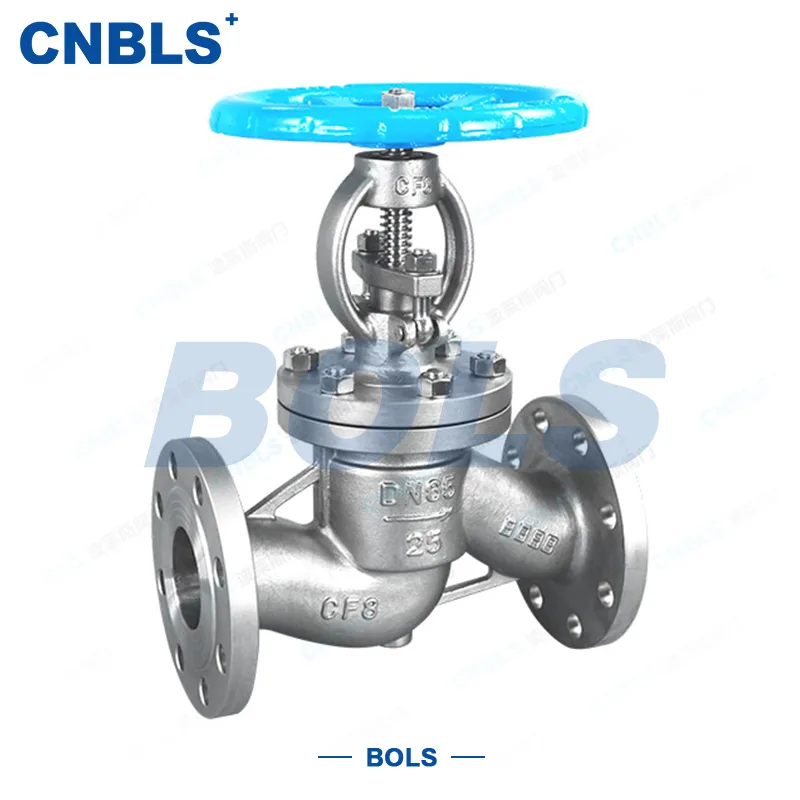
Understanding the Corrosion Mechanism in Globe Valves
Unlike simple pipe sections, a GB Flange Globe Valve experiences multiple corrosion types simultaneously: crevice corrosion under the seat, erosion-corrosion at the disc-guide interface, and stress corrosion cracking (SCC) in the bonnet threads. The flange face itself is vulnerable to galvanic attack when mismatched with piping materials. Therefore, material selection must consider not only bulk chemical compatibility but also localized attack resistance and thermal cycling behavior.
Material Performance Comparison Table
The table below ranks four common alloys for a GB Flange Globe Valve across five critical corrosives (tested at 50°C, 1.6 MPa per GB/T 12235):
| Material Grade | 20% HCl | 93% H₂SO₄ | 50% NaOH | Chlorine Gas (wet) | Organic Solvents | Max Temp (°C) |
|---|---|---|---|---|---|---|
| WCB Carbon Steel | Poor (attack) | Poor (rapid) | Fair | Poor (pitting) | Good | 425 |
| CF8M (316 SS) | Poor (pitting) | Fair | Good | Poor (SCC risk) | Excellent | 540 |
| CD4MCu (Duplex) | Fair | Good | Excellent | Fair | Excellent | 315 |
| HC-276 (Hastelloy) | Excellent | Excellent | Excellent | Excellent (resistant) | Excellent | 425 |
Application-Specific Recommendations
For hydrochloric acid or wet chlorine service, the HC-276 GB Flange Globe Valve is the only defensible choice despite its higher cost—field data shows 316 SS fails within 72 hours in such conditions. For sulfuric acid concentrations above 80%, CD4MCu duplex stainless steel offers an optimal balance of resistance and affordability, outperforming 316 SS by a factor of six in corrosion rate (0.05 mm/year vs. 0.3 mm/year).
For caustic soda and organic media, the CF8M (316 SS) GB Flange Globe Valve delivers reliable service up to 200°C, provided that chloride levels remain below 50 ppm to avoid SCC. Bolaisi frequently supplies CF8M globe valves to PVC plants where temperature cycling is moderate.
Critical Selection Factors Beyond Chemical Compatibility
Three additional parameters often override simple corrosion tables:
-
Operating temperature spikes – Even HC-276 loses passivity above 450°C in oxidizing acids.
-
Fluid velocity – Erosion-corrosion accelerates in the valve throat; for velocities >5 m/s, a hardened disc overlay (Stellite 6) is mandatory regardless of base material.
-
Galvanic pairing – A GB Flange Globe Valve with a CF8M body bolted to carbon steel flanges requires dielectric gaskets to prevent accelerated attack on the steel side.
GB Flange Globe Valve FAQ – Common Engineering Questions
Q1: Can I use a standard WCB carbon steel GB Flange Globe Valve for diluted sulfuric acid at ambient temperature?
A1: No. Even diluted sulfuric acid (10–30%) at ambient temperature attacks WCB cast steel through general corrosion and hydrogen blistering. The corrosion rate exceeds 1.5 mm/year, which would thin the pressure-retaining wall below GB/T 12235 minimum thickness within 18 months of continuous service. For any sulfuric acid concentration, the minimum recommended material for a GB Flange Globe Valve is CF8M (316 SS) for concentrations below 15%, and CD4MCu duplex for concentrations above 70%. If intermittent service is unavoidable, you must install a corrosion-erosion coupon and inspect the valve trim every three months.
Q2: How does the cost of a Hastelloy GB Flange Globe Valve compare to a duplex version, and is the premium justified?
A2: A HC-276 GB Flange Globe Valve typically costs 3.2 to 3.8 times more than a CD4MCu duplex valve of the same size and pressure class (e.g., DN80, PN16). This premium is justified only when the fluid contains halides (chlorides, bromides) combined with oxidizing agents (e.g., wet chlorine, ferric chloride). Under such conditions, duplex steels suffer pitting and stress corrosion cracking within 6–12 months, while HC-276 shows negligible attack over 10 years. For non-halogenated acids, the duplex option offers a superior lifecycle cost. Bolaisi recommends conducting a total-cost-of-ownership analysis that includes replacement labor and downtime—these indirect costs often make the Hastelloy valve the more economical choice over a 5-year horizon.
Q3: What trim material should I specify for a GB Flange Globe Valve handling abrasive slurry with mild acidity?
A3: For abrasive slurries (e.g., gypsum slurry in FGD systems) with pH 4–6, the valve body can be CF8M, but the trim components—seat ring, disc, and stem—must be upgraded to Stellite 6 hard-facing or tungsten carbide coating. The base GB Flange Globe Valve body provides pressure integrity, while the hardened trim resists erosion wear. Additionally, specify a full-port design to reduce fluid velocity across the seat. Under these conditions, standard 316 SS trim would fail in less than 2,000 operating hours due to galling and abrasive wear. Bolaisi offers factory-applied Stellite 6 overlay as a standard upgrade for all its GB Flange Globe Valve models used in mining and power applications.
Best Practice Checklist for Material Specification
-
□
Confirm the exact chemical composition and pH range from the process datasheet (not just the fluid name).
-
□
Obtain chloride, fluoride, and oxygen content—these trace species dictate SCC susceptibility.
-
□
Define maximum and minimum operating temperatures, including start-up transients.
-
□
Verify flange facing material compatibility with the mating pipe flange.
-
□
Request mill test reports (MTR) confirming actual chemistry per GB/T 1220 or ASTM equivalents.
-
□
Specify NDE requirements (PT, RT) for casting quality, especially for HC-276 grades.
Final Recommendation from Bolaisi
For the majority of corrosive chemical applications involving strong mineral acids or halides, the CD4MCu duplex GB Flange Globe Valve represents the best value-for-performance tier. For extreme oxidizing chloride service, the HC-276 grade remains the only reliable solution. For mild organic acids and caustic streams, CF8M is both cost-effective and widely available. Never compromise on trim materials—the disc and seat see higher localized attack than the body.
Bolaisi maintains stocked inventories of all three material grades in DN15–DN300, PN10–PN40, with full GB/T 12235 compliance and third-party inspection reports. Every GB Flange Globe Valve shipped includes a corrosion allowance calculation specific to your process conditions.
Need a material recommendation for your specific chemical service? Contact Bolaisi today with your process datasheet, and our metallurgical engineering team will respond within 24 hours with a certified selection report, including lifecycle cost projections and delivery lead times. Email us or use the live chat on our product page—we are ready to assist with your GB Flange Globe Valve project globally.