

Which factors should be considered when selecting a cast iron square penstock gate over a round one
2026-05-12
When engineers and project managers evaluate water control infrastructure, the choice between a Cast Iron Round And Square Penstock Gate often determines long-term operational success. At FYL, decades of field data confirm that geometry directly influences sealing efficiency, installation cost, and maintenance frequency. While round gates excel in high-pressure pipelines, square gates offer distinct advantages for specific channel conditions. Below is a structured analysis of selection factors.
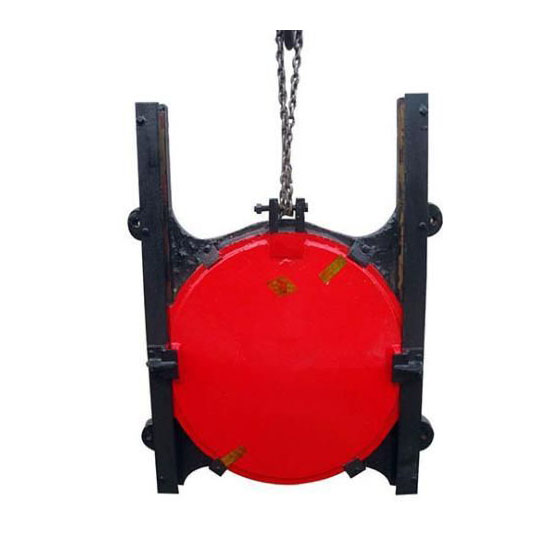
Key selection factors: square vs round cast iron penstock gates
| Factor | Cast Iron Square Penstock Gate | Cast Iron Round Penstock Gate |
|---|---|---|
| Channel shape compatibility | Ideal for rectangular concrete culverts and box channels | Best for circular pipes and tunnels |
| Sealing surface length per flow area | Shorter perimeter per cross-section area, lower leakage risk | Longer perimeter, more gasket contact points |
| Gate travel mechanism | Requires guided rollers on four corners | Uses centered stem with uniform radial support |
| Installation anchoring | Four-wall bolting available | Primarily bottom or side anchors |
| Head pressure tolerance | Excellent for low to medium heads (up to 15m) | Superior for high heads (>20m) |
| Debris handling | Square edges may trap fibrous debris | Smooth round contour clears debris naturally |
Operational considerations that favor square design
Channel geometry is the primary decider. If your existing infrastructure is a rectangular box culvert or a concrete-lined trapezoidal channel, a Cast Iron Round And Square Penstock Gate selection must prioritize square versions to avoid costly transition adapters. FYL recommends square gates for wastewater treatment plant influent channels where launder troughs are uniformly rectangular.
Sealing reliability under low-head conditions also favors square gates. Because the bottom of a square gate seats horizontally across a flat sill, elastomeric seals compress uniformly. Round gates on flat channel floors require curved-to-flat sealing geometry, which increases potential for dribbling leaks when head pressure drops below 2 meters.
Cast Iron Round And Square Penstock Gate FAQ - Common questions
What happens if I install a round penstock gate into a rectangular channel without adapters?
A round gate mounted on a rectangular channel creates four unfilled corner gaps at the channel roof and floor. Water will bypass the gate even when fully closed, making isolation impossible. The only solution is to pour formed concrete adapters or fabricate steel transition plates, which adds 20-30% to installation cost. FYL always advises matching gate geometry to channel geometry exactly.
Does a square penstock gate require stronger actuators than a round gate of the same flow area?
Yes, generally. For equal cross-sectional area (e.g., 0.5 m²), a square gate has a longer stem nut travel distance and needs higher torque to break static seal friction due to four independent sealing edges. FYL testing shows square gates require 18-25% higher actuator torque at opening. However, for manual operation with rising stems, square gates are still manageable with standard gearboxes up to 1200 mm width.
How do freezing conditions affect square versus round cast iron penstock gates
Ice expansion damages both types, but square gates are more vulnerable at their bottom corners because ice forms sharp wedges against the flat sill. Round gates allow ice to shift upward more uniformly. In climates with recurring freeze-thaw cycles, FYL recommends installing square gates with electric heating pads along the bottom seal or specifying rubber seal profiles with expansion relief cuts.
Best practice summary from FYL
-
Select square gates for rectangular channels, low to medium heads (under 15m), and when four-wall anchoring improves structural stability.
-
Select round gates for circular pipes, high-pressure applications, and debris-laden water where self-cleaning contour matters.
-
Always verify gate frame compatibility with existing embedded slide rails or anchor bolts.
Need expert guidance on your penstock selection
Choosing between round and square designs impacts your project budget for decades. FYL engineers provide free hydraulic calculations and gate geometry matching for any channel size up to 3m x 3m. Contact our technical team with your channel drawings and head pressure data for a comparative quotation within 48 hours.