

A dependable shut-off valve helps protect equipment, maintain process stability, and prevent unnecessary downtime. However, selecting the wrong valve configuration can lead to seat leakage, excessive operating torque, premature wear, and costly maintenance. A 2 piece floating ball valve offers a practical solution for many industrial isolation applications, combining a compact body structure with quarter-turn operation and pressure-assisted sealing.
This guide explains how a 2 piece floating ball valve works, which specifications matter most, how to evaluate materials and sealing performance, and what to check before purchasing or installing one. Whether you are an engineer, equipment manufacturer, distributor, or purchasing manager, the information below can help you make a more informed decision based on actual operating conditions.
Key takeaways: Understand the floating-ball sealing principle, match materials to the process medium, verify pressure and temperature limits, compare body configurations, and confirm inspection requirements before approving a valve for service.
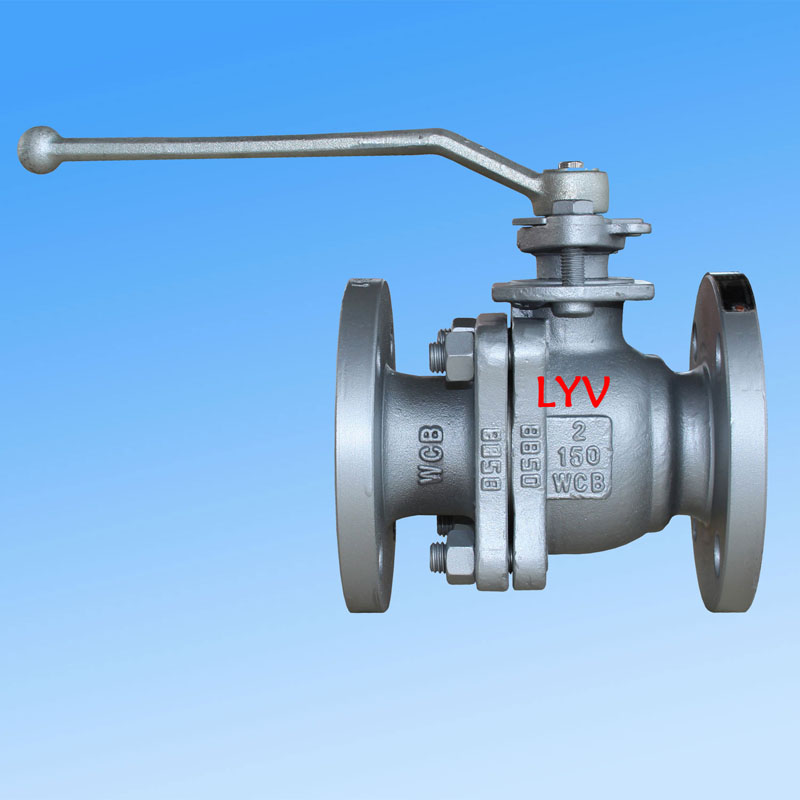
1. What Is a 2 Piece Floating Ball Valve?
A 2 piece floating ball valve is a quarter-turn valve designed to control the passage of fluid through a pipeline. Its body consists of two principal sections assembled around the internal components. These components typically include a spherical ball with a bore, two seats, a stem, packing, and the associated sealing elements.
The term two-piece describes the body construction, while floating describes how the ball is supported. The ball is not fixed by trunnions at both ends. Instead, it can move slightly under differential pressure, allowing it to press against a seat and help establish a tight shut-off.
When the handle or actuator rotates the stem by approximately 90 degrees, the ball moves between its open and closed positions. In the open position, the bore aligns with the pipeline. In the closed position, the solid surface of the ball blocks the flow path.
Typical Components and Their Functions
| Component | Main Function | What Buyers Should Check |
|---|---|---|
| Valve body | Contains the internal components and withstands operating pressure. | Material grade, pressure rating, corrosion resistance, and body-joint integrity. |
| Ball | Rotates to open or block the flow passage. | Surface finish, dimensional accuracy, coating, and material compatibility. |
| Seats | Contact the ball to form the primary shut-off seal. | Temperature limits, chemical resistance, wear behavior, and sealing requirements. |
| Stem | Transfers rotational movement from the handle or actuator to the ball. | Strength, corrosion resistance, and anti-blowout design where specified. |
| Stem packing | Helps prevent leakage around the stem. | Compatibility with the process medium, temperature, and emissions requirements. |
| Body seals and fasteners | Maintain sealing between the assembled body sections. | Gasket compatibility, bolting materials, and assembly requirements. |
The precise construction varies by manufacturer, nominal size, pressure class, connection type, and applicable design standard. Always review the product drawing and datasheet rather than assuming every two-piece valve has identical internal features.
2. How the Floating Ball Mechanism Works
The floating-ball design uses rotational movement and differential pressure to provide shut-off. Understanding this mechanism helps explain both the valve's advantages and its operating limits.
Step 1: The Valve Opens
When the stem rotates the ball into the open position, the ball's bore aligns with the pipeline. Fluid passes through the valve with resistance determined by the bore geometry, flow conditions, and other design factors. A full-bore model can minimize flow restriction when its dimensions match the piping requirements.
Step 2: The Ball Rotates to Close
Turning the handle or activating the actuator rotates the ball approximately one-quarter turn. The solid portion of the ball moves across the flow passage, preventing normal flow through the valve.
Step 3: Differential Pressure Loads the Seat
When the valve is closed and a pressure difference exists across it, upstream pressure can push the floating ball toward the downstream seat. The resulting contact force helps the seat seal against the ball. The actual leakage performance depends on the seat design, material condition, differential pressure, temperature, and manufacturing quality.
Step 4: The Valve Maintains Shut-Off
The ball and seats work together to isolate the downstream section. In a properly specified and maintained valve, this arrangement can provide reliable shut-off. However, excessive pressure, incompatible chemicals, abrasive particles, thermal degradation, or damaged sealing surfaces can compromise performance.
3. Key Advantages for Industrial Applications
Compact Construction
The two-piece body arrangement can provide a compact solution for many process and utility pipelines. It is particularly useful when installation space, equipment layout, and straightforward piping connections are important considerations.
Fast Quarter-Turn Operation
Opening or closing the valve normally requires approximately 90 degrees of rotation. This simple operating movement can reduce the time needed for routine isolation compared with valves that require multiple handwheel turns. Automated versions can also support remote operation when the correct actuator and controls are specified.
Reliable Shut-Off for Suitable Media
When the seat material, ball finish, and pressure rating match the application, a floating ball valve can deliver dependable isolation. It is commonly considered for compatible liquids and gases where tight shut-off is a priority.
Flexible Material and Connection Options
Depending on the product range, buyers may be able to specify carbon steel, stainless steel, or other approved materials, together with threaded, flanged, welded, or other connection configurations. Availability depends on the manufacturer's design and product range.
Practical Lifecycle Costs
A suitable two-piece valve can balance purchase cost, operating simplicity, and service life. However, the lowest initial price does not necessarily represent the lowest ownership cost. Material failures, unplanned shutdowns, difficult access, and repeated seal replacement can outweigh initial savings.
- Choose a valve that matches the actual pressure and temperature range.
- Specify materials according to the fluid's chemical composition.
- Confirm maintenance access before finalizing the piping layout.
- Request appropriate inspection and test documentation.
- Consider the cost of replacement, downtime, and spare parts over the expected service life.
4. Where Are 2 Piece Floating Ball Valves Commonly Used?
These valves are used in many industrial systems where on-off flow control is required. Their suitability depends on the actual medium, operating conditions, valve design, and applicable safety requirements.
Water Supply and Utility Systems
Compatible two-piece ball valves can be used in water distribution, equipment connections, and general utility lines. Buyers should verify corrosion resistance, pressure rating, and any potable-water approvals required by the project.
Industrial Equipment and Skid Packages
Manufacturers of pumps, compressors, treatment equipment, and process skids may use compact ball valves to isolate individual sections for inspection or servicing. Connection dimensions and installation clearances should be confirmed during equipment design.
Chemical Processing
For compatible chemical services, the valve can provide a convenient isolation point. Chemical compatibility must be assessed for every wetted component, including the body, ball, seats, stem, packing, and body seals. A material that resists one chemical may deteriorate rapidly in another.
Oil, Gas, and General Process Lines
Selected configurations may be suitable for specified process duties, provided the valve meets the project's pressure class, temperature limits, fire-safety requirements, emissions requirements, and relevant design standards. Not every standard two-piece valve is suitable for hazardous or high-consequence service.
HVAC and Industrial Cooling
In compatible heating, ventilation, cooling, and auxiliary water circuits, ball valves can isolate equipment during servicing. The selected materials and seals should tolerate the system fluid, temperature fluctuations, and operating pressure.
5. How to Select Body and Seat Materials
Material selection is one of the most important decisions when specifying a 2 piece floating ball valve. An apparently correct valve size can still fail prematurely if its wetted components are incompatible with the medium or operating temperature.
Valve Body Materials
| Material Category | Potential Advantages | Selection Considerations |
|---|---|---|
| Carbon steel | Suitable strength and practical cost for many industrial duties. | Assess corrosion allowance, external protection, medium compatibility, and design temperature. |
| Stainless steel | Useful corrosion resistance for many water, food-related, and chemical environments. | Grade selection matters; chloride concentration, temperature, and crevice conditions can affect resistance. |
| Brass or bronze | Commonly used in selected utility, plumbing, and general service applications. | Confirm pressure-temperature limits and compatibility with the medium, including any ammonia-related restrictions. |
| Special alloys | May address demanding corrosion or process requirements. | Require specific engineering review, documented material grades, and supplier confirmation. |
Seat Materials and Sealing Performance
The seat directly affects shut-off performance, operating torque, wear resistance, and temperature capability. Common options include PTFE, reinforced PTFE, and selected engineering polymers. Their suitability depends on the specific formulation, valve design, and service conditions.
- PTFE: Offers broad chemical resistance in many applications, but its mechanical behavior and temperature limits must be checked against the actual design.
- Reinforced PTFE: Can improve stiffness and resistance to deformation in suitable applications.
- PEEK and other engineered polymers: May be considered for demanding temperature or mechanical requirements when the valve design and supplier ratings support their use.
- Elastomeric seals: Must be selected according to chemical compatibility, gas permeability, temperature, and the required sealing function.
Do not select a seat solely by its maximum advertised temperature. Pressure, fluid composition, cycling frequency, differential pressure, and the combination of materials all affect performance.
Check Every Wetted Component
Compatibility should cover the complete wetted assembly rather than the body alone. For example, a stainless-steel body does not guarantee that the seat, stem packing, or body seal will withstand the process medium. Ask the supplier to confirm the full material configuration against your operating data.
6. Essential Specifications to Verify Before Ordering
A clear specification reduces quotation errors, prevents unsuitable substitutions, and helps ensure that the delivered valve matches the intended installation.
| Specification | Questions to Answer | Why It Matters |
|---|---|---|
| Nominal size | What pipe size and bore are required? | Affects capacity, dimensions, and installation compatibility. |
| Pressure rating | What is the design pressure and maximum differential pressure? | Determines whether the valve is suitable for the intended duty. |
| Temperature | What are the minimum, normal, and maximum temperatures? | Influences body strength, seat behavior, and seal life. |
| Process medium | What fluid, gas, additives, or contaminants are present? | Determines material compatibility and potential safety risks. |
| End connections | Are flanged, threaded, socket-weld, or butt-weld ends required? | Prevents mismatch with piping standards and available space. |
| Bore type | Is full bore or reduced bore required? | Affects flow restriction, dimensions, and application suitability. |
| Operation | Will the valve use a lever, gearbox, pneumatic actuator, or electric actuator? | Determines accessibility, operating torque, and control integration. |
| Design standard | Which project or industry standard applies? | Defines relevant design, dimensions, testing, and acceptance criteria. |
| Inspection | Are material certificates, pressure tests, or special inspections required? | Supports verification, traceability, and project approval. |
Pressure and Temperature Must Be Evaluated Together
A valve's maximum allowable pressure may decrease as operating temperature increases, depending on its materials and design. The rated pressure of a seat may also be lower than the pressure capacity of the body. Review the manufacturer's pressure-temperature chart for the exact configuration.
Confirm the Applicable Standards
Industrial ball valves may be designed or tested to standards such as API 608, ISO 17292, or ASME B16.34, where applicable to the valve type and project. Connection dimensions may be governed by separate standards. Fire-safe qualification, fugitive-emissions requirements, and other approvals must be explicitly verified when required.
Never assume that a valve complies with a particular standard simply because it is described as industrial grade. Request the applicable documentation for the model being quoted.
7. Comparing Common Ball Valve Configurations
The phrase “two-piece” refers to body construction. It does not, by itself, define the connection type, pressure class, bore size, or internal sealing design. Comparing configurations helps determine whether a product matches the installation and maintenance plan.
| Configuration | Main Characteristics | Potential Best Fit | Key Limitation |
|---|---|---|---|
| One-piece ball valve | Compact, integrated body construction. | Suitable services where simple construction and limited internal servicing are acceptable. | Internal component access is often limited; replacement may be necessary when worn. |
| 2 piece floating ball valve | Two main body sections and a floating ball. | General isolation where compact construction and practical procurement cost matter. | Internal servicing often requires removal from the pipeline and body disassembly. |
| 3 piece ball valve | Separate center body and end sections in typical designs. | Installations where maintenance access and component replacement are important. | Additional components and fasteners can increase initial cost and space requirements. |
| Trunnion-mounted ball valve | Ball supported by trunnions, with a different load and sealing arrangement. | Applications where size, pressure, torque, and the approved design favor trunnion support. | Selection and cost depend on the specific duty and engineering requirements. |
A two-piece floating design is not automatically superior to the alternatives. If frequent seat replacement without removing the entire valve is a major requirement, a suitable three-piece design may reduce maintenance effort. If the application involves large sizes or demanding pressure conditions, a trunnion-mounted design may warrant evaluation.
The correct decision should reflect operating conditions, installation constraints, shutdown frequency, maintenance capability, and total lifecycle cost.
8. Installation Practices That Reduce Problems
Even a well-manufactured valve can leak or become difficult to operate if installation is poorly executed. Follow the manufacturer's installation and operation instructions and the applicable site safety procedures.
Before Installation
- Inspect the valve. Check the model, size, pressure rating, connection type, material identification, and visible condition.
- Verify the pipeline. Confirm that the mating flanges or threads comply with the specified dimensions and standards.
- Clean the line. Remove construction debris, welding residue, scale, and other contaminants that could scratch the ball or damage the seats.
- Review flow and orientation requirements. Follow the manufacturer's instructions, particularly for valves with directional features, cavity-relief arrangements, or actuator accessories.
- Plan safe access. Make sure there is adequate clearance for the handle, actuator, bolting, and future maintenance.
During Installation
- Support the piping independently so that excessive loads are not transferred to the valve body.
- Align the mating connections carefully to avoid unnecessary mechanical stress.
- Use the specified gaskets, fasteners, sealing materials, and tightening procedures.
- Protect internal sealing surfaces from impact, dirt, and abrasive particles.
- For threaded connections, use the correct thread standard and an approved sealing method compatible with the service.
- For welded connections, follow the valve manufacturer's welding instructions and any requirements for protecting temperature-sensitive seats and seals.
After Installation
Operate the valve through its intended travel when it is safe to do so. Verify the open and closed positions, check the operating mechanism, and perform the specified pressure and leakage tests before placing the system into service. Test methods and acceptance criteria should follow the approved project documents and manufacturer instructions.
9. Maintenance and Troubleshooting
Preventive maintenance helps identify problems before they cause process interruptions. The inspection interval should be based on service severity, operating frequency, manufacturer recommendations, and the consequences of failure.
Common Problems and Possible Causes
| Observed Problem | Possible Causes | Recommended Action |
|---|---|---|
| Leakage through the closed valve | Worn seats, damaged ball surface, trapped debris, or unsuitable operating conditions. | Safely isolate the system and inspect the sealing components according to the manufacturer's procedure. |
| Leakage around the stem | Worn packing, damaged stem surface, loose or defective sealing components. | Depressurize and follow the approved stem-seal inspection or replacement procedure. |
| Leakage at the body joint | Damaged gasket, incorrect assembly, unsuitable fasteners, or excessive system stress. | Remove the valve from service safely and investigate the body joint and installation conditions. |
| Excessive operating torque | Seat wear, deposits, corrosion, excessive differential pressure, or actuator sizing issues. | Verify operating conditions and inspect the valve after safe isolation. |
| Incomplete opening or closing | Mechanical obstruction, incorrect actuator travel, damaged components, or installation interference. | Check the operating mechanism, travel stops, and actuator settings against the approved instructions. |
Recommended Maintenance Routine
- Inspect the external body, connections, stem area, and actuator for signs of leakage or damage.
- Check for abnormal operating resistance and investigate changes in torque.
- Verify that position indicators correspond to the actual open and closed positions.
- Review process conditions for temperature excursions, chemical changes, and unexpected pressure variations.
- Replace worn seats, packing, and seals only with components approved for the exact valve model and service.
- Keep records of inspections, repairs, test results, and component replacements.
Do not force a stuck valve with an extension bar or excessive actuator torque. This can damage the stem, ball, seats, or operating mechanism. Identify the cause before returning the valve to service.
10. A Practical Purchasing Checklist for Buyers
Purchasing teams often receive quotations that appear similar but contain important differences in materials, sealing components, connection standards, and documentation. A structured request for quotation makes these differences easier to identify.
Information to Include in Your RFQ
- Product description: 2 piece floating ball valve.
- Quantity and size: Required units and nominal pipe size.
- Pressure and temperature: Design conditions, normal operating conditions, and any relevant pressure cycling.
- Process medium: Fluid or gas composition, concentration, and known contaminants.
- Body and trim: Required body, ball, and stem materials.
- Seats and seals: Approved seat material and sealing requirements.
- Connections: End type, connection standard, pressure class, and face-to-face dimensions where relevant.
- Operation: Manual lever, gearbox, pneumatic actuator, or electric actuator.
- Performance: Required shut-off class, leakage criteria, and flow characteristics where applicable.
- Compliance: Applicable design standards, fire-safe qualification, emissions requirements, or industry-specific approvals.
- Inspection documents: Required pressure-test records, material certificates, inspection reports, and traceability documents.
- Commercial requirements: Delivery schedule, packaging, warranty terms, spare parts, and after-sales support.
How to Evaluate a Supplier Beyond Price
A competitive quotation should be supported by clear technical information. Check whether the supplier can identify the exact product configuration, provide a relevant datasheet, explain material options, and confirm the required testing scope.
For critical applications, review the quality documentation and the supplier's ability to provide traceable inspection records. Ask for clarification when a quotation lists a material or standard without sufficient supporting detail.
It is also useful to discuss spare parts, maintenance access, and expected service conditions before placing an order. These conversations can prevent avoidable substitutions and reduce the risk of selecting a valve that fits the pipe but does not meet the process requirements.
Working With Liangyi Valve
Liangyi Valve can be included in your supplier evaluation when sourcing industrial valve solutions. Before confirming a specific 2 piece floating ball valve, request the applicable product datasheet, drawings, material specifications, pressure-temperature ratings, and inspection documents for the proposed model.
Providing complete operating data at the inquiry stage helps the technical team assess the required configuration more accurately and identify any specifications that need clarification before quotation or production.
11. Frequently Asked Questions About 2 Piece Floating Ball Valves
Q1. What is the main function of a 2 piece floating ball valve?
Its main function is to start or stop fluid flow through a pipeline. A ball rotates approximately 90 degrees to move between the open and closed positions. Under suitable differential-pressure conditions, the floating ball presses against the downstream seat to support shut-off.
Q2. What does “floating” mean in a floating ball valve?
It means the ball is not rigidly supported by trunnions at both ends. The ball can move slightly under pressure, allowing it to load the downstream seat. This movement helps create a seal, but it also affects seat loading and operating torque.
Q3. Is a 2 piece floating ball valve suitable for high-pressure service?
It may be suitable for some higher-pressure duties if the exact valve design, size, materials, seats, and pressure-temperature rating support the application. The two-piece construction alone does not establish a pressure rating. Always verify the manufacturer's approved datasheet and the project requirements.
Q4. Which seat material should I choose?
The correct material depends on the process medium, chemical concentration, operating temperature, differential pressure, and cycling frequency. PTFE and reinforced PTFE are common options for suitable applications, while other engineered polymers may be specified for particular duties. Confirm compatibility for the complete sealing assembly.
Q5. Can a 2 piece floating ball valve be used for gas?
Some models are designed for compatible gas services. Suitability depends on the gas composition, pressure, temperature, seat and stem-seal design, leakage requirements, and any applicable fire-safe or fugitive-emissions qualifications. Obtain explicit confirmation for hazardous or flammable gases.
Q6. What is the difference between a two-piece and a three-piece ball valve?
The primary difference is body construction. A two-piece valve has two main body sections, while a typical three-piece design has a removable center body between two end sections. A three-piece design can offer easier internal access in suitable installations, whereas a two-piece valve may provide a more compact, cost-effective solution. Actual maintenance procedures depend on the design.
Q7. Does a two-piece ball valve need regular maintenance?
It should be inspected at intervals appropriate to the service and manufacturer recommendations. Routine checks can identify external leakage, abnormal operating torque, damaged connections, and actuator problems. Internal servicing must be performed only after safe isolation, depressurization, and verification of a safe working condition.
Q8. What causes a ball valve to leak when closed?
Common causes include damaged or worn seats, scratches on the ball, trapped debris, incompatible materials, and operating conditions outside the approved range. Diagnosis should begin with safe isolation and a review of the service conditions and maintenance history.
Q9. What information is needed to request a quotation?
Provide the nominal size, quantity, pressure class, minimum and maximum temperature, medium, body and trim materials, seat material, connection type, operating method, applicable standards, leakage criteria, and required inspection documents. Drawings or an existing valve datasheet are useful when available.
Q10. Can a 2 piece floating ball valve be automated?
Many suitable models can be fitted with pneumatic or electric actuators. Confirm the valve's required operating torque across the expected operating conditions, actuator output, mounting interface, available power or air supply, control signals, and fail-safe requirements where applicable.
12. Final Considerations: Select for Performance and Service Life
A 2 piece floating ball valve can be an effective isolation solution when its construction, sealing materials, pressure-temperature limits, and connections match the application. Its compact layout and quarter-turn operation make it practical for many industrial process and utility systems, but reliable performance depends on correct engineering and installation.
Before making a final decision, evaluate the complete operating envelope, confirm chemical compatibility, review maintenance access, and request the technical documentation needed for approval. These steps help reduce leakage risks, prevent avoidable downtime, and support more predictable lifecycle costs.
Whether you are specifying a new installation or replacing an existing valve, clear technical communication is the foundation of a successful procurement decision.
Looking for the Right 2 Piece Floating Ball Valve?
Choosing the right valve starts with understanding your operating conditions. Share your required size, pressure rating, temperature range, process medium, material preferences, and connection specifications to help identify a suitable configuration.
Connect with Liangyi Valve to discuss your valve requirements, request product information, and review the technical details needed for your project.
Need assistance with your next valve order? Contact us with your specifications and application details to start a product inquiry and move your project forward with greater confidence.
Technical disclaimer: This article provides general product-selection information and is not a substitute for the manufacturer's approved datasheet, installation and maintenance instructions, or project-specific engineering review. Confirm all ratings, materials, certifications, and operating limits for the exact valve configuration before use.