

When Should You Use a Lift Check Valve Instead of a Swing Type
2026-03-16
Selecting the right Check Valve for your fluid system is critical for operational efficiency and equipment longevity. While both lift and swing designs prevent backflow, their working mechanisms suit different applications. At Tianhong, we engineer precision valves for global industries, and understanding this distinction ensures you avoid costly system failures.
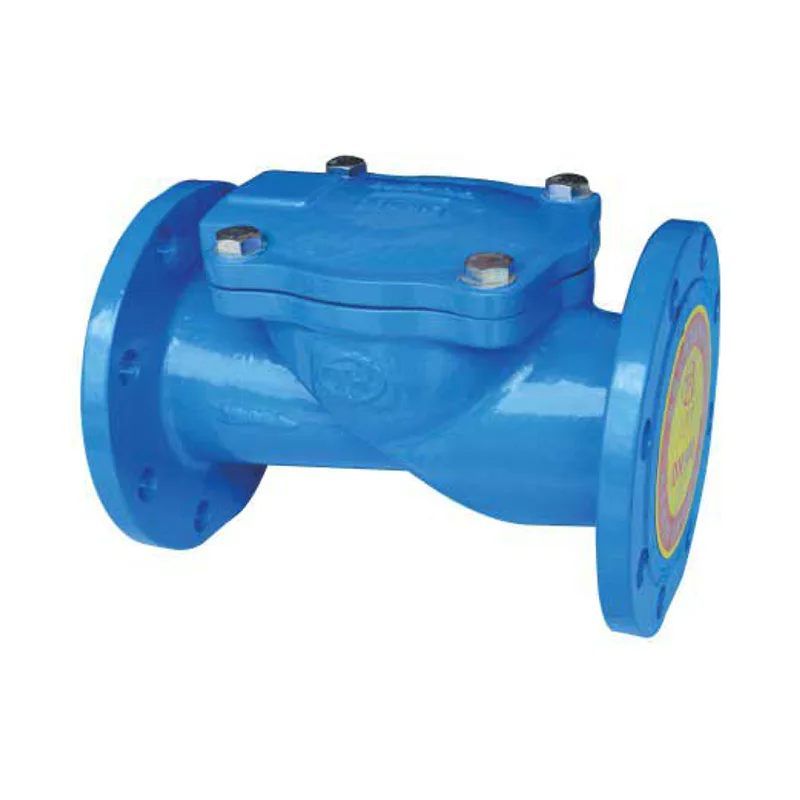
Understanding the Core Mechanism
A swing check valve uses a hinged disc that swings open with forward flow and closes when flow reverses. It relies on gravity and reverse pressure. A lift check valve features a disc or piston that lifts vertically off its seat. It requires the flow to change direction, making it ideal for systems with higher pressure consistency.
When to Choose a Lift Check Valve
You should opt for a lift check valve over a swing type under these specific conditions:
1. High-Pressure Steam or Gas Systems
Incompressible fluids or high-velocity steam demand tight sealing. A lift check valve provides superior sealing because the disc seats against the flow path directly, preventing hammering and leakage.
2. Horizontal Pipelines with High Flow Velocity
Lift designs function best in horizontal installations where flow is consistent and strong enough to lift the disc fully. Swing valves may chatter if velocity fluctuates.
3. Systems Requiring Minimal Water Hammer
The guided lift mechanism closes faster as flow approaches zero, reducing the slamming effect common in swing types.
4. Applications with Limited Space
Lift Check Valves have a compact body, often similar to a globe valve, fitting where swing valves cannot due to their large disc travel arc.
Comparison Table: Lift vs. Swing Check Valves
| Feature | Lift Check Valve | Swing Check Valve |
|---|---|---|
| Best Application | High-pressure steam, gas, or vertical flow | Low-velocity liquid, large pipelines |
| Installation | Horizontal lines (piston type) or vertical | Primarily horizontal |
| Flow Resistance | High (tortuous path) | Low (straight-through path) |
| Sealing Capability | Excellent, even at high pressures | Good, but prone to wear in turbulent flow |
| Water Hammer Risk | Low (quick closing action) | High (slow disc closure) |
| Maintenance | More complex (internal guiding parts) | Simple (hinge pin access) |
Key Scenarios Where Swing Prevails
Despite the advantages of lift types, Tianhong recommends swing check valves for slurry services, large-diameter water mains, or where minimum pressure drop is vital. The straight-through design allows debris to pass without clogging.
FAQ: Common Questions About Check Valves
Q: Can a lift check valve be installed vertically?
A: Yes, but orientation depends on the model. Tianhong piston-style lift Check Valves are designed for horizontal lines, while ball-type lift versions can function vertically with upward flow. Always verify the spring orientation to ensure the disc lifts with gravity assistance or against it as specified.
Q: What causes a lift check valve to fail?
A: The most common failures stem from debris jamming the piston guide or erosion of the seating surface due to continuous turbulence. In steam systems, wire drawing (erosion from high-velocity condensate) can cut grooves into the seat. Regular inspection of the guiding mechanism is essential for longevity.
Q: How do I size a lift check valve correctly?
A: Sizing requires matching the valve port to the pipe size while ensuring the flow velocity is sufficient to hold the disc fully open. If oversized, the disc will flutter, causing premature wear. Tianhong provides engineering charts to calculate the minimum velocity needed to achieve full lift based on fluid density and pressure.
Conclusion
Choosing between a lift and swing Check Valve hinges on your fluid characteristics, pressure, and installation geometry. For clean, high-pressure systems requiring tight shutoff and minimal hammer, a lift check valve is superior. For budget-friendly, low-pressure drop applications in water lines, a swing type suffices.
For expert guidance on selecting the perfect Check Valve for your project, contact Tianhong today. Our engineers are ready to support your specifications with precision and quality you can trust.
Contact Us Now for a detailed consultation or a quote on our premium Check Valve range.