

When Should You Choose Hard Seal Gate Valves Instead of Butterfly Valves for Isolation
2026-07-27
Selecting the right isolation valve for a critical pipeline is never a trivial decision. For engineers and plant operators, the choice often narrows down to two popular designs: the butterfly valve and the Hard Seal Gate Valve. While butterfly valves offer compactness and lower initial costs, Hard Seal Gate Valves provide distinct advantages in severe service conditions where zero leakage, high temperatures, and abrasive media are daily realities. At Hanno, we have witnessed countless facilities transform their reliability metrics after switching from resilient-seated butterfly valves to metal-to-metal sealing gate valves for primary isolation duties. This article dissects the technical criteria that should drive your decision-making process.
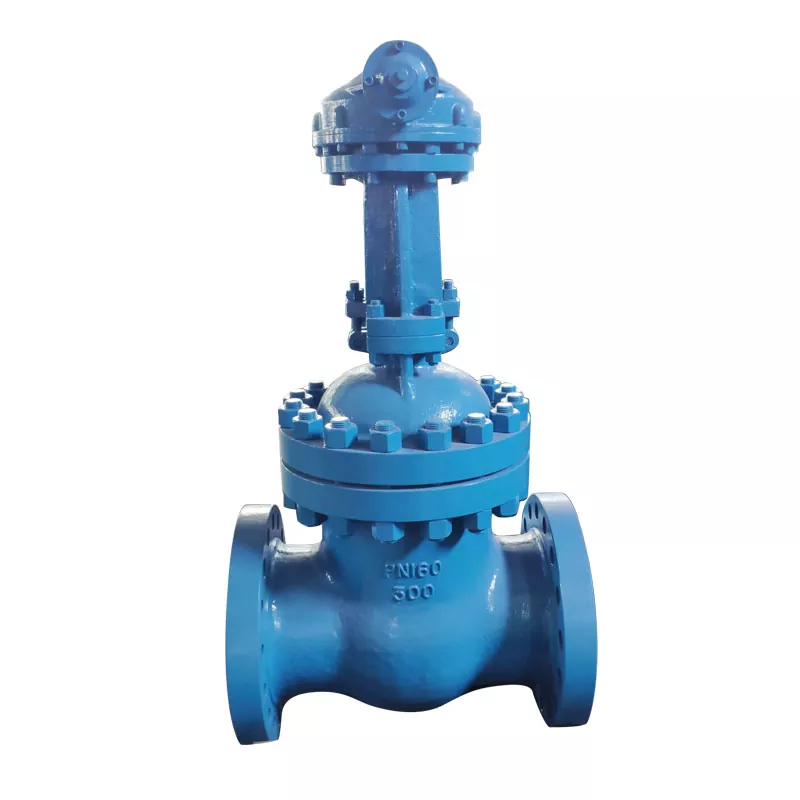
Performance Comparison at a Glance
The table below summarizes the critical differentiators between butterfly valves and Hard Seal Gate Valves across key operational parameters.
| Parameter | Butterfly Valve (Soft/Resilient Seat) | Hard Seal Gate Valve (Metal-Seated) |
|---|---|---|
| Temperature Range | -29°C to +200°C (PTFE/EPDM limited) | -196°C to +650°C (wide alloy compatibility) |
| Pressure Class | Up to ASME Class 600 (limited in large sizes) | ASME Class 150 to 2500+ |
| Bubble-Tight Shutoff | Yes (with resilient seat, but degrades over time) | Yes (with lapped metal seats, sustained under thermal cycling) |
| Abrasion / Slurry Resistance | Poor (seat erosion is common) | Excellent (hardfaced Stellite or tungsten carbide coatings) |
| Fire Safety | Not inherently fire-safe (seat melts) | Inherently fire-safe (metal-to-metal seal) |
| Bidirectional Flow | Limited (many designs are uni-directional) | Fully bidirectional (standard design) |
| Maintenance Interval | Short (frequent seat replacements) | Extended (resists wear and galling) |
Critical Application Criteria for Hard Seal Gate Valves
You should definitively choose a Hard Seal Gate Valve over a butterfly valve when any of the following conditions apply to your isolation service:
1. High-Temperature Steam and Hydrocarbon Services
Butterfly valves with elastomeric or polymeric seats soften, deform, or fail catastrophically above 200°C. In contrast, Hanno’s Hard Seal Gate Valves feature fully metal-to-metal seating surfaces that maintain elastic sealing even at 600°C. For superheated steam lines or thermal fluid systems, this is non-negotiable.
2. Abrasive or Particulate-Laden Fluids
Slurries, catalyst fines, and sand-laden crude oil act as grinding pastes against soft seats. A butterfly valve’s disc will score the seat within weeks, leading to unacceptable fugitive emissions. The hardfaced wedge and seat rings of a Hard Seal Gate Valve resist scoring, ensuring decades of tight shutoff.
3. High Differential Pressure with Zero Leakage Requirements
When isolation must be absolute—for example, before man-entry in gas pipelines or toxic fluid containment—the robust wedge-in-seat design of the Hard Seal Gate Valve provides mechanical advantage that butterfly valves cannot match. The resilient butterfly seat may deform under high differential pressure, while the metal-seated gate valve remains stable.
4. Frequent Thermal Cycling
Butterfly valves often bind or leak after repeated temperature swings because the disc and seat expand at different rates. Hard Seal Gate Valves with fully guided wedges and flexible seat rings—engineered by Hanno—accommodate thermal expansion without losing sealing integrity.
FAQ: Common Questions About Hard Seal Gate Valves
Q1: Can a Hard Seal Gate Valve achieve the same bubble-tight shutoff as a resilient-seated butterfly valve at ambient temperatures?
A1: Yes, but with a crucial distinction. A resilient-seated butterfly valve achieves bubble-tight shutoff (ANSI FCI 70-2 Class VI) through elastic deformation of the polymer seat against the disc edge. However, this sealing is temporary—after a few hundred cycles or a single temperature excursion, the seat takes a compression set and leakage begins. A Hard Seal Gate Valve achieves bubble-tight shutoff through precision-lapped metal surfaces (usually Stellite 6 or 21) that are burnished during the closing stroke. While the initial machining cost is higher, Hanno’s Hard Seal Gate Valves consistently maintain Class VI shutoff for over 10,000 mechanical cycles, provided the line pressure exceeds the minimum seating stress. In practical terms, if your process runs above 150°C or contains particulates, the metal-seated gate valve will actually outperform the butterfly valve in leak-tightness over the long term.
Q2: Are Hard Seal Gate Valves more expensive to operate and maintain than butterfly valves?
A2: The total cost of ownership tells a different story. While the upfront purchase price of a Hard Seal Gate Valve is typically 40–70% higher than an equivalent-sized butterfly valve, the maintenance costs invert dramatically. A butterfly valve in a steam service may require new seat and disc o-rings every 12–18 months, with associated labor and downtime costs that often exceed the original valve price. For Hard Seal Gate Valves, the maintenance interval extends to 5–8 years in similar services, and when maintenance is needed, it usually involves only lapping the seats or replacing the wedge—both field-serviceable operations. Moreover, Hanno designs its Hard Seal Gate Valves with in-line repairability, meaning you do not need to remove the valve body from the pipeline. Considering downtime penalties in oil refineries or chemical plants, the metal-sealed gate valve is frequently the more economical choice over a 10-year horizon.
Q3: What happens if a Hard Seal Gate Valve is partially throttled, and is that better than a butterfly valve?
A3: This is a critical nuance. Neither valve is intended for continuous throttling, but they handle partial opening differently. A butterfly valve can be used for moderate throttling because its disc rotates within the flow path, offering a relatively linear control characteristic—but this comes at the cost of cavitation and seat erosion at low openings. A Hard Seal Gate Valve is strictly an isolation device; if held at 30–50% open, the high-velocity flow will erode the seating surfaces and cause severe vibration of the wedge. Hanno explicitly warns against throttling with gate valves. For isolation duties where occasional partial opening occurs during startup or bypass filling, the Hard Seal Gate Valve is actually more forgiving because its hardened faces resist erosion better than a soft butterfly seat. However, if your application requires frequent modulation, you should select a control valve, not either of these. For pure isolation—where the valve is either fully open or fully closed—the Hard Seal Gate Valve is unequivocally superior in durability and leak-tightness.
Decision Flowchart Summary
Choose a Hard Seal Gate Valve if your checklist includes:
-
Operating temperature > 200°C or < -40°C.
-
Presence of abrasive solids, catalyst dust, or sand.
-
Requirement for fire-safe, fugitive-emission-compliant sealing.
-
Pipeline pressures above ASME Class 600.
-
Isolation cycles exceeding 500 operations per year.
Choose a butterfly valve only if:
-
Temperature is moderate (-20°C to +150°C).
-
Fluid is clean, non-abrasive liquid or gas.
-
Space and weight are extreme constraints.
-
Budget is highly limited for a short-term project (under 3 years).
Final Verdict from Hanno
The industry trend is clear: as process conditions become more demanding, Hard Seal Gate Valves are reclaiming market share from butterfly valves in critical isolation services. Hanno has engineered its Hard Seal Gate Valves with advanced seat geometry and proprietary hardfacing alloys that eliminate the historical drawbacks of metal-seated valves—namely, high torque and susceptibility to galling. When human safety, environmental compliance, and production uptime are on the line, the metal-seated gate valve is not an expense; it is an investment.
Ready to evaluate which valve fits your specific pipeline conditions? Contact Hanno today for a detailed application review, torque calculations, and a customized isolation solution. Our engineering team provides free technical consultations and can ship sample Hard Seal Gate Valves for in-plant trials within 48 hours. Reach out via our website or call your regional Hanno representative—we are here to ensure your isolation strategy is built for the long haul.