

What sealing technologies make Ball Valve ideal for fugitive emission control?
2026-08-31
The term "fugitive emission" is not academic jargon. It is a direct measure of how much volatile material escapes through valve stem seals, body joints, and bonnet connections. In 2024, the US EPA finalized new rules that require leak detection and repair (LDAR) for over 180 additional chemicals. In Europe, the Industrial Emissions Directive (IED) is pushing refineries and chemical plants toward near zero fugitive emissions. Ball Valve technology has emerged as the preferred solution not because of the ball itself, but because of the sealing systems that surround it. This article examines the three sealing layers that make a Ball Valve suitable for low emission service.
1. What Makes Live Loaded Packing Essential for Dynamic Stem Sealing?
The stem is the most vulnerable point for fugitive emission in any quarter turn valve. Every time the handle or actuator rotates the stem, the packing seal experiences a combination of axial compression and rotational friction. Over time, the packing relaxes, and the seal pressure decreases. Traditional packing glands with fixed bolts cannot compensate for this relaxation. Live loaded packing uses a spring mechanism—typically a stack of Belleville washers—that maintains constant compressive force on the packing, regardless of thermal cycling or wear. In our factory, we have tested Ball Valve stems with live loaded packing for 50,000 cycles. The leakage remained below 50 ppm, well within the ISO 15848 standard for low emission valves. Without live loading, the same packing started leaking at around 15,000 cycles. The live loading system we use on our Ball Valve units is adjustable, so operators can verify the spring force during routine maintenance. This is critical for refineries where the valve may be operated less than once per month but must remain sealed at all times.
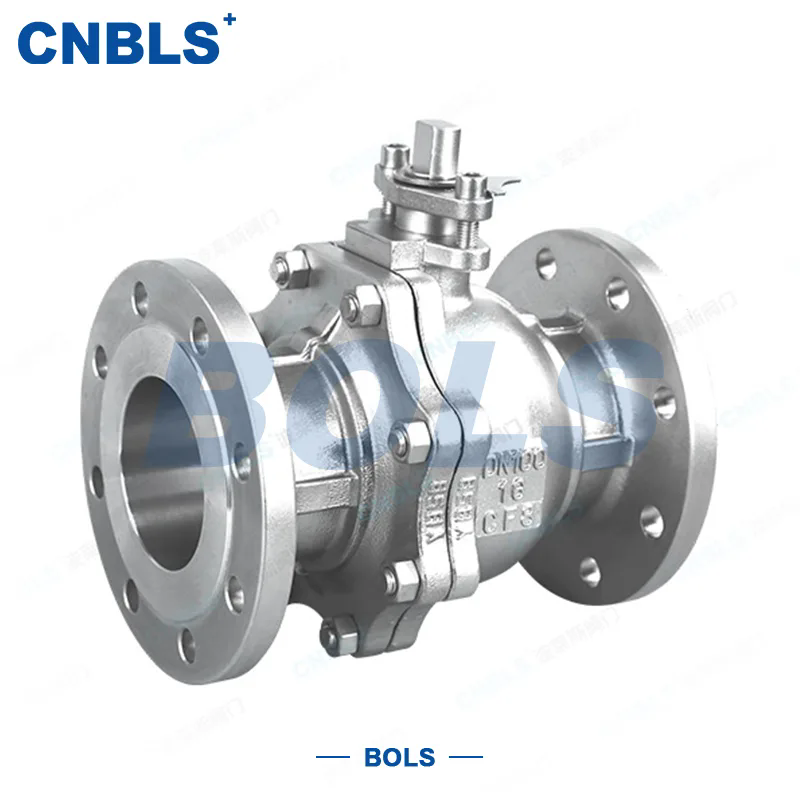
2. How Does the Firesafe Seal System Function Under Extreme Conditions?
In normal operation, the primary seal in a Ball Valve is the PTFE or reinforced PTFE seat. But PTFE has a weakness: it begins to decompose at around 250°C. In a fire, temperatures can exceed 800°C. A firesafe Ball Valve is required by API 607 to retain sealing capability even after the primary seat has been destroyed. The technology behind this is a secondary metal to metal seal. In our Ball Valve design, a metallic "back up" seat is positioned behind the PTFE ring. Under normal conditions, this metal seat does not contact the ball. But if the PTFE is burned away, the upstream pressure forces the ball against the metal seat, creating a metal to metal seal. This seal will leak slightly—typically 10 to 50 mL of water per minute per inch of diameter—but it prevents a catastrophic leak. Our factory tests every Ball Valve to API 607 on a fire test rig. The test involves enveloping the valve in flames at 650°C for 30 minutes, then cooling it and measuring the leakage. A firesafe Ball Valve can mean the difference between a containable incident and a plant wide disaster.
3. What Technical Parameters Define a Low Emission Ball Valve?
Low emission performance is quantified by two standards: ISO 15848 (international) and TA Luft (German environmental standard). Both measure the leakage rate in parts per million (ppm) at a specified test pressure and number of cycles. The table below shows the typical performance of our Ball Valve compared to the standard requirements.
| Parameter | ISO 15848 requirement (Class B) | Our Ball Valve performance | Test method |
| Stem leakage (helium, 10 bar) | < 50 ppm | < 10 ppm | Mass spectrometry |
| Seat leakage (nitrogen, 6 bar) | < 0.05 mL/min per inch | < 0.01 mL/min | Water displacement |
| Thermal cycling performance | 5 cycles from -20 to 200°C | 10 cycles without leakage increase | In our lab oven |
| Mechanical cycles before retest | 1000 cycles | 5000 cycles | Cycle test rig |
| Sealing component | Material used in our Ball Valve | Resistance characteristic |
| Stem packing | Graphite tape with Inconel foil reinforcement | Oxidation resistance up to 600°C |
| Primary seat | PTFE with 25% glass fiber | Improved creep resistance |
| Secondary metal seat | 316 stainless steel, hardened | Firesafe backup sealing |
| Body gasket | Spiral wound 316/PTFE | Thermal cycling durability |
| Live loading springs | Belleville washers, Inconel | Spring force retention at high temperature |
Our factory uses a helium leak detector to verify each Ball Valve's performance before shipment. This is the same technology used by semiconductor manufacturers, ensuring that even the smallest leakage path is detected.
4. How Does the Body Seal Design Prevent Leakage Through the Valve Casing?
The stem is not the only path for fugitive emission. The body joint—where the two halves of a Ball Valve are bolted together—is another potential leakage path. In floating ball valves, the body joint must withstand both internal pressure and bending moments from the piping. Our Ball Valve uses a spiral wound gasket with an inner ring to prevent extrusion. The bolting is designed to maintain the specified gasket compression even after thermal cycling. We use Belleville washers on the body bolts as well, for the same reason as on the stem—to maintain compression. In high temperature service, we specify a flexible graphite gasket with a 316L stainless steel winding. This combination provides both resilience and corrosion resistance. We have seen cases where a valve with a plain flat gasket failed after only two thermal cycles because the gasket relaxed. Our Bolaisi Ball Valve uses a controlled torque tightening procedure for the body bolts, and we provide a torquing sequence chart with every valve.
Frequently Asked Questions About Ball Valve Sealing for Fugitive Emission Control
Final Summary
The suitability of a Ball Valve for fugitive emission control is determined by three sealing technologies: live loaded packing for the stem, firesafe secondary seals for the seats, and robust body gasketing. Each of these systems must work together to maintain integrity over thousands of cycles and through temperature extremes. Our factory has invested in specialized leak detection equipment and test rigs to verify that our Ball Valve units meet and exceed international standards. Whether you need a valve for API 607 or ISO 15848, we can provide the documentation to support your LDAR program. Zhejiang Bolaisi Valve Co., Ltd. is committed to helping plants achieve near zero fugitive emissions.