

What Role Does Material Selection Play in the Longevity of Upward Expansion Discharge Valves
2026-04-02
When it comes to high-performance fluid control systems, the Upward Expansion Discharge Valve stands as a critical component in maintaining safety, efficiency, and operational continuity. At LOZOSE, we have spent years engineering valves that withstand extreme conditions, and our experience confirms that material selection is not merely a design detail—it is the single most decisive factor determining how long an Upward Expansion Discharge Valve will perform reliably in demanding industrial environments.
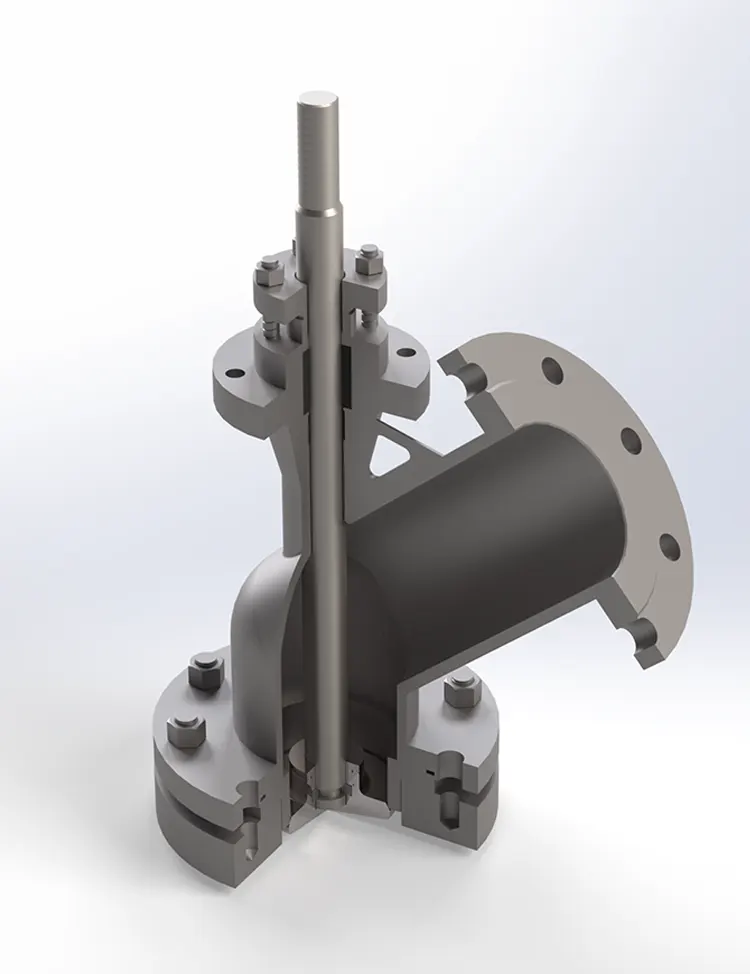
The Science Behind Material Durability
An Upward Expansion Discharge Valve operates under unique mechanical stresses. The upward expansion mechanism subjects internal components to cyclical loading, thermal gradients, and direct contact with aggressive media. Choosing the wrong material can lead to premature failures such as stress corrosion cracking, galling, seat leakage, or catastrophic rupture. Below is a breakdown of how material properties directly influence valve longevity.
| Material Property | Impact on Valve Longevity |
|---|---|
| Corrosion Resistance | Prevents pitting and crevice corrosion in aggressive chemical or steam environments |
| Tensile Strength | Ensures structural integrity under high-pressure surges and mechanical cycling |
| Hardness | Reduces wear on seating surfaces during repeated upward expansion cycles |
| Thermal Stability | Maintains dimensional accuracy and seal integrity across temperature extremes |
| Fatigue Resistance | Extends service life by resisting crack initiation under cyclic loading |
At LOZOSE, we select materials based on a rigorous analysis of operating conditions, media composition, temperature ranges, and cycle frequency. For instance, in high-temperature steam applications, we utilize precipitation-hardened stainless steels or nickel-based alloys that retain strength where standard austenitic grades would succumb to creep deformation.
How Material Selection Mitigates Failure Modes
The longevity of an Upward Expansion Discharge Valve is directly tied to its ability to resist specific failure mechanisms. Each material choice addresses one or more of these risks:
-
Galling and Adhesive Wear: Common in valves with moving internal components. LOZOSE employs surface-hardened alloys and dissimilar material pairings to eliminate cold welding.
-
Erosion: Particulate-laden flows rapidly degrade soft materials. We specify hardened stellite overlays on critical seating surfaces.
-
Hydrogen Embrittlement: In hydrogen service environments, we use specially treated low-carbon alloys to prevent sudden fracture.
-
Thermal Expansion Mismatch: Mismatched components can bind or leak. Our engineering team matches coefficients of thermal expansion across all wetted parts.
Upward Expansion Discharge Valve FAQ
What are the most common materials used for an Upward Expansion Discharge Valve in corrosive chemical services?
For corrosive chemical applications, the most commonly specified materials are Hastelloy C-276, duplex stainless steels such as 2205 and 2507, and high-grade austenitic stainless steels like 316L with controlled sulfur content. LOZOSE typically recommends nickel-based superalloys when chloride-induced stress corrosion cracking is a concern, as these materials provide exceptional resistance to pitting and crevice corrosion even at elevated temperatures. In highly oxidizing environments, we also utilize zirconium or titanium grades where standard alloys would fail within months. The selection is further refined based on the specific concentration of chemicals, presence of chlorides, and operating temperature ranges to ensure a minimum service life of 15 to 20 years with proper maintenance.
How does the material of the seat and disc affect the operational lifespan of an Upward Expansion Discharge Valve
The seat and disc assembly experiences the most severe mechanical and thermal stress during each upward expansion cycle. If these components are made from mismatched or inadequately hardened materials, premature leakage can occur within the first few thousand cycles. LOZOSE engineers precision-match seat and disc materials to optimize hardness differentials—typically employing a hardened alloy such as Stellite 6 for the seat and a precipitation-hardened stainless steel for the disc. This combination minimizes adhesive wear while maintaining tight shut-off capabilities. For ultra-high cycle applications exceeding 100,000 operations, we utilize ceramic-coated or full ceramic components that eliminate galling altogether and extend service intervals by up to 300 percent compared to conventional material pairings.
What factors should be considered when selecting materials for an Upward Expansion Discharge Valve in high-temperature steam service
In high-temperature steam service, material selection must account for creep resistance, oxidation resistance, and thermal fatigue tolerance. Traditional carbon steels lose strength rapidly above 800°F, making them unsuitable for sustained high-temperature operation. LOZOSE recommends Grade 91 or 92 chrome-molybdenum alloys for superheated steam applications up to 1100°F, as these materials maintain yield strength and resist temper embrittlement over decades of service. For temperatures exceeding this range, we utilize Inconel 625 or similar nickel-based alloys that form a stable oxide layer, preventing scaling and maintaining dimensional stability. Additionally, we evaluate the steam purity level—high-purity steam requires low-sulfur materials to avoid stress corrosion cracking, while lower-quality steam may necessitate erosion-resistant overlays on internal flow paths to withstand particulate impact.
Industry Standards and Validation
Material selection at LOZOSE is never based on assumption. Every Upward Expansion Discharge Valve undergoes validation against international standards including ASME B16.34, API 6D, and ISO 15848 for fugitive emissions. Our in-house metallurgical laboratory conducts hardness verification, PMI (positive material identification), and corrosion testing on every production batch, ensuring that the material delivered matches the engineering specification.
Conclusion
The longevity of an Upward Expansion Discharge Valve is fundamentally a materials engineering challenge. From corrosion resistance to fatigue life, each performance attribute traces back to deliberate, application-specific material choices. LOZOSE combines decades of application experience with advanced metallurgical expertise to deliver valves that exceed industry expectations for reliability and service life.
Contact us today to discuss your specific operating conditions. Our engineering team will provide a detailed material recommendation tailored to maximize the service life of your Upward Expansion Discharge Valve application. Reach out to LOZOSE for a consultation and discover how precision material selection transforms valve reliability.