

What Role Do Butterfly Valves Play in Hydropower Surge Tank and Penstock Protection?
2026-10-20
A hydropower plant experiences a sudden load rejection. The turbine guide vanes close in 8 seconds, but the water in the penstock continues to flow toward the turbine due to its momentum. The pressure at the turbine inlet rises sharply. Without protection, the penstock could rupture. The Butterfly Valve installed between the surge tank and the penstock must close in a controlled manner to limit the pressure rise while diverting the flow into the surge tank. The closing law, the valve response time, and the valve's ability to seal under reverse flow are all critical. This guide explains the role of the butterfly valve in surge tank and penstock protection.
1. What Is the Hydraulic Transient After a Load Rejection?
When a hydropower unit rejects its load, the turbine guide vanes close to prevent overspeed. The water in the penstock, which was moving at 3 to 6 meters per second, must be stopped. The kinetic energy of the water is converted into pressure energy, creating a pressure wave that travels upstream. This is the water hammer effect. The pressure rise depends on the rate of closure and the penstock characteristics. The surge tank provides a free surface where the water can rise and fall, absorbing the pressure wave. The Butterfly Valve controls the flow between the surge tank and the penstock. The table below shows the pressure rise for different closure times.
| Closure time (seconds) | Pressure rise (% of static head) | Surge tank level rise (m) | Penstock stress |
| 4 | 45 – 55% | 8 – 10 | High |
| 8 | 30 – 40% | 6 – 8 | Moderate |
| 12 | 20 – 30% | 5 – 6 | Low |
| 16 | 15 – 20% | 4 – 5 | Very low |
| 20 | 10 – 15% | 3 – 4 | Minimal |
In our factory, we manufacture Butterfly Valve units for hydropower applications with closure times from 4 to 20 seconds. The closure time is controlled by a hydraulic actuator with a programmable closing law. The valve must close fast enough to protect the penstock but slow enough to limit the pressure rise. Dafugui Pipe Valve Co., Ltd. has been manufacturing butterfly valves for hydropower for over 15 years.
2. How Does the Butterfly Valve Closing Law Limit Water Hammer?
The closing law is the relationship between the valve opening and time during closure. A linear closing law closes the valve at a constant rate. A two-stage closing law closes the valve quickly at the beginning and slowly at the end. A parabolic closing law closes the valve slowly at the beginning and quickly at the end. The optimal closing law depends on the penstock characteristics and the surge tank design. The table below compares the pressure rise for different closing laws.
| Closing law | Closure time (seconds) | Maximum pressure rise (%) | Surge tank level rise (m) |
| Linear | 10 | 35 | 7.0 |
| Two-stage (fast then slow) | 12 | 25 | 5.5 |
| Two-stage (slow then fast) | 12 | 32 | 6.8 |
| Parabolic | 14 | 20 | 4.8 |
Hydropower engineer's note: The two-stage closing law (fast then slow) is the most common for hydropower butterfly valves. The first stage closes the valve from 100 percent to 30 percent opening in 4 to 6 seconds. This reduces the flow velocity quickly. The second stage closes from 30 percent to 0 percent in 6 to 10 seconds. This slow final closure limits the pressure rise. In our factory, we program the closing law into the actuator's PLC. The law can be adjusted on site to match the actual penstock characteristics.
3. What Are the Design Features That Enable Emergency Closure?
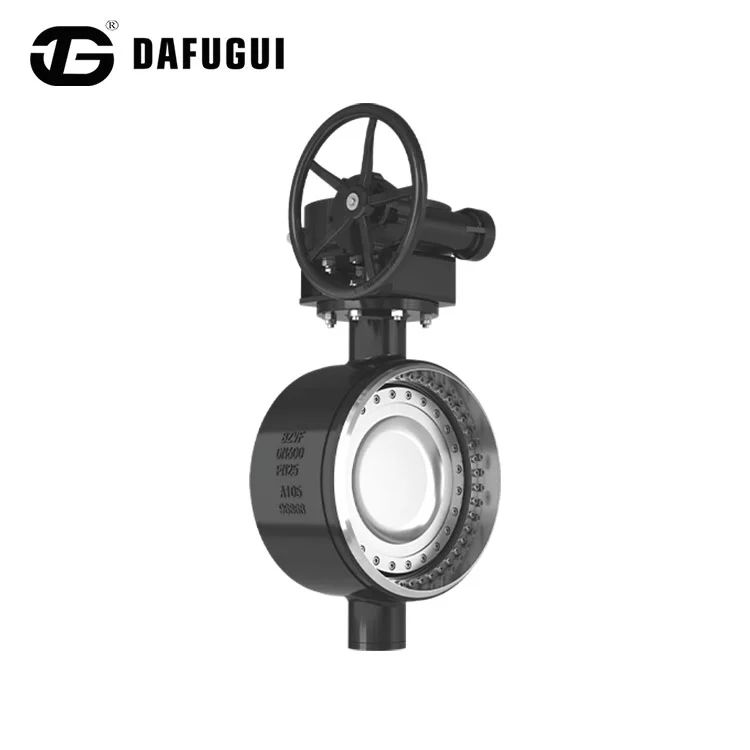
The Butterfly Valve in a hydropower surge tank application must close reliably under emergency conditions. The valve is typically equipped with a hydraulic actuator with a spring-return fail-safe mechanism. If the hydraulic pressure is lost, the spring closes the valve. The valve disc must be designed to withstand the reverse flow and the pressure surge without deformation. The table below shows the design features and their function.
| Design feature | Function | Specification |
| Spring-return actuator | Closes valve on power failure | Closing time 4 – 20 seconds |
| Double-offset disc | Reduces seat friction and wear | Seat contact only at final closure |
| Metal-to-metal seat | Withstands high velocity and debris | Leakage class IV or better |
| Heavy-duty shaft | Resists torque from flow and pressure | Safety factor 2.0 on yield |
| Trunnion mounting | Supports the disc under high pressure | Bearings on both sides |
In our factory, we manufacture Butterfly Valve units with double-offset discs and metal-to-metal seats for hydropower applications. The double-offset design ensures that the disc does not contact the seat until the final few degrees of closure, which reduces wear and torque. The metal-to-metal seat is suitable for high-velocity flow and for water containing sand or debris. Dafugui provides full hydraulic and structural calculations for each valve.
4. How Is the Valve Tested to Verify Emergency Closure Performance?
The Butterfly Valve must be tested to verify that it closes within the specified time and that it seals under the design pressure. The test includes three parts. The first is the closing time test. The valve is opened to 100 percent and then commanded to close. The time to reach 0 percent opening is measured. The second is the pressure test. The valve is subjected to 1.5 times the design pressure on the upstream side, and the leakage is measured. The third is the dynamic test. The valve is installed in a test loop with a pump and a surge tank. The pump is shut down suddenly, and the pressure rise and the valve closure are recorded. The table below shows the test parameters and acceptance criteria.
| Test | Parameter | Acceptance criteria |
| Closing time | Time from 100% to 0% opening | Within ±10% of specified time |
| Pressure test | 1.5x design pressure, 30 minutes | No leakage through seat |
| Dynamic test | Pressure rise after pump trip | < 30% of static head |
| Seat leakage | Reverse flow at design pressure | < 0.1% of rated flow |
In our factory, we perform the closing time test and the pressure test on every Butterfly Valve before shipment. The dynamic test is performed on a sample basis because it requires a large test loop. Dafugui provides the test report with each valve. We also offer on-site testing during commissioning.
Frequently Asked Questions About Butterfly Valves in Hydropower Surge Tank and Penstock Protection
Summary for Hydropower Engineers
The Butterfly Valve plays a critical role in surge tank and penstock protection during load rejection. It must close in a controlled manner to limit the water hammer pressure while allowing the surge tank to absorb the flow. The closing law, the actuator design, and the seat construction are all critical for reliable emergency closure. The valve must be tested to verify the closing time, the pressure containment, and the dynamic performance. By specifying the right butterfly valve and tuning the closing law, hydropower engineers can protect the penstock and the turbine from the damaging effects of water hammer. Dafugui Pipe Valve Co., Ltd. has been manufacturing Butterfly Valve units for hydropower for over 15 years and provides full engineering support for our customers.
Dafugui Pipe Valve Co., Ltd. manufactures Butterfly Valve units for hydropower with double-offset discs, metal-to-metal seats, and spring-return actuators. We provide closing law programming, pressure test reports, and on-site commissioning support.