

What Pressure Classes Are Available for ASME Flanged Floating Ball Valves
2026-11-13
Selecting the correct pressure rating is one of the most important decisions when specifying an ASME Flanged Floating Ball Valve. The pressure class determines wall thickness, flange dimensions, material requirements, and ultimately the safety margin of the valve in service. At Xiangzheng, we manufacture ASME Flanged Floating Ball Valves across the full range of standard ASME pressure classes, and this guide explains what each class means and where it is typically applied.
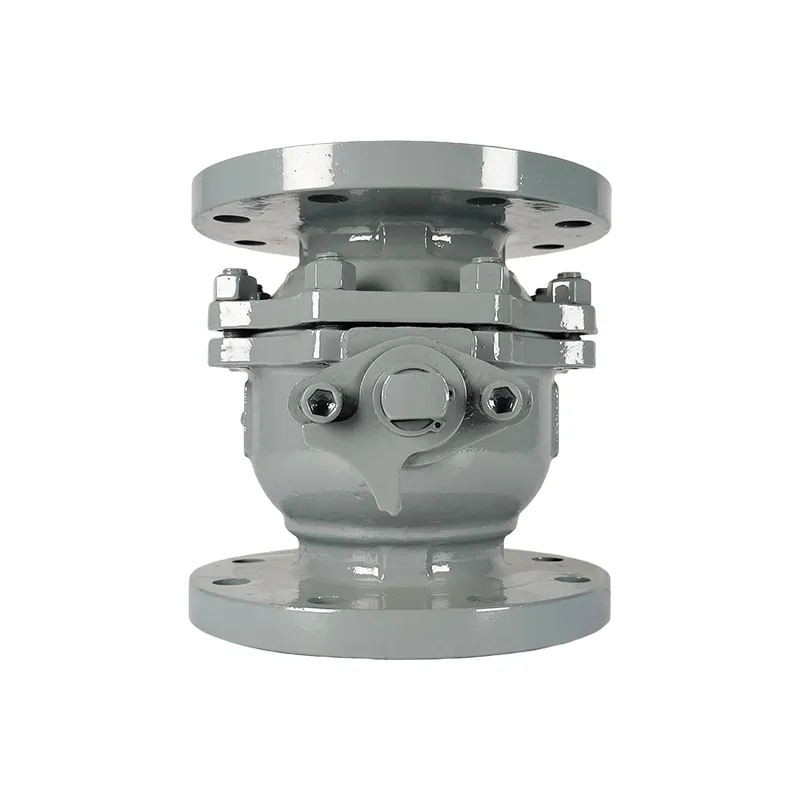
Understanding ASME Pressure Classes
Pressure classes for ASME Flanged Floating Ball Valves are defined primarily by ASME B16.34 (Valves – Flanged, Threaded, and Welding End) and ASME B16.5 (Pipe Flanges and Flanged Fittings). The class number is not a direct pressure in psi or bar; it is a reference designation that corresponds to a maximum allowable pressure that decreases as temperature rises.
Standard Pressure Classes Available
| Pressure Class | Typical Size Range | Common Body Materials | Typical Service |
|---|---|---|---|
| Class 150 | 1/2" – 12" | WCB, CF8, CF8M | Water, air, low-pressure process lines |
| Class 300 | 1/2" – 12" | WCB, CF8, CF8M | Moderate-pressure steam, oil, gas |
| Class 600 | 1/2" – 10" | WCB, CF8, CF8M | High-pressure process, power generation |
| Class 900 | 1/2" – 8" | WCB, WC6, CF8M | High-pressure oil and gas |
| Class 1500 | 1/2" – 6" | WC6, WC9, CF8M | Severe high-pressure service |
| Class 2500 | 1/2" – 4" | WC9, CF8M | Extreme high-pressure applications |
Key Selection Factors
-
Design temperature and pressure: Always verify the pressure-temperature rating from ASME B16.34 rather than relying on the class number alone.
-
Flange compatibility: Class 150 and 300 valves use ASME B16.5 flanges; higher classes require thicker flanges and more bolting.
-
Material derating: Carbon steel, stainless steel, and alloy steels have different allowable stress curves, which directly affect the usable pressure at elevated temperature.
-
End connection: Raised-face flanges are standard through Class 600; ring-type joint (RTJ) flanges are common for Class 900 and above.
-
Testing requirements: Higher classes generally require more stringent shell and seat leakage testing per API 598.
Why Class Selection Matters
An undersized pressure class creates a serious safety risk, while an oversized class adds unnecessary cost, weight, and flange mismatch. Xiangzheng engineers help customers match the ASME Flanged Floating Ball Valve pressure class to the actual design conditions, ensuring compliance and long service life.
Frequently Asked Questions
Q: What is the maximum pressure rating of an ASME Flanged Floating Ball Valve?
A: The highest standard class is Class 2500, which in carbon steel can handle cold working pressures up to approximately 6,170 psi (425 bar) at ambient temperature, decreasing at elevated temperatures per ASME B16.34.
Q: Can a Class 300 ASME Flanged Floating Ball Valve be used at 400°C?
A: Yes, but only within the derated allowable pressure for the specific body material at 400°C. Carbon steel loses significant strength above 350°C, so stainless or alloy steel is often recommended.
Q: How do I confirm the pressure class marked on an ASME Flanged Floating Ball Valve?
A: The class is cast or stamped on the valve body, usually near the flange. Always cross-check the nameplate, material certificate, and ASME B16.34 rating tables before installation.
Contact Us
Need help selecting the right pressure class for your project? Contact Xiangzheng today for expert engineering support, material recommendations, and a fast quotation on ASME Flanged Floating Ball Valves tailored to your pipeline conditions.