

What Makes Gate Valves Essential in Municipal Water Supply and Distribution Networks?
2026-09-08
In a typical municipal water distribution network, gate valves are the most numerous type of valve. They are also the most overlooked—until something goes wrong. When a water main breaks at 3:00 AM, the ability to isolate the affected section quickly depends entirely on the gate valves installed along the line. If the valve does not close fully, the repair crew is left working in a flooded trench. This is not a hypothetical scenario; it happens in every city, every year. The choice of gate valve—rising stem or non-rising, metal-seated or resilient-seated—determines whether that 3:00 AM repair takes 4 hours or 14 hours. This guide is written for municipal engineers who need to specify gate valves that will perform reliably over decades of service.
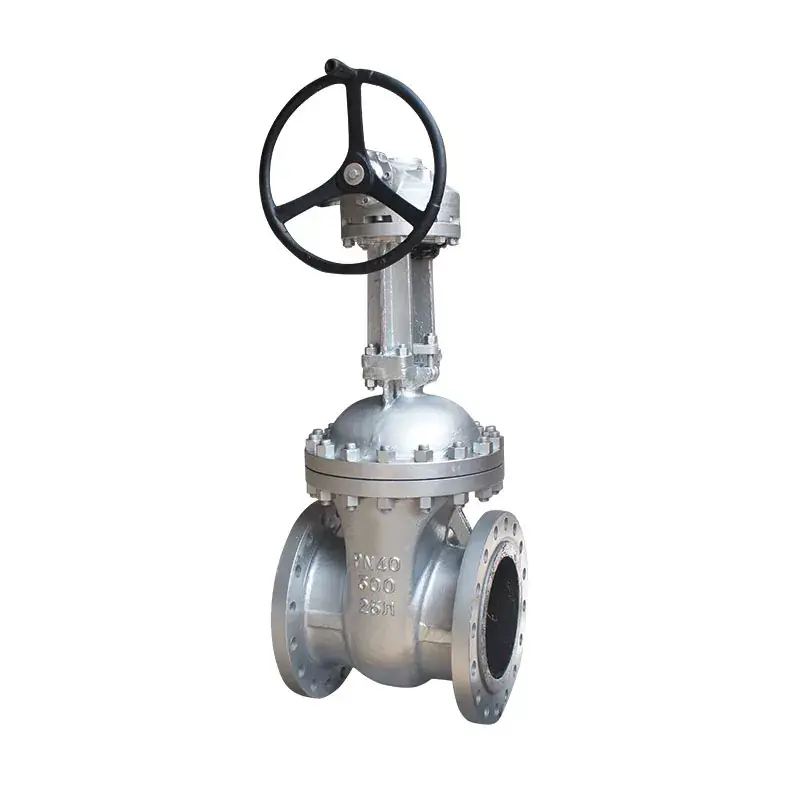
1. What Is the Primary Function of Gate Valves in a Water Distribution Network?
Gate Valves serve two primary functions in a water distribution network: isolation and flow control. The vast majority of Gate Valves are used for isolation—they are either fully open or fully closed. In the fully open position, the gate is retracted completely out of the flow path, creating a straight-through passage with minimal pressure drop. This is the key advantage of Gate Valves over butterfly valves or globe valves: the pressure loss through an open gate valve is negligible. In a typical 300 mm diameter pipeline, a fully open gate valve contributes less than 0.5 meter of head loss. This low pressure drop is essential for maintaining adequate water pressure at the service points, especially in networks with long transmission lines. In our factory, we manufacture Gate Valves with a smooth, unobstructed bore that is designed to match the pipe inner diameter, ensuring that there is no flow restriction when the valve is fully open.
Field observation: In a study of 200 water main breaks, the average repair time was extended by 45 percent when the isolation valve failed to close completely. The cause was typically sediment buildup on the valve seat or a worn gate.
Zhejiang Hengnuo Valve Manufacturing Co., Ltd. produces Gate Valves that are tested for bubble-tight shutoff at the full rated pressure. This means that when the valve is closed, there is no detectable leakage, allowing maintenance crews to isolate sections with confidence.
2. What Are the Critical Design Differences Between Rising Stem and Non-Rising Stem Gate Valves?
The choice between rising stem and non-rising stem Gate Valves is one of the first decisions a design engineer must make. In a rising stem valve, the stem moves upward when the valve is opened, providing a visual indication of the valve position. In a non-rising stem valve, the stem rotates in place and the gate moves inside the body, with no external indication of position. Rising stem valves are preferred for above-ground installations where visual position indication is valuable. Non-rising stem valves are used for buried installations where the valve is operated from a surface box and the vertical space is limited. The table below compares the two designs across the dimensions that matter to network operators.
| Design feature | Rising stem Gate Valve | Non-rising stem Gate Valve |
| Visual position indication | Yes (stem position visible) | No (requires rotation count) |
| Installation height requirement | Greater (requires clearance for stem) | Less (stem remains within body) |
| Typical application | Above-ground (pump stations, treatment plants) | Buried (distribution mains) |
| Maintenance access | Easier (stem and bonnet accessible) | More difficult (requires valve box access) |
| Stem corrosion exposure | Higher (threads exposed to atmosphere) | Lower (threads protected inside bonnet) |
In our factory, we manufacture both rising and non-rising stem Gate Valves. The stem threads on rising stem valves are coated with a dry lubricant to prevent galling, and the stem is protected with a zinc-rich paint to resist corrosion. For non-rising stem valves, the stem threads are fully enclosed and operate in an oil-filled chamber to prevent corrosion and ensure smooth operation.
3. How Does the Seat Material Affect Long-Term Shutoff Performance?
The seat is the sealing surface that the gate presses against when the valve is closed. The choice of seat material determines the leak-tightness and the durability of the valve. There are two main types of seats in Gate Valves: metal seats and resilient seats. Metal seats are machined from the same material as the valve body (typically cast iron or ductile iron) and are ground to a smooth finish. They can withstand high temperatures and high pressures, but they are susceptible to scoring from debris and require precise alignment to achieve a tight seal. Resilient seats are made from elastomeric materials such as EPDM or NBR, which provide a bubble-tight seal even when there is minor debris on the seat surface. Resilient-seated Gate Valves are the preferred choice for municipal water applications because they maintain their seal over many years of operation with minimal maintenance. The table below compares the two seat types.
| Seat type | Bubble-tight shutoff | Debris tolerance | Temperature range | Maintenance frequency |
| Metal seat (iron/brass) | Moderate (requires clean surfaces) | Poor (scratches easily) | -29°C to 260°C | Inspect annually, lap seats as needed |
| Resilient seat (EPDM/NBR) | Excellent (seals around debris) | Good (elastomer deforms to seal) | -29°C to 85°C (standard EPDM) | Virtually none (self-sealing) |
| Resilient seat (PTFE) | Excellent | Good | -29°C to 200°C | Minimal |
Zhejiang Hengnuo Valve Manufacturing Co., Ltd. produces resilient-seated Gate Valves with EPDM seats that are bonded to the gate or the body. The EPDM is certified for potable water applications and is tested to ensure it does not leach contaminants into the water.
4. What Are the Most Common Failure Modes and How Can They Be Prevented?
Gate Valves in municipal service fail in predictable ways. The most common failure mode is the accumulation of sediment and debris on the seat, which prevents the gate from fully closing. This is often caused by the valve being left partially open for extended periods, allowing debris to settle on the seat. The second most common failure is corrosion of the stem or the gate, which can cause the valve to seize or the gate to become loose. The third failure mode is wear of the resilient seat, which is typically caused by cycling the valve under high pressure. In our factory, we recommend a regular exercise program: each Gate Valve should be operated from fully closed to fully open and back to fully closed at least once per year. This prevents sediment from settling and redistributes the lubricant on the stem. We also recommend installing a valve box with a clear opening so that the operator can see the valve position and check for leaks.
Frequently Asked Questions About Gate Valves in Municipal Water Networks
Summary for Water Network Engineers and Operators
Gate Valves are an essential component of any municipal water distribution network. Their low pressure drop, reliable shutoff, and long service life make them the preferred choice for isolation applications. The key to successful long-term performance is selecting the right design for the application, installing the valve correctly, and implementing a regular exercise and inspection program. A well-maintained Gate Valve will provide decades of reliable service, ensuring that the network can be maintained and repaired with minimal disruption to customers. Our factory has been manufacturing Gate Valves for water applications for over 20 years, and we have seen the difference that good valve selection and maintenance makes over the life of a network.
Zhejiang Hengnuo Valve Manufacturing Co., Ltd. produces Gate Valves to AWWA, EN, and ISO standards. We provide full test documentation, including hydrostatic and seat leakage test results, with every valve.