

What Makes Ball Valves Effective in Preventing Clogging in Slurry and Sewage Systems?
2026-10-20
A maintenance supervisor at a municipal wastewater treatment plant tracks the pump station maintenance log. The station uses gate valves on the discharge lines. The valves are 150 mm size. The supervisor notes that the station has experienced 12 clogging events in the past two years. Each event requires the pump to be stopped, the valve to be opened, and the line to be manually cleaned. The average downtime is 4 hours. The supervisor proposes replacing the gate valves with Ball Valves. The plant manager asks for the justification. The supervisor explains that the gate valve has a cavity where solids accumulate, and the seat faces are exposed to the flow. The ball valve has a full-port design with no cavity, and the ball rotates against the seat to wipe away debris. This guide explains why ball valves are effective in preventing clogging in slurry and sewage systems.
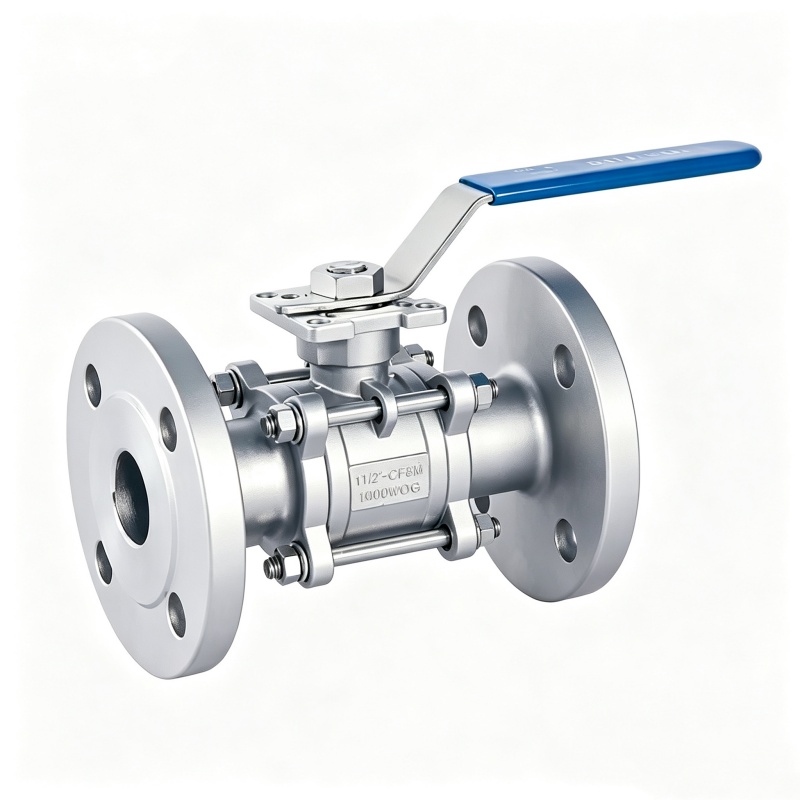
1. How Does the Full-Port Design Prevent Solids From Accumulating?
The most important feature of a Ball Valves for slurry and sewage service is the full-port design. In a full-port valve, the bore of the ball is the same diameter as the inside diameter of the pipe. When the valve is open, there is no restriction and no cavity for solids to settle. In a reduced-port valve, the bore is smaller than the pipe, which creates a step that traps solids and fibers. In a gate valve, the body has a cavity below the gate where solids accumulate when the valve is closed. The table below compares the flow path characteristics of different valve types.
| Valve type | Flow path | Solids accumulation risk | Typical application |
| Full-port ball valve | Straight-through, no cavity | Very low | Slurry, sewage, fibrous fluids |
| Reduced-port ball valve | Straight-through, smaller bore | Moderate | Clean fluids, limited space |
| Gate valve | Cavity below gate | High | Clean water, isolation |
| Globe valve | S-shaped, high resistance | High | Throttling, clean fluids |
In our factory, we manufacture Ball Valves with full-port design as the standard for slurry and sewage applications. The bore is machined to match the pipe inside diameter within 0.5 mm. We also polish the bore to a surface finish of Ra 0.4 microns to reduce the adhesion of solids. Wenzhou Joepai Valve Co., Ltd. has been manufacturing ball valves for over 15 years.
2. How Does the Rotating Ball Create a Scouring Action?
The second feature that makes a Ball Valves effective in preventing clogging is the scouring action of the rotating ball. When the valve is operated from open to closed, the ball rotates 90 degrees against the seat. The edge of the ball acts as a scraper that removes any solids that have adhered to the seat surface. This action is particularly important in sewage service, where fibrous materials and grease can coat the seat. The table below shows the scouring effect for different ball and seat designs.
| Ball and seat design | Scouring action | Debris clearance | Suitable for fibrous media |
| Standard ball, PTFE seat | Moderate | Good | Yes (with frequent operation) |
| V-notch ball, PTFE seat | High (cutting edge) | Excellent | Yes (for stringy solids) |
| Ball with scraper seat | Very high (seat scrapes ball) | Excellent | Yes (for grease and fibers) |
| Ball with spring-loaded seat | Moderate | Good | Yes (for abrasive slurries) |
Maintenance supervisor's note: In our plant, we switched from gate valves to full-port ball valves with scraper seats on the raw sewage lines. The clogging events dropped from 12 per year to 2 per year. The two remaining events were caused by large objects that would have clogged any valve. The scraper seat is particularly effective because it removes the grease and fiber buildup from the ball surface every time the valve is operated. We recommend that the valve be cycled at least once per week to maintain the scouring action.
3. What Seat Materials Are Best for Slurry and Sewage Service?
The seat material in a Ball Valves must resist abrasion from sand and grit in slurry service and chemical attack from sewage. The most common seat materials are PTFE, reinforced PTFE (RPTFE), PEEK, and polyurethane. PTFE is chemically inert but has low abrasion resistance. RPTFE has better abrasion resistance but slightly lower chemical resistance. PEEK has excellent abrasion resistance and good chemical resistance, but it is more expensive. Polyurethane has the best abrasion resistance but limited temperature range. The table below compares the seat materials for slurry and sewage service.
| Seat material | Abrasion resistance | Chemical resistance | Temperature range | Typical application |
| PTFE | Low | Excellent | -20°C to +200°C | Chemical sewage, clean fluids |
| RPTFE | Moderate | Very good | -20°C to +220°C | General sewage, mild slurry |
| PEEK | High | Good | -40°C to +250°C | Abrasive slurry, high temperature |
| Polyurethane | Very high | Moderate | -30°C to +80°C | Sand and grit slurry |
In our factory, we recommend RPTFE for municipal sewage service and PEEK for mining slurry service. We also offer a polyurethane seat for slurry with high sand content. The seat is the wearing component in a ball valve, so it should be selected based on the abrasiveness of the medium. Joepai provides a seat selection guide for each application.
4. How Should Ball Valves Be Installed and Maintained to Prevent Clogging?
The installation orientation and maintenance schedule affect the clogging performance of a Ball Valves. The valve should be installed with the stem vertical or horizontal, but not inverted. If the stem is inverted, the cavity around the stem can fill with debris, which can prevent the valve from operating. The valve should be cycled at least once per week to maintain the scouring action. The table below shows the recommended installation and maintenance practices.
| Practice | Recommendation | Reason |
| Installation orientation | Stem vertical or horizontal, not inverted | Prevents debris accumulation around stem |
| Cycling frequency | At least once per week | Maintains scouring action and seat cleanliness |
| Flushing | Flush with clean water after maintenance | Removes residual solids from the bore |
| Seat inspection | Every 6 months | Detects wear before leakage occurs |
| Stem lubrication | Every 3 months | Ensures smooth operation |
In our factory, we provide a maintenance kit with every Ball Valves order. The kit includes the recommended lubricant, a seat replacement tool, and a maintenance log template. Wenzhou Joepai Valve Co., Ltd. also offers a training program for the plant maintenance team. The training covers the disassembly, inspection, and reassembly of the valve.
Frequently Asked Questions About Ball Valves in Slurry and Sewage Systems
Summary for Maintenance Supervisors and Plant Engineers
Ball Valves are effective in preventing clogging in slurry and sewage systems because of their full-port design, which eliminates cavities where solids can accumulate, and their rotating ball, which provides a scouring action that removes debris from the seat. The seat material should be selected based on the abrasiveness and chemical composition of the medium. The installation orientation and cycling frequency are important for maintaining the anti-clogging performance. By selecting the right valve configuration and following the recommended maintenance practices, plants can reduce clogging events and downtime. Wenzhou Joepai Valve Co., Ltd. has been manufacturing Ball Valves for over 15 years and provides full application support for slurry and sewage systems.
Wenzhou Joepai Valve Co., Ltd. manufactures Ball Valves with full-port design, scraper seats, and RPTFE, PEEK, and polyurethane seat options. We provide seat selection guides, maintenance kits, and training programs for all of our products.