

What Is the Proper Bolting Torque Specification for Flanged GOST Globe Valves During Installation
2026-08-04
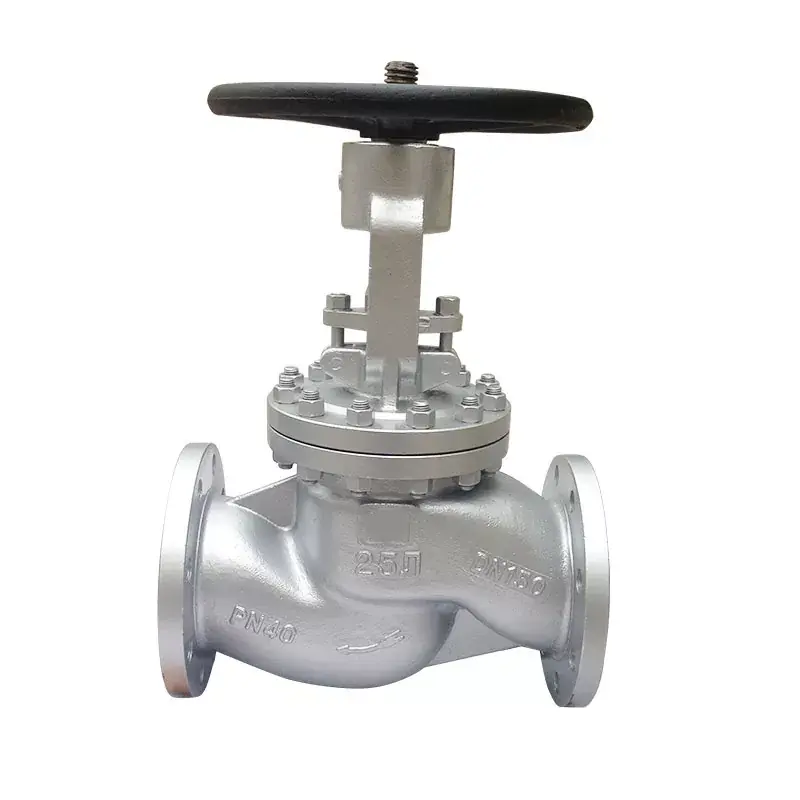
When installing flanged GOST Globe Valves, one of the most critical yet frequently overlooked parameters is the correct bolting torque. Under-tightening leads to leakage and flange joint failure, while over-tightening can distort the valve body, damage gaskets, or even strip threads. For engineers and maintenance teams working with Russian-standard piping systems, achieving the precise torque value is not a matter of guesswork—it requires reference to specific standards, gasket materials, bolt grades, and operating conditions. At Hanno, we have supplied GOST Globe Valves to over 200 industrial sites worldwide, and we consistently emphasize that torque specification is the single most decisive factor in flange joint reliability.
Why Standard Torque Charts Are Not Enough
Most general torque charts provide broad ranges (e.g., 200–300 N·m for M24 bolts), but GOST Globe Valves operate under unique dimensional and pressure specifications per GOST 12815 (flange dimensions) and GOST 12816 (flange design). The proper torque depends on at least five interdependent variables:
| Variable | Impact on Torque |
|---|---|
| Bolt material grade (e.g., 40X, 35X, or A193-B7) | Higher tensile strength allows higher torque without yield |
| Gasket type and material (spiral-wound, PTFE, asbestos-free) | Determines required gasket stress (MPa) for sealing |
| Flange pressure rating (PN 10, 16, 25, or 40) | Higher PN requires larger bolt diameters and higher clamp load |
| Lubrication condition (dry, oiled, or anti-seize) | Friction coefficient changes torque–tension relationship by ±30% |
| Operating temperature (ambient vs. 400°C) | Thermal expansion alters bolt elongation and residual stress |
The Calculated Approach for GOST Flanges
For flanged GOST Globe Valves, the industry-accepted method follows the EN 1591-1 or ASME PCC-1 calculation framework, adapted to GOST bolt circle dimensions. The fundamental equation is:
T = K × F × d
Where:
-
T = required torque (N·m)
-
K = nut factor (friction coefficient, typically 0.18–0.22 for lubricated steel)
-
F = desired bolt preload (N), calculated as 50–60% of bolt yield strength
-
d = nominal bolt diameter (m)
For a practical example, consider a DN 150, PN 25 GOST Globe Valve with 8 × M24 bolts (grade 40X, yield strength ≈ 640 MPa). Using a target preload of 55% yield, the calculated torque falls between 380–420 N·m with lubrication, but drops to 280–320 N·m when dry. Hanno recommends always applying a consistent molybdenum-disulfide anti-seize lubricant to all studs and nuts before tensioning, and recording the actual torque value per bolt in a sequential cross-pattern (3-pass method: 30% → 70% → 100%).
Step-by-Step Installation Best Practice
| Step | Action | Critical Check |
|---|---|---|
| 1 | Clean flange faces and bolt threads | Remove rust, old gasket debris, and burrs |
| 2 | Inspect bolt length and thread condition | Replace any bolt with damaged threads |
| 3 | Apply specified lubricant to threads, nut face, and washer | Use same lubricant batch for all bolts |
| 4 | Hand-tighten all bolts in cross-sequence | Ensure gasket sits concentrically |
| 5 | Torque to 30% of final value (cross-pattern) | Mark each bolt with a paint line |
| 6 | Torque to 70% (cross-pattern) | Check for equal gasket compression |
| 7 | Torque to 100% (final pass, same cross-pattern) | Measure flange parallelism (≤0.1 mm tolerance) |
| 8 | Re-torque after 24 hours (hot/cold cycle if applicable) | Compensate for gasket relaxation |
Common Mistakes Observed in the Field
Through our global service records, Hanno has identified three recurring errors when bolting GOST Globe Valves:
-
Using impact wrenches without torque control – This induces shock loads that exceed specified torque by up to 40%, risking bolt neck fracture.
-
Ignoring the gasket manufacturer’s recommended gasket stress – A PTFE gasket requires only 20–25 MPa, whereas a spiral-wound 316L/graphite needs 45–55 MPa – the torque must be adjusted accordingly.
-
One-pass tightening – This creates uneven load distribution, leading to flange bending and premature gasket blowout.
Frequently Asked Questions About GOST Globe Valves
Q1: Can I use the same torque specification for all PN ratings of GOST Globe Valves?
A: No. Each pressure rating (PN 10, 16, 25, 40) has different flange thicknesses, bolt circle diameters, and bolt counts. For example, a PN 10 DN 200 GOST Globe Valve uses 8 × M20 bolts with a recommended torque of approximately 180–220 N·m (lubricated), while a PN 40 DN 200 uses 12 × M27 bolts with torque values exceeding 600 N·m. Always refer to the valve’s nameplate data and the specific GOST 12815 flange dimension table. At Hanno, we provide a project-specific torque chart with every shipment of GOST Globe Valves to eliminate this ambiguity.
Q2: How does operating temperature change the required bolting torque for GOST Globe Valves?
A: Temperature affects both bolt elasticity and gasket compressibility. At elevated temperatures (above 200°C), carbon steel bolts undergo thermal expansion and creep relaxation, which reduces the effective clamp load over time. To compensate, engineers typically apply a "hot torque" value that is 10–15% higher than the cold torque, but this must be performed after the system reaches steady-state temperature and then cooled down for a re-torque check. For cryogenic applications (below –40°C), bolt materials become more brittle, so the torque must be reduced to 80–85% of ambient value to prevent thread galling. Hanno recommends conducting a bolt-stretch measurement (using ultrasonic gauges) rather than relying solely on torque wrenches for extreme-temperature GOST Globe Valves.
Q3: What torque value should I use if the flange gasket is replaced with a non-GOST equivalent?
A: This is a frequent field modification. If you replace the original GOST-certified gasket (e.g., paronite grade PON-B) with an ANSI/ASME spiral-wound gasket, the required gasket seating stress changes entirely. You must recalculate the torque based on the new gasket’s y (seating stress) and m (maintenance factor) per ASME VIII or EN 1591. As a rule of thumb, a soft gasket requires lower torque, while a metallic jacketed gasket demands significantly higher preload. Hanno advises customers to always consult the gasket supplier's data sheet and run a torque-verification test on one bolted joint assembly (using a load-cell or tension indicator) before applying the value to all flanges of GOST Globe Valves in the system.
Quality Assurance and Documentation
Every GOST Globe Valve supplied by Hanno undergoes a rigorous hydrostatic and pneumatic test per GOST 4666, with flange bolt-hole alignment verified against GOST 12815. We include in our documentation:
-
Recommended torque range (min–max) for each flange size and rating
-
Recommended lubricant type and batch number
-
Calibration certificate of the torque wrench used during factory testing
Final Recommendation
Do not treat bolting torque as an afterthought. The difference between a leak-free startup and an emergency shutdown often comes down to ±20 N·m per bolt. For critical services—steam, hydrogen, or corrosive media—Hanno strongly advises using hydraulic bolt tensioners instead of torque wrenches, as they provide ±3% accuracy compared to ±25% for manual torque tools. Additionally, always train your installation crew on the cross-pattern sequence and use painted witness marks to visually confirm that no bolt has loosened after thermal cycling.
Need a custom torque calculation sheet for your specific GOST Globe Valves?
Contact Hanno today with your valve size, PN rating, gasket type, and operating temperature—our engineering team will generate a verified torque specification within 24 hours, complete with step-by-step installation guidelines. Reach out via our website or email us directly for a prompt, expert response. Your plant reliability is our priority.