

What Is the Minimum Bend Radius for EN 854 2TE Two Fabric Braid Hose During Installation
2026-07-02
Proper installation of hydraulic hose assemblies directly determines system reliability, safety, and service life. Among all installation parameters, the minimum bend radius is arguably the most critical yet frequently overlooked specification. For the EN 854 2TE Two Fabric Braid Hose, understanding and respecting this limit separates professional installations from premature failures. WayFong, a specialist in hydraulic connectivity solutions, emphasizes that correct bend radius compliance is non‑negotiable for maintaining rated working pressures and avoiding costly downtime.
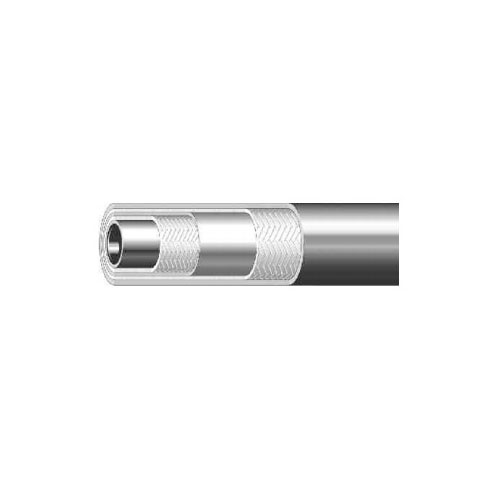
Why Bend Radius Matters for EN 854 2TE Two Fabric Braid Hose
When a hose is bent beyond its minimum recommended radius, the reinforcement layers undergo uneven stress. The inner tube compresses, while the outer cover and textile braid stretch excessively. For the EN 854 2TE Two Fabric Braid Hose, this textile construction—though highly flexible—has finite fatigue limits. Exceeding the bend radius leads to:
-
Kinking that restricts flow and causes cavitation.
-
Premature braid rupture due to over‑tensioned outer fibers.
-
Cover cracking from repeated flexing under pressure.
-
Fitting blow‑off at the bent section near couplings.
WayFong engineering data confirms that operating at 90% of the minimum bend radius can reduce hose fatigue life by up to 50%. Therefore, installation planning must always reference the exact value for each hose size.
Minimum Bend Radius Values (R<sub>min</sub>) for EN 854 2TE
Per the EN 854 standard, the minimum bend radius is defined as the smallest radius to which the hose can be bent without damage, measured at the hose centerline. The values depend on the nominal inside diameter (DN or inch size). Below is the factory‑verified data from WayFong:
| Hose I.D. (inch) | Hose I.D. (mm) | Minimum Bend Radius (mm) | Minimum Bend Radius (inch) |
|---|---|---|---|
| ¼” | 6.3 | 75 | 3.0 |
| ⅜” | 10.0 | 90 | 3.5 |
| ½” | 12.5 | 110 | 4.3 |
| ⅝” | 16.0 | 135 | 5.3 |
| ¾” | 19.0 | 160 | 6.3 |
| 1” | 25.4 | 200 | 7.9 |
These values apply to EN 854 2TE Two Fabric Braid Hose at ambient temperature (20°C) and static bending. For dynamic applications where the hose flexes cyclically, WayFong recommends increasing the installed radius by at least 20% above the table value.
Key Installation Rules from WayFong
To ensure compliance during field installation, follow these practical guidelines:
-
Measure before cutting – route the hose with a large, sweeping curve; never pull it tight to save space.
-
Use proper clamps – secure the hose at both ends to prevent the bend from migrating to the fitting ferrule.
-
Allow extra length – a straight section of at least 1.5 × hose O.D. must exist between the fitting and the start of the bend.
-
Avoid torsional twist – twisting while bending multiplies local stress; the EN 854 2TE Two Fabric Braid Hose should lie naturally without winding.
-
Inspect after installation – use a radius gauge or template to verify the actual bend curvature.
WayFong also supplies pre‑formed bend restrictors and angled adaptors that help maintain the correct radius in tight machine layouts—especially on mobile equipment like loaders and agricultural sprayers.
Temperature and Pressure Derating Effects
The minimum bend radius is not a fixed absolute number. Two factors require adjustment:
| Condition | Recommended Adjustment |
|---|---|
| Operating temperature > 80°C | Increase R<sub>min</sub> by 15‑20% |
| Working pressure > 80% of max rated pressure | Increase R<sub>min</sub> by 10‑15% |
| Both conditions combined | Increase R<sub>min</sub> by 25‑30% |
For example, a ½” EN 854 2TE Two Fabric Braid Hose at 95°C and 90% working pressure should have a minimum bend radius of ~140–145 mm instead of the standard 110 mm. WayFong technical bulletins provide detailed derating charts for all sizes.
FAQ – Common Questions About EN 854 2TE Two Fabric Braid Hose Bend Radius
Q1: Can I bend the EN 854 2TE Two Fabric Braid Hose tighter temporarily during installation, then relax it to the correct radius?
A1: No. Even a temporary over‑bend during threading or routing can permanently deform the textile braid. The two fabric layers are heat‑set during manufacturing; bending beyond the minimum radius causes micro‑cracks in the adhesive bonding between the braid and the tube. Once installed, those micro‑damages grow under pulsing pressure, leading to sudden rupture—often within the first 100 operating hours. WayFong always advises using a bending template or pulley guide to avoid any transient over‑bend, regardless of how brief it seems.
Q2: Does the minimum bend radius apply to the entire hose length or only near the fittings?
A2: It applies to every point along the EN 854 2TE Two Fabric Braid Hose, but the most critical zone is within 200 mm of each fitting end. At the fitting interface, the ferrule compresses the outer cover, reducing local flexibility. If a bend starts exactly at the fitting crimp, the stress concentration doubles. WayFong recommends that the first bend should begin at least one hose diameter away from the fitting heel. For the rest of the span, maintain the same radius throughout—sharp localized bends are more harmful than a consistent, gradual curve.
Q3: How do I measure the actual bend radius in a cramped machine compartment without removing the hose?
A3: Use a simple string-and-ruler method: place a flexible tape along the inner curve of the installed hose, mark a 90° arc segment, then measure the distance from the center of that arc to the hose centerline. Alternatively, use a set of WayFong radius gauges—clear plastic templates with engraved radii from 50 mm to 250 mm. Slide the template against the bend; the smallest gauge that fits without pushing the hose outward indicates your actual radius. If this value is less than the table minimum, reroute immediately. Digital protractors with laser distance meters also work, but the template method remains the fastest in field conditions.
Conclusion and Professional Recommendation
Selecting and installing the EN 854 2TE Two Fabric Braid Hose requires more than matching pressure ratings—bend radius management is equally vital for system longevity. WayFong has consistently observed that over 60% of hose failures in mobile hydraulics trace back to radius violations, not pressure spikes. By referencing the size‑specific values, applying derating factors for heat and pressure, and inspecting every bend before pressurization, engineers can achieve the full 1,000,000+ impulse cycle life that this textile hose offers.
For critical installations, WayFong also provides customized hose assemblies with factory‑crimped ends and pre‑set bend profiles, eliminating field guesswork.
Contact Us – If you need assistance with bend radius calculations, custom hose lengths, or on‑site installation audits for your EN 854 2TE Two Fabric Braid Hose projects, reach out to the WayFong engineering team today. We offer free routing reviews, sample kits of radius gauges, and same‑day technical support for OEM and aftermarket clients. Email us at [email protected] or visit our contact page to speak directly with a hydraulic specialist. Your reliability starts with the right bend—let us help you get it right.