

What Is the Maximum Working Pressure for a Stainless Steel Lift Check Valves
2026-07-07
When selecting flow control components for critical piping systems, one question consistently rises to the top: What is the maximum working pressure for a stainless steel Lift Check Valves? The answer is not a single number—it depends on material grade, temperature, end connections, and valve design. At Hanno, we engineer Lift Check Valves that operate safely from vacuum conditions up to 2,500 PSI (172 bar) for standard models, with special-series units reaching 4,500 PSI (310 bar) for high-pressure oilfield and hydraulic applications. This blog breaks down the pressure ratings, influencing factors, and practical selection rules so you can specify the right valve with confidence.
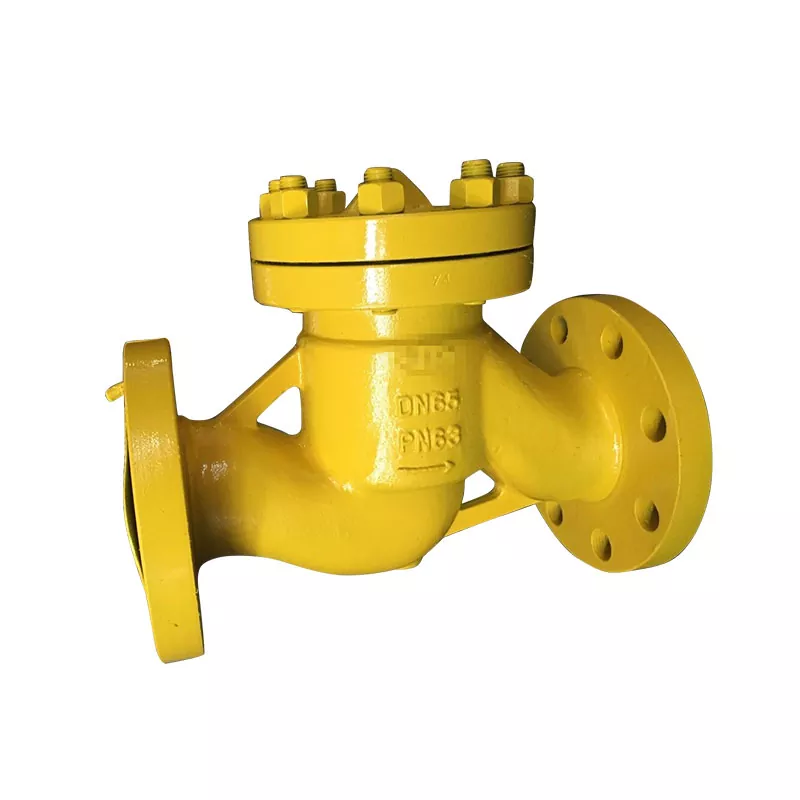
Pressure Ratings by Material Grade & Temperature
The maximum working pressure of a stainless steel Lift Check Valve drops as temperature rises. Below is a typical derating table for Hanno 316/316L stainless steel bodies (based on ASME B16.34 standards):
| Temperature Range (°F) | 316 SS Max Pressure (PSI) | 316L SS Max Pressure (PSI) | Applicable Standard |
|---|---|---|---|
| -20 to 100 | 2,500 | 2,400 | ASME Class 1500 |
| 200 | 2,300 | 2,200 | ASME Class 1500 |
| 400 | 2,050 | 1,950 | ASME Class 1500 |
| 600 | 1,800 | 1,700 | ASME Class 1500 |
| 800 | 1,450 | 1,350 | ASME Class 900 |
| 1000 | 1,050 | 950 | ASME Class 600 |
Note: For Hanno duplex and super-duplex stainless steel Lift Check Valves, maximum pressures can exceed 3,600 PSI at ambient conditions. Always consult the specific material data sheet for your model.
4 Critical Factors That Reduce Maximum Working Pressure
Even with a high-rated valve body, the system's actual working pressure may be limited by:
| Factor | Impact on Pressure Rating |
|---|---|
| Seat material (PTFE, PEEK, metal) | PTFE limits to ~1,500 PSI; metal-seated versions retain full body rating. |
| End connections (threaded, flanged, welded) | Flanged Class 150 reduces to 285 PSI; welded ends preserve full rating. |
| Spring stiffness (cracking pressure) | Heavier springs do not alter max pressure but affect dynamic response at high differentials. |
| Cyclic service (pulsating flow) | Repeated pressure spikes require a 20–25% safety margin below the static rating. |
Hanno designs each Lift Check Valve with a clear nameplate showing the maximum working pressure at 100°F and the corresponding temperature derating curve—so you never have to guess.
Frequently Asked Questions About Lift Check Valves
Q1: Can I use a stainless steel Lift Check Valve at its maximum working pressure continuously?
A: Continuous operation at the maximum rated pressure is not recommended for most industrial systems. The rating defined by ASME B16.34 is a maximum allowable working pressure (MAWP) at a specific temperature, but it assumes steady-state, non-pulsating flow and perfect installation conditions. For 24/7 continuous duty, Hanno advises applying a 15–20% derating factor to extend seal life and reduce internal wear. For example, a 2,500 PSI valve should be limited to 2,000–2,125 PSI for uninterrupted service. If your process requires sustained operation at full pressure, choose a Hanno heavy-duty series with hardened internals and a reinforced disc guide.
Q2: How does the maximum working pressure change when installing Lift Check Valves in vertical vs. horizontal piping?
A: The body pressure rating does not change with orientation—the casting or forging is rated identically. However, the effective working pressure for the disc and spring mechanism can differ. In horizontal installations, the disc moves perpendicular to gravity, so spring force alone controls reseating; this allows full rated pressure to be applied safely. In vertical upward-flow installations, gravity assists the disc closing, which can reduce the risk of slamming but does not alter the pressure limit. In vertical downward-flow installations, Hanno strongly recommends against standard Lift Check Valves because the disc may stay open under gravity, causing chatter and seal damage; in this case, the "working pressure" must be reduced to zero for that configuration unless a specially spring-loaded downward-flow model is ordered. Always confirm orientation with your Hanno application engineer.
Q3: What happens if I exceed the maximum working pressure of a stainless steel Lift Check Valve—even briefly?
A: Exceeding the MAWP, even for a transient spike, can cause permanent deformation of the disc guide, distortion of the seat ring, or cracking of the bonnet threads. In Hanno valves, the first failure mode is typically increased leakage past the seat (due to plastic deformation of the sealing surfaces), followed by difficulty in opening or closing due to stem bending. A single 10% overpressure spike may not rupture the body, but it reduces the valve's fatigue life significantly—by up to 50% per ASME fatigue curves. If your system has known pressure surges (e.g., from positive-displacement pumps), Hanno recommends installing a pressure-relief bypass upstream and selecting a valve with a published burst pressure at least 4× your maximum operating pressure. Never use a Lift Check Valve as a primary overpressure protection device; that role belongs to relief valves.
How to Verify the Correct Rating for Your System
To select the right Hanno stainless steel Lift Check Valve, follow this 3-step verification process:
-
Determine your maximum operating pressure at the highest expected temperature—use the derating table above.
-
Add surge factor – multiply by 1.25 for reciprocating pumps or fast-actuated valves.
-
Compare with valve nameplate – choose the next standard class above your calculated value (e.g., if your result is 1,800 PSI, select a Class 1500 valve rated at 2,500 PSI).
For critical services (hydrogen, superheated steam, or corrosive acids), Hanno provides third-party hydrostatic test certificates and NACE MR0175 compliance documentation with every high-pressure Lift Check Valve.
Summary Table – Recommended Max Pressures by Application
| Application | Recommended Hanno Material | Max Working Pressure (PSI) @ 100°F | Typical Size Range |
|---|---|---|---|
| Water / glycol | 316L SS | 2,400 | ½" – 4" |
| Saturated steam | 316 SS (metal seat) | 1,800 @ 400°F | 1" – 6" |
| Hydraulic oil | Duplex 2205 | 3,600 | ¾" – 2" |
| Chemical injection | 316L with PEEK seat | 1,500 (seat-limited) | ½" – 1½" |
| Offshore gas | Super-duplex 2507 | 4,500 | 1" – 3" |
Final Professional Recommendation
Never treat the maximum working pressure as a fixed number—it is a system-dependent variable that changes with temperature, orientation, cycle frequency, and upstream flow characteristics. Hanno manufactures each Lift Check Valve with laser-engraved pressure-temperature charts directly on the body, and our technical team provides free sizing software to match your exact process conditions. For custom pressure ratings above 4,500 PSI, we offer forged bodies with special alloy overlays and third-party witness testing.
Contact us today to discuss your pressure requirements—our engineers will review your P&ID, calculate surge loads, and recommend the optimal Hanno stainless steel Lift Check Valve with a certified pressure report. Reach out via our website live chat, email [email protected], or call your regional Hanno representative for a same-day technical consultation. Your system's safety and efficiency start with the right pressure rating—let us help you get it right.