

What Is the Maximum Pressure and Temperature Rating for a Metal Hard Seal Butterfly Valve
2026-07-10
When selecting a Metal Hard Seal Butterfly Valve for industrial piping systems, the two most critical performance parameters engineers ask about are pressure and temperature ratings. These ratings determine not only the valve's suitability for your application but also its safety margin, service life, and overall reliability. At Dafugui, we specialize in manufacturing high-performance Metal Hard Seal Butterfly Valves that withstand extreme conditions across oil & gas, power generation, chemical processing, and marine industries. Understanding these ratings is the first step toward making an informed procurement decision.
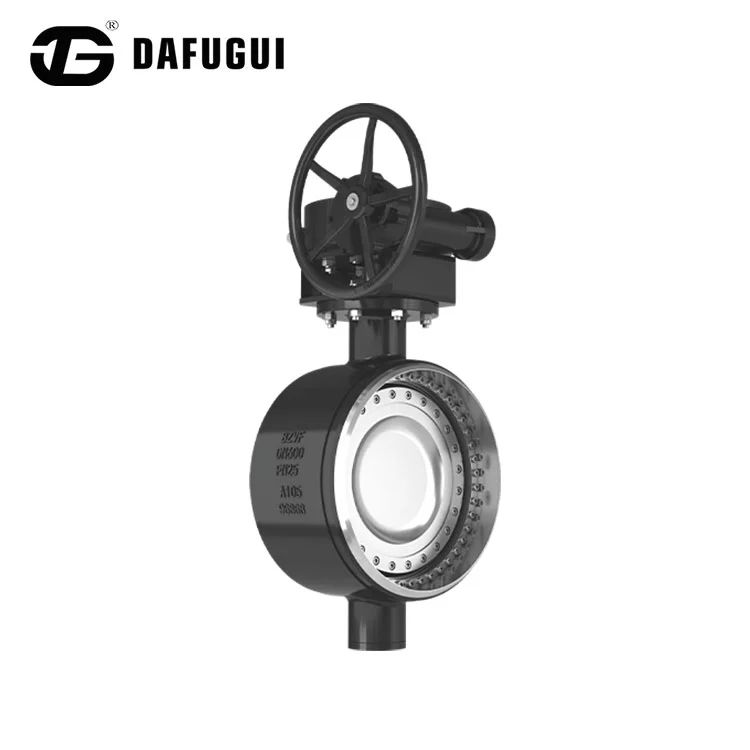
Pressure-Temperature Relationship: The Fundamental Rule
For any Metal Hard Seal Butterfly Valve, pressure and temperature are inversely correlated. As operating temperature rises, the maximum allowable working pressure decreases. This relationship is governed by industry standards such as ASME B16.34, API 609, and ISO 17292. The valve's body material, seat material, and disc thickness all contribute to the final rating curve.
Below is a general reference table for a standard Dafugui Metal Hard Seal Butterfly Valve (wafer/lug type, stainless steel body, hard-faced seat):
| Body Material | Temperature Range | Max Pressure (ANSI Class) | Max Pressure (Bar) |
|---|---|---|---|
| WCB Carbon Steel | -29°C to 425°C | Class 150 – 600 | 20 – 100 |
| CF8M (316 Stainless) | -40°C to 540°C | Class 150 – 900 | 20 – 150 |
| Duplex Stainless (2205) | -50°C to 450°C | Class 150 – 1500 | 20 – 260 |
| Inconel 625 | -200°C to 650°C | Class 300 – 2500 | 50 – 420 |
| Titanium Gr.2 | -70°C to 315°C | Class 150 – 600 | 20 – 100 |
Note: These values are typical for Dafugui standard series. Custom alloys and special seat overlays (Stellite, Colmonoy) can extend both limits.
Typical Maximum Ratings by Valve Class
For a standard Metal Hard Seal Butterfly Valve, the practical upper limits are:
| ANSI Class | Max Pressure @ 38°C | Max Temperature (Continuous) |
|---|---|---|
| Class 150 | 285 psi (19.6 bar) | 400°C (with metal seat) |
| Class 300 | 740 psi (51 bar) | 450°C (with Stellite facing) |
| Class 600 | 1480 psi (102 bar) | 540°C (with Inconel overlay) |
| Class 900 | 2220 psi (153 bar) | 540°C (special design) |
| Class 1500 | 3705 psi (255 bar) | 540°C (limited by bolting) |
Dafugui engineering team routinely tests our Metal Hard Seal Butterfly Valve products to 1.5× the rated pressure for hydrostatic shell integrity and 1.1× for seat leakage (ISO 5208 Rate A).
Critical Factors That Affect Real-World Ratings
-
Seat Material: Hardfacing alloys (Stellite 6, Stellite 21, or tungsten carbide) allow higher temperatures than 17-4PH or 304 stainless seats.
-
Stem Bearing Material: Graphite or silicon nitride bearings maintain low friction above 400°C; PTFE bearings degrade quickly.
-
Disc-to-Seat Interference: Triple-offset designs reduce friction and allow tighter shutoff at elevated temperatures.
-
End Connection Type: Lugged valves handle higher bending moments than wafer types in high-pressure pipelines.
-
Thermal Cycling: Frequent start/stop operations can reduce the effective rating by 15–20% due to differential expansion.
At Dafugui, every Metal Hard Seal Butterfly Valve is supplied with a customized pressure-temperature chart derived from actual FEA (finite element analysis) and prototype testing—not generic catalog values.
Frequently Asked Questions About Metal Hard Seal Butterfly Valve Ratings
Q1: Can a Metal Hard Seal Butterfly Valve handle steam service at 450°C and 40 bar continuously?
A: Yes, but only with the correct material combination. For steam at 450°C and 40 bar, Dafugui recommends a Metal Hard Seal Butterfly Valve with a CF8M body, Stellite 6 hard-faced seat, and Inconel 718 stem. The bolting must be B8M Class 2 or higher, and graphite spiral-wound gaskets are mandatory. At this condition, the pressure is within 80% of the Class 600 rating, which provides a safe margin. However, thermal cycling should be limited to 50 full cycles per year unless a proprietary anti-galling stem treatment is applied. We also advise installing a bypass line for warm-up to prevent thermal shock, which can crack the hardfacing layer.
Q2: What happens if I exceed the recommended temperature limit of my Metal Hard Seal Butterfly Valve?
A: Exceeding the maximum temperature limit—even by 20°C—can trigger multiple failure mechanisms simultaneously. First, the metallic seat hardfacing may undergo phase transformation (e.g., sigma phase formation in stainless steels), leading to brittleness and micro-cracking. Second, the stem bearings lose lubricity and start galling, which increases operating torque by 200–300% and may shear the stem. Third, the body gasket flange relaxes due to creep, causing external leakage. In extreme cases, the disc can warp permanently, jamming the valve in either the open or closed position. Dafugui strongly advises using our online sizing tool or contacting our application engineers to verify your actual operating profile—we never recommend running any Metal Hard Seal Butterfly Valve above 95% of its certified temperature limit.
Q3: How do I determine the correct pressure class for a Metal Hard Seal Butterfly Valve in a cyclic high-temperature process?
A: For cyclic duty (e.g., regenerative thermal oxidizers or batch reactors), you must apply a derating factor. Dafugui uses a three-step methodology: (1) Calculate the peak pressure at the peak temperature from the process data; (2) Apply a 1.25× safety factor for pressure spikes; (3) Reduce the selected Class rating by one full class if the number of thermal cycles exceeds 1,000 per year. For example, if your process runs at 35 bar and 400°C with 2,000 cycles/year, a Class 600 Metal Hard Seal Butterfly Valve is marginal—we would move up to Class 900, but with a reduced bore to keep torque acceptable. Additionally, we recommend a stem extension to keep packing temperatures below 300°C, and we always provide cyclic fatigue test reports upon request. No generic valve supplier can offer this level of detail—Dafugui includes cycle-specific rating charts with every order for cyclic applications.
Summary: How to Select the Right Rating
| Application Type | Recommended Class | Preferred Material | Max Temp |
|---|---|---|---|
| Sour gas, 200°C | Class 150 | Duplex 2205 | 250°C |
| Superheated steam, 520°C | Class 600 | Inconel 625 body + Stellite seat | 540°C |
| Cryogenic LNG, -160°C | Class 300 | CF8M with impact-tested stem | -196°C |
| Abrasive slurry, 150°C | Class 150 | WCB + tungsten carbide overlay | 250°C |
| High-pressure hydrogen, 200 bar @ 80°C | Class 1500 | 316L + nitrided disc | 150°C |
Final Professional Recommendation
Never base your selection solely on the nameplate rating. The true maximum pressure and temperature for a Metal Hard Seal Butterfly Valve depend on your specific media composition, cycle frequency, installation orientation, and upstream/downstream pipe loads. Dafugui provides fully documented pressure-temperature curves per ASME Section VIII, Div. 1, along with NACE MR0175 compliance where required. Our in-house foundry and CNC machining centers allow us to control every metallurgical step—from melt to final assembly—ensuring that the rating you specify is the rating you actually receive.
Ready to specify the right Metal Hard Seal Butterfly Valve for your extreme-duty application? Contact Dafugui today with your process data sheet, and our senior valve engineers will respond within 24 hours with a customized rating proposal, FEA validation, and a competitive quotation. Visit our website or email us directly—we are here to ensure your flow control operates safely, efficiently, and without unplanned downtime. Let Dafugui be your trusted partner in high-performance valve solutions.