

What Is the Difference Between Equal Percentage and Linear Control Valve Characteristics?
2026-09-17
1. What Are Inherent and Installed Characteristics?
The inherent characteristic of a control valve is the relationship between the valve opening percentage and the flow capacity (Cv) when the pressure drop across the valve is held constant. The installed characteristic is the relationship when the valve is installed in a system where the pressure drop varies with flow. This distinction is critical because the installed characteristic determines the actual control performance. For a linear valve, the inherent characteristic is a straight line: 50 percent open gives 50 percent of maximum Cv. For an equal percentage valve, the inherent characteristic is exponential: each equal increment of stem travel produces an equal percentage change in the existing flow. At 50 percent open, an equal percentage valve may provide only 15 to 20 percent of maximum Cv.
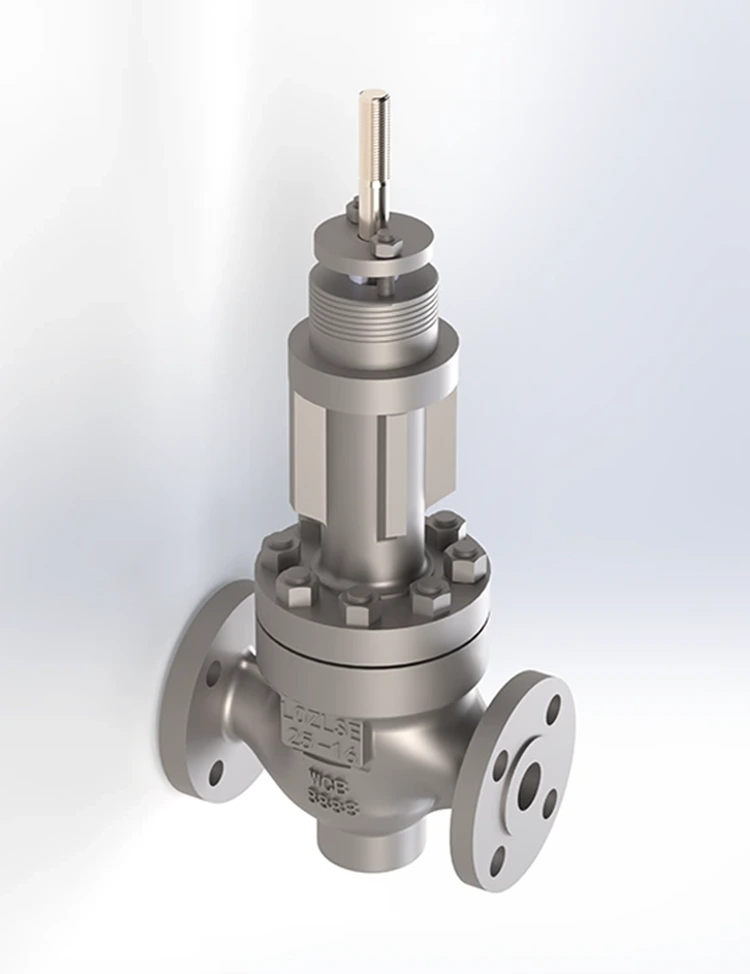
The table below compares the inherent Cv values for the two characteristics.
| Valve opening (%) | Linear Cv (% of max) | Equal percentage Cv (% of max) |
| 10 | 10 | 2.0 |
| 20 | 20 | 3.5 |
| 30 | 30 | 6.0 |
| 40 | 40 | 10.0 |
| 50 | 50 | 17.0 |
| 60 | 60 | 28.0 |
| 70 | 70 | 46.0 |
| 80 | 80 | 68.0 |
| 90 | 90 | 85.0 |
| 100 | 100 | 100 |
Zhejiang Lozose Intelligent Control Instrument Co., Ltd. manufactures Conventional Series Control Valve units with both linear and equal percentage trim options. Our factory tests the inherent characteristic of every valve on a flow bench to verify that it matches the published curve.
2. How Does System Pressure Drop Affect the Installed Characteristic?
The installed characteristic is determined by the ratio of the pressure drop across the valve at full flow to the total system pressure drop. This ratio is called the valve authority or the pressure drop ratio. When the valve authority is high (the valve accounts for most of the system pressure drop), the installed characteristic is close to the inherent characteristic. When the valve authority is low (the valve accounts for a small fraction of the total pressure drop), the installed characteristic becomes distorted. A linear valve in a low-authority system will have an installed characteristic that is closer to equal percentage. An equal percentage valve in a low-authority system will have an installed characteristic that is closer to linear. The table below shows the installed characteristic for different valve authorities.
| Valve authority | Installed characteristic (linear inherent) | Installed characteristic (equal % inherent) |
| High (0.7 – 1.0) | Nearly linear | Strongly equal percentage |
| Medium (0.3 – 0.7) | Moderately distorted | Moderately distorted |
| Low (0.1 – 0.3) | Approaches equal percentage | Approaches linear |
This is why the selection of the valve characteristic cannot be made in isolation. It must be based on the system design. In our factory, we work with process engineers to calculate the valve authority before recommending a characteristic. We provide a valve sizing and selection service that includes the installed characteristic calculation.
3. What Is the Practical Selection Criteria for Equal Percentage vs Linear?
The selection criteria for a Conventional Series Control Valve characteristic depend on the process dynamics. The following rules of thumb are widely used in the industry. Use an equal percentage characteristic when the process is a temperature control loop, a pressure control loop with a wide load range, or any loop where the pressure drop across the valve decreases as the flow increases. Use a linear characteristic when the process is a level control loop, a flow control loop with a constant pressure drop, or a loop where the pressure drop across the valve is relatively constant. The table below summarizes the typical applications for each characteristic.
| Process application | Recommended characteristic | Reason |
| Heat exchanger temperature control | Equal percentage | Wide load range, variable pressure drop |
| Pressure reduction station | Equal percentage | Variable downstream pressure |
| Level control in a surge tank | Linear | Constant head, self-regulating process |
| Flow control with a fixed restriction | Linear | Constant pressure drop across valve |
| Reactor feed control | Equal percentage | Wide range of feed rates |
When the process characteristics are uncertain, an equal percentage valve is often the safer choice because it provides better control at low flow and is more forgiving of oversized valves. A linear valve that is oversized will have poor resolution at low flow and may cause cycling.
4. How Does the Control Loop Tuning Differ Between the Two Characteristics?
The installed characteristic affects the loop gain, which is the product of the valve gain, the process gain, and the controller gain. If the installed characteristic is highly nonlinear, the loop gain will vary with the operating point, which can cause instability at one operating point and sluggish response at another. A well-designed loop will have a relatively constant loop gain. This is achieved by selecting a valve characteristic that compensates for the nonlinearity of the process. For example, if the process gain decreases as the load increases, an equal percentage valve (whose gain increases with flow) can compensate and keep the loop gain constant. If the process gain is constant, a linear valve is the better choice. In our factory, we provide support for loop tuning. We can calculate the installed gain and recommend controller settings for your specific process.
Practical tuning tip: If you are experiencing oscillation at low flow and sluggish response at high flow with a linear valve, switching to an equal percentage trim may solve the problem without changing the controller settings. This is one of the most common valve-related tuning issues in process plants.
Frequently Asked Questions About Control Valve Characteristics
Summary for Process Control Engineers
The difference between equal percentage and linear control valve characteristics is not just a matter of trim shape. It is a matter of how the valve interacts with the system pressure drop and the process gain. The correct selection requires an understanding of the valve authority, the process dynamics, and the control loop tuning. Equal percentage valves are generally preferred for temperature and pressure control loops with wide load ranges. Linear valves are preferred for level and flow control loops with constant pressure drops. Zhejiang Lozose Intelligent Control Instrument Co., Ltd. has been manufacturing Conventional Series Control Valve units for over 18 years and provides full engineering support for valve selection and loop tuning.
Lozose manufactures Conventional Series Control Valve units with linear, equal percentage, and modified parabolic trim options. We provide valve sizing calculations, installed characteristic analysis, and actuator selection support.