

What Is the Difference Between a Floating Ball Valve and a Motor Trunnion Mounted Ball Valve
2026-07-08
When selecting a quarter-turn isolation valve for high-pressure or large-diameter piping systems, engineers often hesitate between two popular designs: the floating ball valve and the Motor Trunnion Mounted Ball Valve. Both serve the same fundamental purpose—starting and stopping flow—but their internal geometry, mechanical support, and actuation requirements differ dramatically. At Tianhong, we have engineered and supplied thousands of these valves across oil & gas, chemical, and power generation projects. Understanding these differences is not just academic; it directly affects your system’s reliability, maintenance costs, and safety margins. This article breaks down the technical distinctions, operational trade-offs, and selection criteria to help you make an informed decision.
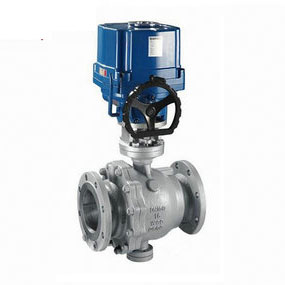
Core Design Principle: How Each Valve Works
| Feature | Floating Ball Valve | Motor Trunnion Mounted Ball Valve |
|---|---|---|
| Ball Support | The ball is not fixed; it “floats” between two upstream and downstream seats. | The ball is mechanically anchored at the top and bottom via trunnion bearings (shafts). |
| Sealing Mechanism | Upstream line pressure pushes the ball against the downstream seat to create a seal. | Line pressure is absorbed by the trunnion bearings; seats are spring-energized to move against the ball. |
| Torque Requirement | Higher torque, especially at high differential pressures. | Lower and more stable torque due to fixed ball and bearing-supported rotation. |
| Typical Size Range | ≤ DN 300 (12 inches) | DN 50 to DN 1200+ (2 to 48+ inches) |
| Pressure Rating | Up to Class 600 (limited by seat friction) | Up to Class 2500 and beyond |
| Actuator Type | Usually manual lever or small pneumatic actuator. | Almost always requires a Motor Trunnion Mounted Ball Valve actuator (electric or hydraulic) due to size and fail-safe needs. |
Operational Differences Under Real-World Conditions
The Motor Trunnion Mounted Ball Valve excels in large-bore, high-pressure applications because the trunnion bearings absorb the fluid thrust, meaning the operating torque remains nearly constant regardless of upstream pressure. In contrast, a floating ball valve sees torque increase proportionally with pressure, which can lead to actuator oversizing and stem galling over time.
For example, in a 16-inch Class 900 gas pipeline, a floating ball design would require an impractically large electric motor and frequent seat replacement. Tianhong's Motor Trunnion Mounted Ball Valve series solves this by using double-piston-effect (DPE) seats that seal bidirectionally while keeping breakaway torque within 60% of the floating design's requirement. Additionally, the trunnion design allows for fire-safe, anti-blowout stems and lower fugitive emissions—critical for modern ESG-compliant facilities.
Maintenance and Lifecycle Cost Comparison
| Maintenance Factor | Floating Ball Valve | Motor Trunnion Mounted Ball Valve |
|---|---|---|
| Seat Wear | Seats wear unevenly; must be replaced as a pair. | Seats are individually replaceable inline (top-entry or split-body). |
| Bearing Maintenance | None (no bearings). | Trunnion bearings need periodic lubrication and wear inspection. |
| Actuator Overhaul | Frequent due to high cyclic torque degradation. | Less frequent due to consistent torque profile. |
| Mean Time Between Failures (MTBF) | 50,000–100,000 cycles (clean service). | 200,000+ cycles with Tianhong's hardened bearing system. |
| Spare Parts Cost | Lower per piece but higher frequency. | Higher upfront but lower total cost of ownership over 10 years. |
A Motor Trunnion Mounted Ball Valve typically costs 40–60% more upfront than an equivalent floating valve. However, in critical services such as crude oil shipping or high-temperature steam, the Motor Trunnion Mounted Ball Valve pays back the premium within 18 months through reduced downtime and extended packing life.
Motor Trunnion Mounted Ball Valve – FAQ (Frequently Asked Questions)
Q1: Can a Motor Trunnion Mounted Ball Valve be used in bidirectional flow, or does it have a preferred flow direction?
A1: Yes, most Motor Trunnion Mounted Ball Valve designs are fully bidirectional, provided they are equipped with double-piston-effect seats. However, Tianhong recommends checking the nameplate because some single-piston-effect (SPE) variants are directional to achieve bubble-tight shutoff in one direction. For bidirectional service, always specify DPE seats and trunnion-mounted construction. The valve's flow direction does not affect the bearing load, unlike floating valves where flow direction changes seat loading.
Q2: How do you size an electric actuator for a Motor Trunnion Mounted Ball Valve, and what safety factor is recommended?
A2: Actuator sizing requires three torque values: breakaway (starting), running, and seating torque. For a Motor Trunnion Mounted Ball Valve, the breakaway torque is typically 1.3× the running torque, while floating valves can have breakaway torques up to 2.5× running. Tianhong advises using a safety factor of 1.25–1.5 over the maximum calculated torque, and always include a torque limiter to protect the stem. For motor-operated valves, also consider the motor's thermal duty cycle—do not exceed 20% on/off time for heavy-duty services.
Q3: What are the signs that the trunnion bearings in a Motor Trunnion Mounted Ball Valve need replacement?
A3: The earliest indicators are a gradual increase in operating current (for electric motors) and unusual low-frequency vibration during the last 10% of travel. As bearings wear, the ball may sag, causing uneven seat contact and higher fugitive emissions. Tianhong recommends checking bearing radial clearance annually using dial gauges—if clearance exceeds 0.002 inches per inch of shaft diameter, schedule a bearing replacement. Never attempt to weld or heat-straighten a worn trunnion shaft; always replace with factory-matched components.
Selection Decision Matrix (When to Choose Which)
| Application Condition | Recommendation |
|---|---|
| Line size ≤ 6 inches, Class 150–600, clean water/gas | Floating ball valve (cost-effective) |
| Line size ≥ 10 inches, any pressure class | Motor Trunnion Mounted Ball Valve |
| High cycle frequency (> 50 cycles/day) | Motor Trunnion Mounted Ball Valve (bearing support reduces fatigue) |
| Slurry or abrasive media | Motor Trunnion Mounted Ball Valve with tungsten-carbide-coated ball & seats |
| Cryogenic (-196°C) or high-temperature (450°C+) | Motor Trunnion Mounted Ball Valve (extended stem and thermal break) |
| Emergency shutdown (ESD) with tight shutoff | Motor Trunnion Mounted Ball Valve (lower torque = faster stroking) |
Why Tianhong Stands Out
Every Motor Trunnion Mounted Ball Valve from Tianhong undergoes 100% hydrostatic, pneumatic, and fugitive emission testing per ISO 15848-1. Our trunnion bearings are made from reinforced PTFE with 25% carbon graphite, ensuring low friction even after 10,000 cycles. We also offer modular electric actuators with Profibus, Modbus, or Foundation Fieldbus compatibility, making our Motor Trunnion Mounted Ball Valve solutions Industry 4.0-ready.
Final Verdict
If your application involves small lines, low pressures, and infrequent operation, a floating ball valve remains a viable, budget-friendly choice. However, for any critical, large-diameter, high-pressure, or high-cycle service, the Motor Trunnion Mounted Ball Valve is the superior engineering solution. Its fixed-ball geometry, lower torque, longer seat life, and easier maintainability translate into real operational savings. At Tianhong, we have witnessed plants reduce their valve-related downtime by over 70% simply by switching from floating to trunnion-mounted designs in their most demanding services.
Ready to upgrade your flow control system? Contact Tianhong today for a tailored valve selection sheet, torque calculation report, and a 3D model of our Motor Trunnion Mounted Ball Valve range. Our application engineers are available for live remote walkthroughs and can deliver factory test videos within 48 hours.