

What Is the Correct Bolting Torque for Installing a Forged National Standard Globe Valve in a Flanged Pipeline
2026-06-18
Proper installation of a Forged National Standard Globe Valve directly determines its service life, leak-tightness, and operational safety. Among all installation steps, bolting torque is the most frequently miscalculated parameter. Incorrect torque leads to flange leakage, gasket extrusion, or even valve body distortion. For industrial facilities relying on Huadu’s precision-engineered Forged National Standard Globe Valve, following the correct torque procedure is not optional—it is a prerequisite for reliable performance.
This guide provides a data-driven approach to bolting torque, covering calculation, tool selection, sequence, and real-world verification. Every engineer and maintenance lead should treat torque as a critical control point, not a rough estimate.
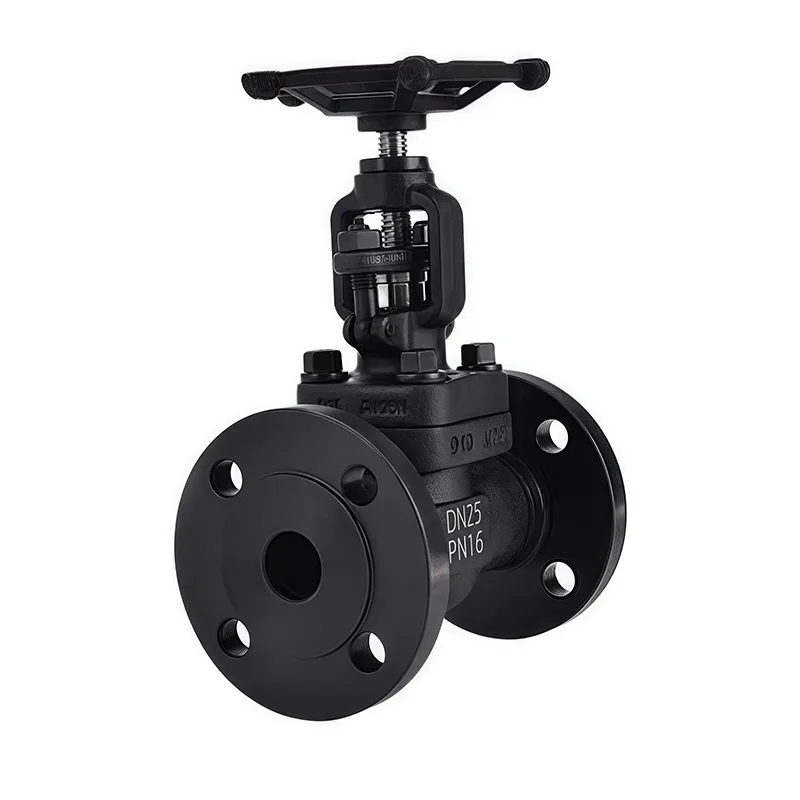
Why Torque Accuracy Matters for a Forged National Standard Globe Valve
A Forged National Standard Globe Valve operates under extreme conditions: high temperature, high pressure, and often corrosive media. The flange bolting must maintain uniform gasket compression to prevent fugitive emissions. Under-torquing causes leakage; over-torquing deforms the flange faces or shears the studs. Huadu recommends torque values based on ASTM A193 grade B7 studs and spiral-wound gaskets, but site conditions—lubrication, thread condition, and flange finish—all affect the final applied torque.
The Standard Torque Calculation Formula
For any Forged National Standard Globe Valve with raised-face flanges, the target torque (T) is derived from:
T = K × D × F
Where:
-
T = Torque (ft-lb or N·m)
-
K = Nut factor (0.15–0.22, depending on lubricant)
-
D = Nominal bolt diameter (inches or mm)
-
F = Desired bolt preload (lb or N)
Preload is typically 50%–70% of the bolt’s yield strength. For Huadu valves, the factory test report includes a recommended preload range for each size class.
Recommended Torque Ranges for Common Sizes
The table below gives baseline torque values for a Forged National Standard Globe Valve with Class 600 flanges, using lubricated B7 studs (K=0.18). Always verify with your specific gasket type and service temperature.
| Valve Size (inches) | Bolt Diameter (inches) | Recommended Torque (ft-lb) | Torque (N·m) |
|---|---|---|---|
| 1” | 5/8” | 110 – 130 | 149 – 176 |
| 1.5” | 3/4” | 190 – 220 | 258 – 298 |
| 2” | 7/8” | 290 – 340 | 393 – 461 |
| 3” | 1” | 450 – 520 | 610 – 705 |
| 4” | 1⅛” | 630 – 730 | 854 – 990 |
*Note: These values assume dry-thread calibration. Huadu advises reducing torque by 15% if using PTFE-based lubricants.*
Step-by-Step Tightening Sequence for a Forged National Standard Globe Valve
Flange joint integrity depends on pattern, not just magnitude. Follow this star-pattern sequence for all Huadu Forged National Standard Globe Valve installations:
-
Hand-tighten all nuts until finger-tight.
-
Pass 1 – Apply 30% of target torque in a star pattern.
-
Pass 2 – Apply 60% of target torque, star pattern.
-
Pass 3 – Apply 100% of target torque, star pattern.
-
Final pass – Clockwise rotation, verify each nut turns 5°–10° maximum.
Tools and Verification Methods
Manual torque wrenches are acceptable for smaller sizes. For 3” and above, Huadu strongly recommends hydraulic torque wrenches with ±3% accuracy. After tightening, use one of these verification methods:
-
Turn-of-nut method – measure rotation from snug condition.
-
Dial indicator – check flange gap uniformity (max variation <0.002”).
-
Ultrasonic bolt elongation – most accurate for critical services.
Frequently Asked Questions About Forged National Standard Globe Valve Bolting
Q1: Can I use the same torque value for a Forged National Standard Globe Valve at 400°C as I do at ambient temperature?
A: No. High temperature reduces bolt yield strength and alters gasket relaxation. For every 100°C above 100°C, reduce the target preload by approximately 5%–7% unless using creep-resistant studs (e.g., B16). Huadu provides temperature-derating charts with every Forged National Standard Globe Valve shipment for Class 800 and above. Always re-torque after the first thermal cycle—shut down, cool to ambient, and apply a secondary torque pass at 95% of the cold value to compensate for relaxation.
Q2: How do I identify if my Forged National Standard Globe Valve flanges are damaged from previous over-torquing?
A: Visual signs include radial scratches on flange faces, compressed or extruded gasket material beyond the flange OD, and studs that bind during removal. More precisely, measure flange flatness with a straightedge and feeler gauge—deviation exceeding 0.005” per inch of flange diameter indicates distortion. For Huadu valves, replacement flange kits are available, but if the body flange is warped, the entire Forged National Standard Globe Valve must be recertified. We recommend dye-penetrant inspection on the flange hub area after any severe over-torque incident.
Q3: What is the maximum allowable torque for a Forged National Standard Globe Valve without voiding the warranty?
A: Huadu warrants the valve body and bonnet for flange bolting loads up to 75% of the stud’s proof load, provided the torque is applied in a star pattern and gasket crush is controlled. Exceeding 100% of the table values above risks distorting the integral seat or bonnet gasket groove. For absolute limits, refer to the nameplate’s “MAST” (Maximum Allowable Stem Torque) — but for bolting, the hard stop is flange yield, not stem torque. Always contact Huadu technical support if your application requires torque above 110% of our published range; we will perform finite-element analysis for your specific pressure class.
Common Mistakes to Avoid
-
Using impact wrenches without torque control – leads to scatter > ±30%.
-
Mixing lubricants – oil vs. anti-seize changes K-factor by 0.05, altering preload by 25%.
-
Tightening in a circular pattern – causes gasket crushing on one side and leakage on the opposite.
-
Ignoring stud thread damage – reusing damaged studs reduces effective preload by up to 40%.
Huadu offers pre-matched stud-and-nut sets with factory-applied molybdenum disulfide coating, eliminating guesswork for every Forged National Standard Globe Valve installation.
Final Verification Before Line Pressurization
After torque completion, perform a hydrostatic test at 1.5× design pressure. Monitor the flange joint for 15 minutes. If any weepage appears, retorque all nuts to 100% target in the same star pattern—do not exceed 105%. Record the final torque value and ambient temperature in the maintenance log. This documentation supports traceability, a key requirement of API 6D and ASME PCC-1.
Contact Us for Expert Support on Your Forged National Standard Globe Valve Installation
Every pipeline system has unique variables—thermal cycling, vibration, and external loads. Generic torque tables are starting points, not final answers. Huadu’s engineering team provides site-specific bolting calculations, including flange stiffness analysis and gasket stress verification, for your exact operating conditions. Whether you are commissioning a new Forged National Standard Globe Valve or retrofitting an existing station, we are ready to assist.
Reach out to Huadu today through our website or regional technical hotline. Share your valve size, pressure class, and service temperature, and we will deliver a customized torque procedure within one business day. Do not leave flange integrity to chance—let Huadu help you bolt it right, the first time. Contact us now for a free torque checklist and installation template tailored to your Forged National Standard Globe Valve model.