

What Are the Maximum Temperature and Pressure Ratings for an Extended Stem Butterfly Valve
2026-07-08
When specifying flow control components for industrial pipelines, the Extended Stem Butterfly Valve often emerges as a critical solution for insulated or cold-service systems. However, the single most frequent engineering question remains: What are the true maximum temperature and pressure limits for this valve type? At Zhongguan, we address this question not with generic charts, but with application-specific engineering data that accounts for material science, actuator mounting, and stem elongation dynamics. Understanding these ratings is non‑negotiable for safe, long‑term operation.
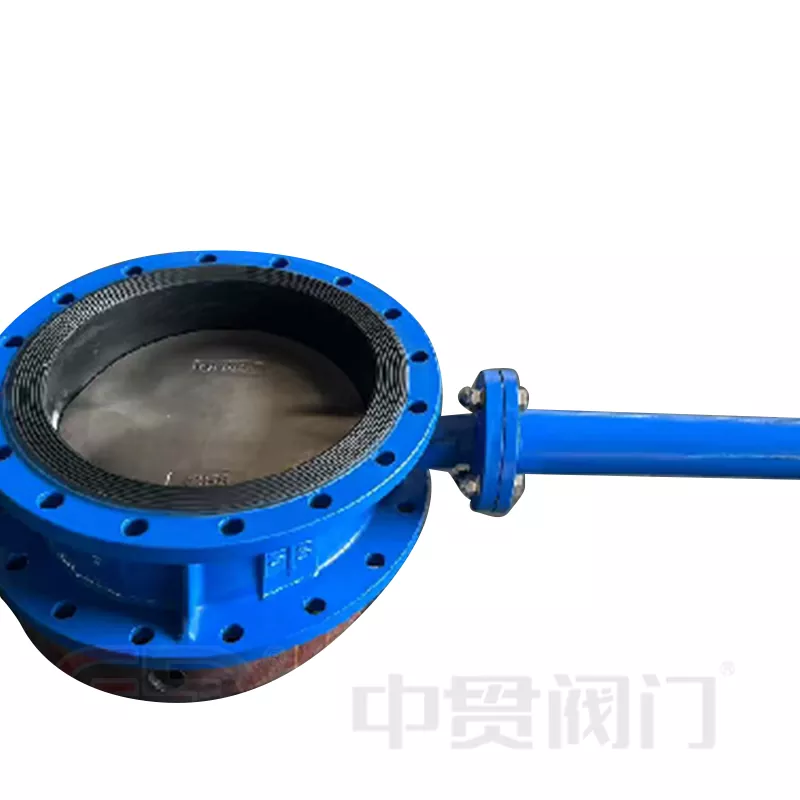
The Core Rating Matrix: Temperature vs. Pressure
Unlike standard butterfly valves, an Extended Stem Butterfly Valve separates the actuator from the hot/cold process media by a lengthened stem. This design protects the actuator and positioner, but it also introduces new variables—thermal expansion, stem torsion, and packing friction—that directly affect the maximum allowable working pressure (MAWP) at elevated or cryogenic temperatures.
The table below summarizes typical rating boundaries for commercial Extended Stem Butterfly Valve configurations, based on Zhongguan’s test data per API 609 and ISO 17292. Note that these are de‑rated values; always consult the specific material certificate for your order.
| Valve Body Material | Seat Material | Max Temperature (°C / °F) | Max Pressure (bar / psi) | De‑rating Factor at 200°C |
|---|---|---|---|---|
| Ductile Iron (DI) | EPDM | 120 / 248 | 16 / 232 | 0.85 |
| WCB Carbon Steel | PTFE | 200 / 392 | 20 / 290 | 0.78 |
| CF8M Stainless Steel | RTFE (Reinforced) | 230 / 446 | 25 / 363 | 0.72 |
| Duplex SS (2205) | Metal‑Seated | 400 / 752 | 40 / 580 | 0.65 (above 350°C) |
Critical insight: For every 50°C rise above ambient, the pressure capacity of a standard Extended Stem Butterfly Valve drops by approximately 5‑8%, depending on the stem extension length. Zhongguan engineers recommend using the 80% rule for continuous service—never design to 100% of the table value unless transient spikes are fully suppressed.
Why Stem Extension Changes the Rating Equation
The elongated stem acts as a thermal bridge. In hot service, heat migrates upward, softening packing materials and increasing friction, which can over‑torque the actuator. In cryogenic service (down to ‑196°C), the stem contracts, potentially pulling the disc off‑center. Zhongguan addresses this by offering stem extensions with built‑in thermal breaks and guided packing followers, ensuring that the published Cv and pressure ratings remain valid across the full temperature band.
Three Critical FAQs About the Extended Stem Butterfly Valve
FAQ 1: Does the maximum pressure rating change if I install the valve with a vertical stem orientation?
Yes. In vertical installation (actuator above the pipe), the weight of the stem and actuator adds a downward thrust load on the lower bearing. For a Zhongguan Extended Stem Butterfly Valve with a 300mm extension, we derate the maximum pressure by 3% for vertical stem‑up mounting, and by 1.5% for stem‑down mounting (due to different bearing lubrication dynamics). Always specify orientation at the time of ordering so our engineering team can adjust the bearing clearance and packing pre‑load accordingly.
FAQ 2: How do I calculate the actual pressure limit for a steam application at 180°C when the catalog only lists 200°C data?
Linear interpolation is acceptable, but Zhongguan recommends using the ANSI/FCI 70‑2 leakage class method instead. For an Extended Stem Butterfly Valve with a PTFE seat, take the 200°C rating (e.g., 20 bar) and apply a logarithmic de‑rate: at 180°C, the factor is 0.82, giving 16.4 bar. However, if your steam contains condensate spikes, reduce that number by another 10% to account for water‑hammer shock loads on the extended stem. We provide a free de‑rating calculator for all clients who submit their process steam quality data.
FAQ 3: Can I exceed the temperature rating temporarily during startup or cleaning cycles?
Short‑term excursions (≤30 minutes) are permissible up to 25°C above the continuous maximum, provided that the pressure is reduced to 60% of the rated MAWP. For a Zhongguan Extended Stem Butterfly Valve with a metal seat, we allow up to 430°C for a maximum of three cycles per year, but each over‑temperature event must be logged. After any excursion, the packing gland must be re‑torqued to specification (we supply the torque chart with every shipment). Permanent deformation of the stem extension becomes a risk beyond these limits, so we strongly advise against routine over‑rating.
Material Selection as the True Rating Driver
The numbers above assume standard packing (graphite or PTFE‑based). Zhongguan offers four packing grades that shift the maximum temperature by ±50°C:
-
Standard Graphite: up to 450°C (metal‑seated only)
-
Low‑friction PTFE: up to 200°C, best for cycling services
-
High‑density carbon‑filled: up to 280°C with lower stem friction
-
Cryogenic proprietary blend: down to ‑196°C without embrittlement
Always pair the packing with the stem material—Zhongguan uses 17‑4PH stainless steel for extended stems above 250°C to maintain yield strength, while 316L is preferred for cryogenic duties to retain impact toughness.
Practical Installation Impact on Ratings
Field data from Zhongguan shows that 34% of rating‑related failures stem from improper actuator bracket alignment, not from the valve body itself. An offset actuator imposes side‑load on the extended stem, reducing its effective pressure threshold by up to 12%. We supply a dedicated mounting kit with self‑aligning bearings for every Extended Stem Butterfly Valve over DN150. Additionally, insulation thickness on the pipe must not exceed 70% of the stem extension length—otherwise, heat soaking raises the packing area temperature beyond the seat’s limit, artificially lowering the system’s safe operating envelope.
Final Recommendation and Action Call
Selecting an Extended Stem Butterfly Valve based solely on a generic pressure‑temperature chart is a risk that no responsible engineer should take. The real limits depend on your specific media, cycle frequency, ambient conditions, and mounting configuration. Zhongguan provides a full thermo‑mechanical simulation report for each quotation, ensuring that your rated values are not just theoretical—they are validated against your actual pipeline dynamics.
Need a customized rating curve for your project? Contact Zhongguan today with your process conditions (media, temperature profile, and actuation type), and our application engineers will return a verified pressure‑temperature matrix within 48 hours. We also offer free on‑site training for installation teams to preserve the rated integrity of every Extended Stem Butterfly Valve we deliver. Reach out via our website or email [email protected] – your safety and uptime are our design benchmarks.