

What Are the Maximum Temperature and Pressure Ratings for a 2PC Ball Valve
2026-08-27
When selecting a 2PC Ball Valve for industrial piping systems, the two most critical performance parameters engineers evaluate are temperature tolerance and pressure capacity. These ratings determine not only operational safety but also service life and maintenance intervals. At Partech, we engineer 2PC Ball Valves that comply with international standards such as ASME B16.34 and API 608, ensuring reliable performance across demanding applications. Understanding these ratings is not a matter of guesswork—it requires a systematic review of material science, sealing technology, and end-user operating conditions.
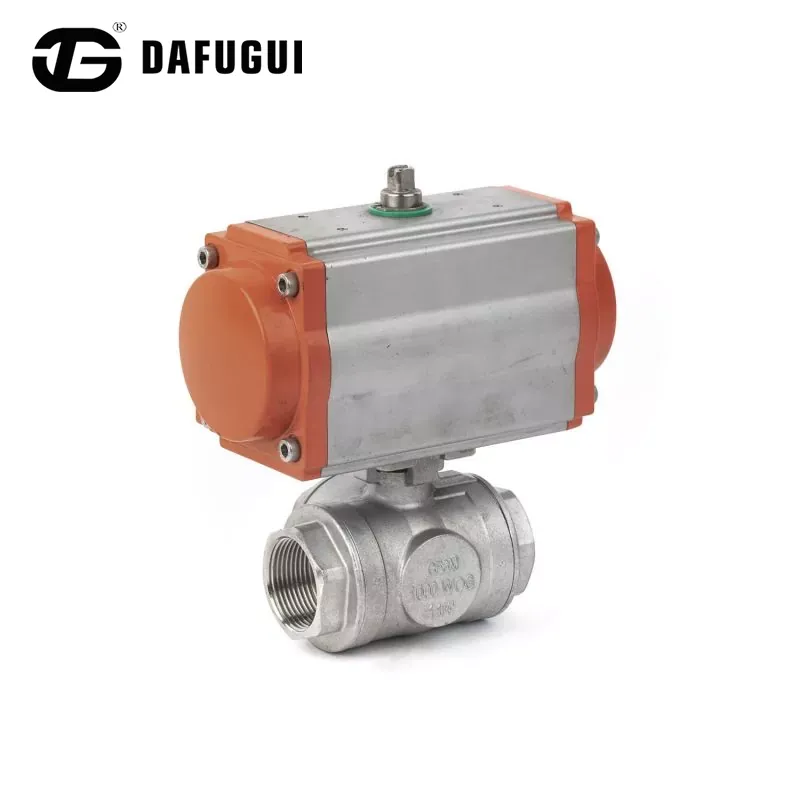
Standard Rating Framework for 2PC Ball Valves
Most commercially available 2PC Ball Valves follow pressure-temperature tables derived from the ASME B16.34 standard. The general rule is: as temperature increases, maximum allowable working pressure decreases. This inverse relationship is non-negotiable and must be respected to avoid catastrophic failure.
Below is a generalized rating matrix for a standard stainless steel (CF8M) 2PC Ball Valve with PTFE seats:
| Temperature Range (°F) | Maximum Working Pressure (psi) | Applicable Standard |
|---|---|---|
| -20 to 100 | 1000 | ASME Class 600 |
| 101 to 200 | 920 | ASME Class 600 |
| 201 to 300 | 840 | ASME Class 600 |
| 301 to 400 | 700 | ASME Class 600 |
| 401 to 450 | 580 | ASME Class 600 |
Note: For Class 150 rated 2PC Ball Valves, typical maximum pressure at ambient temperature is 285 psi, derating to approximately 150 psi at 400°F.
Material-Driven Rating Variations
The seat and seal materials profoundly affect the maximum service temperature of any 2PC Ball Valve. While the metal body (stainless steel, carbon steel, or brass) can often withstand much higher temperatures, the polymeric seats are the limiting factor.
| Seat Material | Max Continuous Temperature | Typical Pressure Limit |
|---|---|---|
| PTFE (Virgin) | 450°F (232°C) | 1000 psi (Class 600) |
| Reinforced PTFE | 500°F (260°C) | 800 psi |
| PEEK | 600°F (315°C) | 1440 psi |
| Metal-Seated (hard) | 800°F+ (427°C+) | Varies with alloy |
At Partech, we offer 2PC Ball Valves with both soft-seated and metal-seated options, allowing customers to match temperature requirements with cost-efficiency. For cryogenic services down to -320°F, we also provide extended-bonnet configurations with specialized PCTFE seats.
Critical Factors That Derate Performance
Even with published tables, actual in-service ratings for a 2PC Ball Valve depend on:
-
Cyclic operation – Frequent actuation generates frictional heat, locally exceeding bulk fluid temperature.
-
Pressure spikes – Surge pressures can momentarily exceed rated values by 20–30%.
-
Media compatibility – Certain chemicals (e.g., steam, chlorine) accelerate seat degradation, effectively lowering the maximum temperature by 50–75°F.
-
Mounting orientation – Vertical installations with hot fluids may cause heat stacking near the stem packing.
Partech recommends always applying a 15% safety margin below the catalog rating for continuous duty cycles. For critical services, we provide custom derating curves based on your actual process data.
Frequently Asked Questions About 2PC Ball Valves
Q1: Can I use a standard PTFE-seated 2PC Ball Valve for saturated steam service at 350°F?
A1: No. Saturated steam at 350°F corresponds to approximately 120 psi, which is within the pressure limit of a Class 600 2PC Ball Valve. However, PTFE seats begin to soften and creep above 400°F, and steam’s molecular penetration causes rapid blistering of PTFE at temperatures as low as 300°F. For saturated steam, Partech recommends either reinforced PTFE with a steam-certified grade or, preferably, a PEEK-seated 2PC Ball Valve rated for 600°F continuous. Additionally, the valve body must be full-penetration welded and x-ray inspected to handle thermal cycling without joint fatigue. Always consult the steam tables and cross-reference with the valve’s pressure-temperature matrix before installation.
Q2: How do I convert pressure ratings from psi to bar for a 2PC Ball Valve used in European projects?
A2: Conversion is straightforward: 1 psi = 0.0689476 bar. For example, a 1000 psi rating equals 68.95 bar. However, European standards (EN 12516-1) use different temperature reference points—typically at 50°C instead of 100°F. This means a 2PC Ball Valve rated 1000 psi at 100°F in ASME may be listed as PN 63 (63 bar) at 50°C under EN, but the derating curve differs because EN assumes a lower ambient baseline. At Partech, we provide dual-rated nameplates (ASME/EN) for export orders. We also perform hydrostatic testing at 1.5× the rated pressure for every 2PC Ball Valve shipped to EU jurisdictions, ensuring compliance with PED 2014/68/EU. Always verify whether the rating is "cold working pressure" or "hot working pressure"—the latter already includes temperature derating.
Q3: What happens if I momentarily exceed the maximum temperature of a 2PC Ball Valve by 50°F during a startup upset?
A3: A short-term excursion (under 5 minutes) may not cause immediate failure, but it can permanently deform the PTFE seat, increasing torque and reducing shutoff tightness from API 598 bubble-tight to a visible leakage rate. The stem O-rings (typically FKM or EPDM) are even more sensitive—a 50°F overshoot above 400°F can cause them to harden and crack within hours, leading to stem leakage. At Partech, we recommend installing a temperature-monitoring thermocouple on the valve body and programming a control-system interlock that closes the valve automatically if the skin temperature exceeds 95% of the rated maximum. If your process has frequent upsets, we advise upgrading to a metal-seated 2PC Ball Valve with Inconel springs, which withstand excursions up to 850°F without permanent damage. We also offer thermal-sleeve kits that slow down heat transfer to the stem packing, granting you a 15–20°F buffer during transient events.
Practical Selection Checklist
When finalizing your 2PC Ball Valve specification, always confirm:
-
□
Maximum operating temperature (including startup and shutdown)
-
□
Maximum operating pressure (including pump dead-head)
-
□
Seat material compatibility with trace contaminants
-
□
End connections (threaded, socket-weld, or flanged)
-
□
Fire-safe certification if required (API 607/ISO 10497)
Partech provides free preliminary rating calculations with every inquiry, including FEA stress reports for high-temperature variants.
Why Trust Partech for Your 2PC Ball Valve Needs?
With over 18 years of manufacturing experience, Partech combines ISO 9001:2015 quality systems with in-house material testing laboratories. Every 2PC Ball Valve undergoes 100% hydrostatic and pneumatic seat-leakage tests before shipment. Our engineering team publishes real-world derating data—not just theoretical tables—based on accelerated life-cycle testing at our Houston R&D facility.
Contact Us
Selecting the correct 2PC Ball Valve rating is not a one-size-fits-all decision. Process conditions, ambient environments, and regulatory codes all influence the final choice. Contact Partech today—share your operating temperature, pressure, media, and cycle frequency—and our application engineers will respond within 24 hours with a customized rating report, CAD drawing, and firm quotation. Reach us through our website’s live chat or email [email protected]. Your safety and uptime are our priority.