

What Are the Key Differences Between Wafer and Flanged Stainless Steel Swing Check Valves
2026-01-12
When designing or maintaining a piping system, selecting the correct Stainless Steel Swing Check Valve is crucial for ensuring reliable backflow prevention, longevity, and system efficiency. A common point of consideration for engineers and procurement specialists is the choice between wafer-style and flanged-end connections. As a leading industrial valve manufacturer with decades of expertise, Tianhong is here to clarify these key differences to guide your specification process.
The core distinction lies in their design for installation within a pipeline. A wafer-style Stainless Steel Swing Check Valve is a compact, lightweight unit designed to be clamped between two pipeline flanges using long bolts that span the entire valve body. Conversely, a flanged Stainless Steel Swing Check Valve features its own integral flanges at each end, which are bolted directly to the mating flanges of the pipeline.
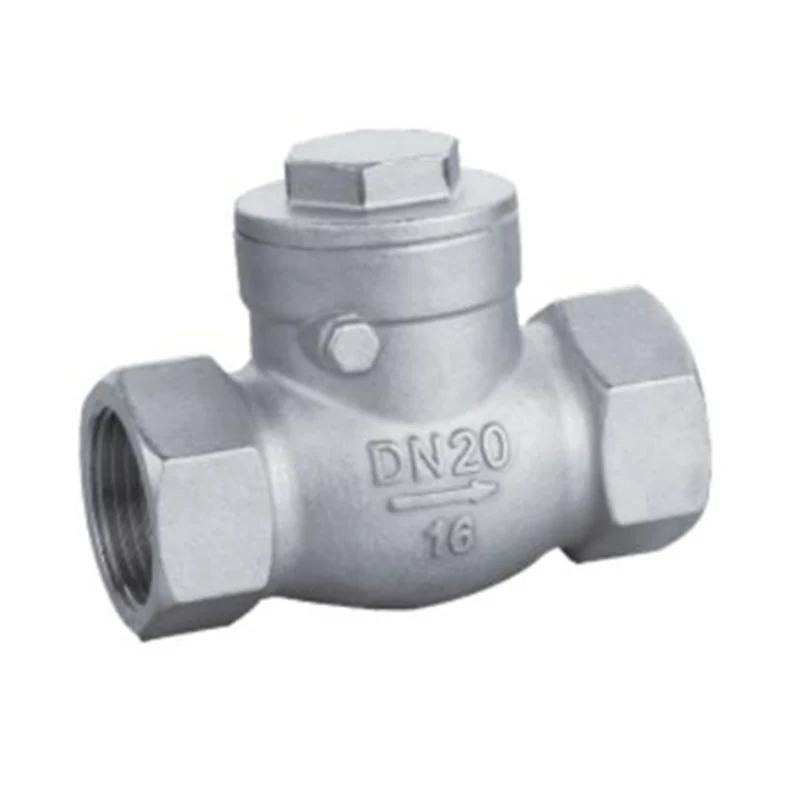
To break down the comparison professionally, here are the key differentiators in a clear list:
-
Installation & Space: Wafer valves save significant space and weight, ideal for tight installations. Flanged valves require more axial space for their flange faces and bolts.
-
Structural Role: Wafer valves rely on the line flanges and bolts for structural support and sealing. Flanged valves bear pressure through their own integrated flanges.
-
Maintenance & Isolation: Flanged valves allow for easier isolation and removal from a line without disturbing adjacent piping sections. Removing a wafer valve typically requires spreading the pipeline flanges.
For a quick, at-a-glance comparison, refer to the table below:
| Feature | Wafer-Style Check Valve | Flanged Check Valve |
|---|---|---|
| Installation | Clamped between line flanges | Bolted directly to line flanges |
| Weight & Space | Lighter, more compact | Heavier, requires more length |
| Cost | Generally lower initial cost | Higher cost due to more material |
| Maintenance | Can be more complex to remove | Easier to isolate and remove |
| Best For | Systems with space/weight constraints, standard pressure | Systems requiring frequent maintenance, higher-pressure applications |
Stainless Steel Swing Check Valve FAQ
What is the primary function of a Stainless Steel Swing Check Valve?
Its primary function is to allow fluid flow in one direction and automatically prevent backflow (reverse flow) in a piping system. The swing disc opens with forward pressure and closes by gravity and backflow, protecting equipment and ensuring process integrity.
Can a Stainless Steel Swing Check Valve be installed in any orientation?
No, proper orientation is critical. These valves are typically designed for installation in horizontal pipes with the disc hinge pin horizontal. Installation in vertical lines with upward flow is sometimes possible but requires specific design validation to ensure proper disc closure.
Why choose a stainless steel construction for swing check valves?
Stainless steel offers superior corrosion resistance, high strength, and durability in harsh environments, handling everything from water and steam to aggressive chemicals. This makes a Tianhong Stainless Steel Swing Check Valve a reliable, long-life investment for demanding applications in chemical, marine, food & beverage, and pharmaceutical industries.
Choosing the right valve type impacts your system's performance, maintenance schedule, and total cost of ownership. Whether the compact efficiency of a wafer valve or the robust, service-friendly design of a flanged valve is right for you depends on your specific application parameters. The team at Tianhong possesses deep engineering knowledge to help you navigate these choices. Contact us today to discuss your project needs and receive expert guidance on selecting the optimal Stainless Steel Swing Check Valve for your system.