

What Are the Key Differences Between a Pressure Reducing Valve and a Fluid Pipeline Pressure Regulating Valve
2026-09-24
In fluid handling systems, maintaining consistent downstream pressure is essential for safety, efficiency, and equipment longevity. Engineers often encounter two terms that appear interchangeable: the pressure reducing valve and the Fluid Pipeline Pressure Regulating Valve. While both devices manage pressure, they differ in design intent, application scope, and performance characteristics. Huitong, a manufacturer with decades of experience in fluid control solutions, clarifies these distinctions to help system designers and maintenance teams select the right component.
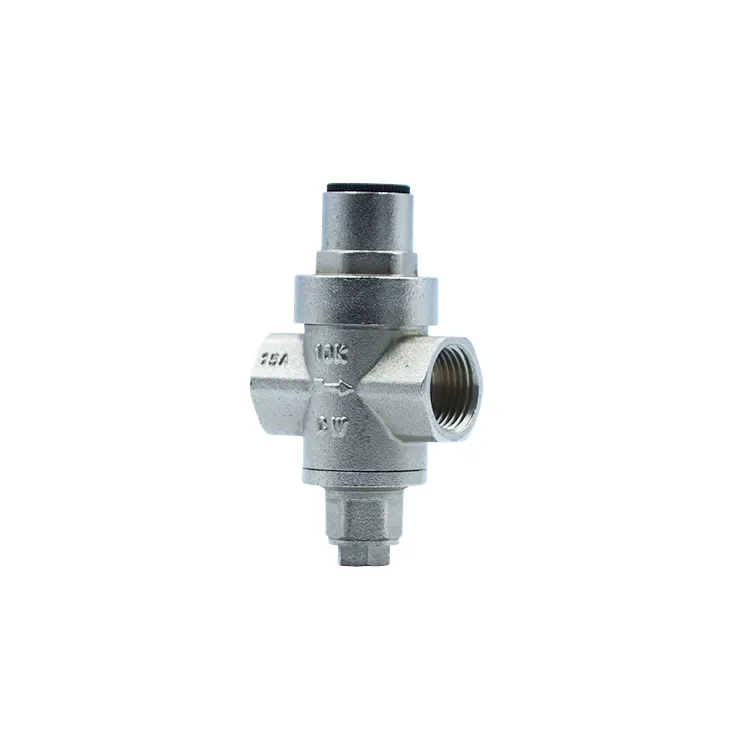
Core Functional Differences
A pressure reducing valve (PRV) is typically a self-actuated device that lowers a higher inlet pressure to a stable, lower outlet pressure. It responds directly to downstream pressure changes via a spring-loaded diaphragm or piston.
A Fluid Pipeline Pressure Regulating Valve, by contrast, is a broader category that encompasses both reducing and back-pressure regulation. It may be pilot-operated, electronically controlled, or integrated into a closed-loop system. Its primary role is to maintain a target pressure setpoint regardless of flow fluctuations, inlet pressure variations, or temperature changes.
Huitong designs both types, but emphasizes that a Fluid Pipeline Pressure Regulating Valve offers greater tunability and is often preferred in complex pipeline networks where precision matters.
Key Comparison Table
| Feature | Pressure Reducing Valve | Fluid Pipeline Pressure Regulating Valve |
|---|---|---|
| Control Mode | Direct-acting, spring-loaded | Pilot, pneumatic, or electronic |
| Primary Function | Reduce inlet to lower outlet | Maintain precise downstream setpoint |
| Response Speed | Moderate | Fast, with feedback loop |
| Accuracy | ±5–10% of setpoint | ±1–2% of setpoint |
| Typical Application | Water supply, steam lines | Chemical dosing, fuel pipelines, high-purity fluids |
| Adjustment Range | Limited | Wide, with remote setpoint capability |
| Failure Mode | Often fails open | Configurable (fail-open, fail-closed, fail-last) |
When to Choose Each Type
-
Select a pressure reducing valve for simple, cost-sensitive installations with stable inlet conditions.
-
Select a Fluid Pipeline Pressure Regulating Valve when precision, remote control, or integration with SCADA systems is required.
-
Huitong recommends the regulating valve for pipelines carrying hazardous or expensive fluids, where pressure spikes can cause catastrophic failures.
Maintenance and Longevity Considerations
Pressure reducing valves require periodic spring and diaphragm inspection. A Fluid Pipeline Pressure Regulating Valve may need pilot orifice cleaning and sensor calibration. Huitong provides both with corrosion-resistant materials and modular replacement parts.
FAQ: Fluid Pipeline Pressure Regulating Valve
Q: What is the main advantage of a Fluid Pipeline Pressure Regulating Valve over a standard pressure reducing valve?
A: The main advantage is precise, closed-loop control. A Fluid Pipeline Pressure Regulating Valve continuously monitors downstream pressure and adjusts the valve trim to maintain the setpoint within ±1–2%, even when flow demand or inlet pressure changes rapidly. This makes it suitable for critical processes where pressure deviations could affect product quality or safety.
Q: Can a Fluid Pipeline Pressure Regulating Valve handle both liquid and gas applications?
A: Yes, but the internal trim and materials must be selected accordingly. For liquids, cavitation and flashing prevention are critical. For gases, compressibility and noise attenuation require different trim designs. Huitong offers application-specific configurations for both media.
Q: How often should a Fluid Pipeline Pressure Regulating Valve be inspected or recalibrated?
A: Inspection frequency depends on fluid cleanliness and cycling frequency. In clean, low-cycle service, annual inspection is sufficient. In dirty or high-cycle pipelines, quarterly checks are recommended. Huitong suggests replacing pilot filters and verifying sensor accuracy at each interval.
Conclusion and Contact
Choosing between a pressure reducing valve and a Fluid Pipeline Pressure Regulating Valve depends on required accuracy, control architecture, and fluid criticality. For demanding pipeline systems, the regulating valve delivers superior performance and configurability. Huitong supplies both types with full technical support. To discuss your specific pressure control challenge, contact us today for a consultation and customized quote.