

What are the key design considerations for a non-return flap in a swing check valve
2026-04-20
When engineering a reliable Non-Return Flap Design Swing Check Valve, several critical factors determine its operational efficiency, longevity, and safety. At Zhongguan, we have learned that the non-return flap—the moving component that allows unidirectional flow and prevents backflow—requires meticulous attention to geometry, material, and dynamics. This article explores the essential design parameters that separate a superior valve from a field failure.
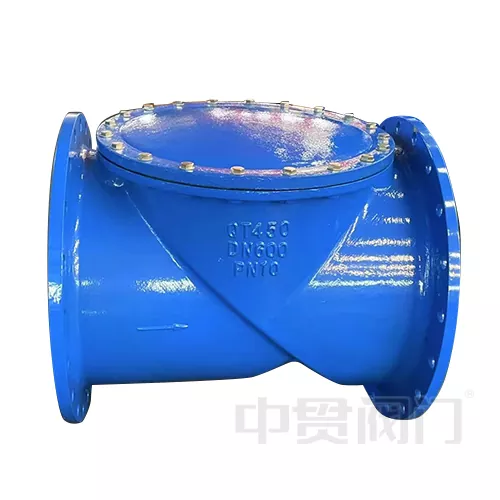
Core Design Considerations for the Non-Return Flap
The flap’s performance directly influences water hammer, pressure loss, and sealing integrity. Below are the primary engineering decisions a designer must make.
| Design Parameter | Key Question | Why It Matters for Non-Return Flap Design Swing Check Valve |
|---|---|---|
| Flap Geometry & Aspect Ratio | What is the optimal diameter-to-thickness ratio? | Lower inertia ensures faster closing, reducing backflow velocity. |
| Hinge Position & Offset | Should the hinge be centered or offset from the seat plane? | Offset creates a moment arm, allowing gravity-assisted seating at zero flow. |
| Flap Material & Coating | Does the fluid contain abrasives or corrosives? | Ductile iron with EPDM or PTFE coating extends seat life. |
| Closing Spring (if used) | Is an auxiliary spring necessary for vertical installations? | A spring ensures positive shut-off but increases pressure drop. |
| Flap Weight & Balance | How to balance low cracking pressure against rapid closure? | Light flaps reduce head loss; heavier flaps prevent slamming. |
Why Flap Dynamics Matter More Than Static Strength
Many engineers focus only on static pressure ratings, but in a Non-Return Flap Design Swing Check Valve, dynamic behavior is paramount. When flow decelerates, the flap must begin closing before reverse velocity builds. A flap that is too heavy will slam into the seat, causing water hammer. A flap that is too light may flutter, destroying the seat in months. Zhongguan recommends computational fluid dynamics (CFD) to simulate flap motion across varying flow rates.
Material Selection Guide
| Fluid Type | Recommended Flap Material | Seat Material | Zhongguan Standard Series |
|---|---|---|---|
| Clean water, 0-80°C | Ductile iron (coated) | NBR rubber | ZG-SW Series |
| Seawater or brine | Aluminum bronze | PTFE | ZG-MB Series |
| Corrosive chemicals | 316 stainless steel | Viton | ZG-SS Series |
| Abrasive slurries | Hardened duplex stainless | Metal-to-metal with stellite | ZG-HD Series |
Three Essential FAQs on Non-Return Flap Design Swing Check Valve
FAQ 1: How does flap opening angle affect the total pressure drop across the valve?
The flap opening angle has a direct nonlinear relationship with pressure drop. At full rated flow, a well-designed Non-Return Flap Design Swing Check Valve should achieve an opening angle of 75 to 85 degrees. Angles below 60 degrees indicate undersized valve body or incorrect hinge placement, leading to increased turbulence and energy loss. For every 10-degree reduction from optimum, the pressure drop typically doubles. Zhongguan designs flaps to achieve 80-degree opening at nominal flow, keeping head loss below 0.5 psi for most line sizes.
FAQ 2: What is the minimum upstream velocity required to fully lift the non-return flap?
This minimum velocity, known as the "cracking and full-lift velocity," depends heavily on flap weight and hinge friction. For a standard Non-Return Flap Design Swing Check Valve with a metallic flap, full lift generally requires 1.5 to 2.0 m/s (5 to 6.5 ft/s) in horizontal lines. If the velocity drops below 1.0 m/s, the flap may oscillate partially open, causing seat wear. Zhongguan offers low-inertia flap designs with reduced mass that achieve full lift at 0.8 m/s, ideal for variable flow systems such as pump discharge lines.
FAQ 3: How can I prevent water hammer caused by flap slamming in a vertical installation?
Water hammer in vertical lines occurs when reverse flow accelerates the flap into the seat at high speed. To prevent this, three design modifications are recommended for any Non-Return Flap Design Swing Check Valve installed vertically. First, install an external damping lever or an oil dashpot to control final closing velocity. Second, reduce flap weight by 20-30% compared to horizontal applications. Third, use a soft seat insert (NBR or EPDM) to absorb impact energy. Zhongguan provides vertical-service valves with integrated velocity decelerators as standard on ZG-V series, eliminating hammer even at sudden pump stops.
Best Practices from Zhongguan Engineering
Field data shows that over 60% of swing check valve failures originate from inappropriate flap design for the actual service conditions. Always verify:
-
Cracking pressure (should be ≤ 0.5 psi for gravity systems)
-
Flap travel time (closing within 0.3 to 0.8 seconds for 6-inch valves)
-
Seat leakage rate (ISO 5208 Rate A for critical applications)
Contact Us
Selecting the correct Non-Return Flap Design Swing Check Valve requires experience across fluid types, pressure classes, and installation orientations. Zhongguan has supplied over 15,000 engineered swing check valves to water treatment, petrochemical, and power plants worldwide. For a customized flap design review based on your line size, media, and flow velocity, please contact our engineering team today. Visit our website or send your specifications to receive a detailed proposal within 24 hours. Let Zhongguan help you eliminate backflow risks permanently.