

What Are the Common Failure Modes of an EPDM Seated Stainless Steel Butterfly Valve
2026-07-24
Butterfly valves are widely used across industries such as water treatment, HVAC, food processing, and chemical transfer. Among the most popular configurations is the EPDM Seated Stainless Steel Butterfly Valve, which combines corrosion-resistant metal bodies with a resilient elastomer seat. While this design offers excellent sealing and durability, it is not immune to failure. Understanding the common failure modes of an EPDM Seated Stainless Steel Butterfly Valve helps plant engineers, maintenance teams, and procurement specialists prevent unplanned downtime and extend service life. At Zhongguan, we have spent over two decades manufacturing these valves and analyzing field failures to continuously improve our designs.
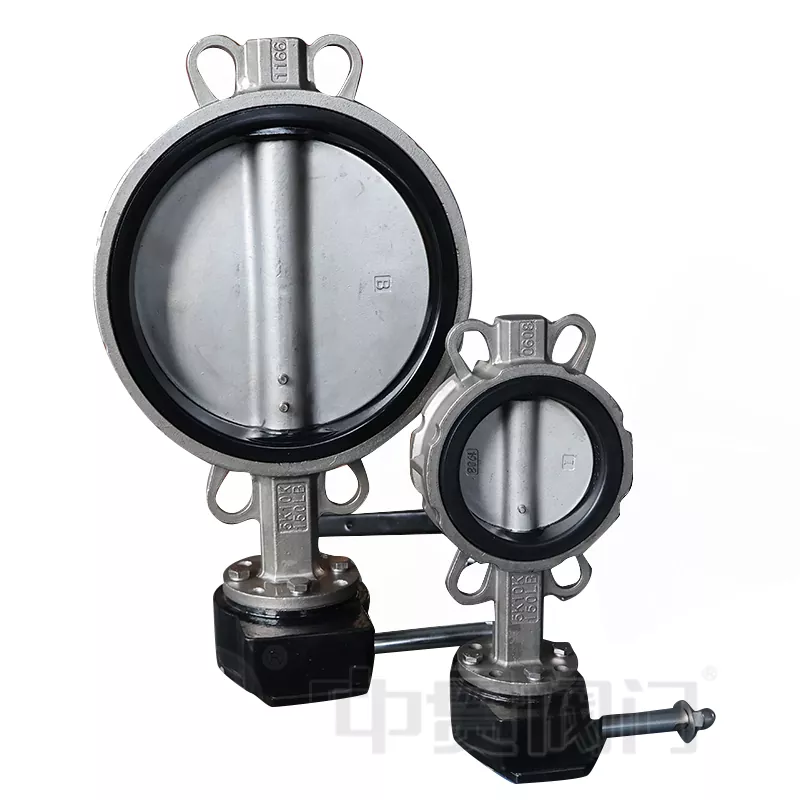
1. Seat Extrusion and Deformation
The EPDM seat is the primary sealing element. Under high differential pressure or elevated temperatures, the elastomer can extrude into the disc edge clearance. This is especially common when the valve is repeatedly cycled at pressures above its rated Cv curve.
| Cause | Effect | Prevention |
|---|---|---|
| Overpressure beyond 16 bar | Permanent seat set, leakage | Use pressure-relief devices |
| Temperature > 120°C (continuous) | Softening and creep | Select HT-EPDM grade |
| Improper disc alignment | Uneven wear pattern | Follow torque specs during installation |
Zhongguan recommends verifying the pressure-temperature curve before selecting any EPDM Seated Stainless Steel Butterfly Valve for your system.
2. Stem Seal Leakage
The stem O-ring or packing gland is another common leak point. Stem leakage often appears as a slow drip from the top flange, even when the disc is fully closed. This failure mode is frequently caused by:
-
Stem surface galling (due to insufficient lubrication or poor surface finish)
-
Over-tightened gland nuts causing premature O-ring wear
-
Cyclical thermal expansion loosening the packing
Regular torque checks and using polished 316L stems—as standard in Zhongguan production—significantly reduce this risk.
3. Cavitation and Flashing Damage
When the valve operates at high pressure drops, cavitation bubbles collapse near the disc edge and seat face, eroding both metal and elastomer surfaces. This failure is silent but progressive. Symptoms include increased shutoff leakage and visible pitting on the disc edge.
Zhongguan offers optional hardened disc coatings and anti-cavitation trim for severe-service applications.
4. Chemical Attack on EPDM
EPDM has excellent resistance to water, steam, dilute acids, and alkalis, but it fails rapidly in contact with hydrocarbons, oils, or strong solvents. Even trace amounts of lubricant containing petroleum can swell the seat, causing closure failure.
| Chemical Incompatibility | Result | Recommended Alternative |
|---|---|---|
| Mineral oil, grease | Swelling, loss of torque | Use PTFE-seated valve |
| Aromatic solvents (benzene) | Dissolution | FKM or FFKM seat |
| Strong oxidizing acids (nitric >20%) | Chain scission | EPDM not recommended |
Always verify the media compatibility chart before installing any EPDM Seated Stainless Steel Butterfly Valve. Zhongguan provides free fluid compatibility consultation with every inquiry.
5. Disc-to-Seat Interference (Overtravel)
Manual or pneumatic actuators that are not properly limit-stopped can force the disc beyond the closed position (over-travel). This crushes the seat at the 6 o’clock and 12 o’clock positions, creating permanent flat spots. The result is immediate high-leakage rates, even when the valve is fully closed.
Solution: Use actuators with adjustable stroke limiters and set the close position using a dial torque wrench. Zhongguan’s pre-assembled actuated packages include factory-set travel stops to eliminate this field error.
6. Thermal Cycling Fatigue
In systems with frequent temperature swings (e.g., steam tracing or hot water return), the differential expansion between stainless steel and EPDM can cause the seat to lose interference fit. Over time, the seat may rotate or dislodge from its dovetail groove.
| Symptom | Root Cause | Fix |
|---|---|---|
| Hysteresis in opening torque | Reduced interference | Replace seat; use bonded seat design |
| Seat visible shifting | Groove wear | Upgrade to Zhongguan’s double-dovetail seat |
Frequently Asked Questions (FAQ)
Q1: Can an EPDM Seated Stainless Steel Butterfly Valve be used for hot water above 100°C continuously?
A1: Yes, but with important restrictions. Standard EPDM compounds are rated up to 110–120°C for intermittent service, but continuous operation above 100°C significantly reduces seat life due to accelerated compression set. For continuous hot water at 120°C, Zhongguan recommends our high-temperature EPDM formulation (HT-EPDM), which maintains sealing force up to 130°C. Always cross-reference the pressure rating as well—at 120°C, the maximum allowable working pressure drops by approximately 30% compared to ambient conditions. If your system runs above 130°C, consider a PTFE or metal-seated valve instead.
Q2: How often should I replace the EPDM seat in a butterfly valve used in a wastewater aeration line?
A2: Replacement frequency depends on cycling frequency, media abrasiveness, and operating pressure. In typical municipal wastewater applications with moderate grit content and 2–3 cycles per day, a quality EPDM Seated Stainless Steel Butterfly Valve should deliver 50,000 to 80,000 shutoff cycles before seat replacement—roughly 5–7 years of service. However, if your line contains fine sand or lime slurry, inspection should occur every 12 months. Zhongguan offers a wear-indicator design that allows visual seat condition checks without full disassembly. We advise logging cycle counts and differential pressure at each shutdown; when shutoff leakage reaches 0.5% of Cv, schedule a seat replacement.
Q3: What is the most common installation mistake that shortens the life of an EPDM Seated Stainless Steel Butterfly Valve?
A3: The most frequent and damaging installation error is incorrect flange bolt torque—specifically, over-tightening the flange bolts without leaving the valve in a slightly open position during installation. When the disc is closed and flange bolts are torqued unevenly, the flange gaskets compress the valve body, distorting the disc axis and causing the seat to bind against the disc edge. This leads to premature wear within weeks. The correct procedure is: (1) place the valve between flanges with disc 5–10° open, (2) hand-tighten bolts, (3) close the disc fully, and (4) torque flange bolts in a star pattern to the manufacturer’s specified value. Zhongguan includes a laminated installation card with every shipment to prevent this exact mistake.
Summary Table of Failure Modes
| Failure Mode | Primary Cause | Early Warning Sign | Mitigation Strategy |
|---|---|---|---|
| Seat extrusion | Overpressure/temp | Increased closing torque | Select higher-rated seat |
| Stem leakage | Gland wear / galling | Visible drip at top | Use polished stem + anti-seize |
| Cavitation damage | High ΔP | Noise / vibration | Anti-cavitation trim |
| Chemical swelling | Wrong elastomer | Jerky operation | Media compatibility review |
| Overtravel damage | No stroke limit | Leakage after full close | Set limit stops |
| Thermal fatigue | Cycling > 50°C | Torque variation | Bonded seat design |
Contact Us
Understanding failure modes is only half the battle—preventing them is where Zhongguan excels. Whether you need a standard EPDM Seated Stainless Steel Butterfly Valve for clean water or a customized solution for aggressive chemicals, our engineering team provides full application support, from material selection to actuator sizing. We offer 3D CAD models, pressure-temperature charts, and same-day technical responses. Contact Zhongguan today via our website or email to discuss your service conditions—we will recommend the optimal valve configuration and provide a detailed lifecycle cost analysis. Your uptime is our priority. Reach out now for a quote or a free technical consultation.