

What Are the Common Failure Modes of a PN16 Stainless Steel Hard-Seal Gate Valve in Corrosive Environments
2026-08-13
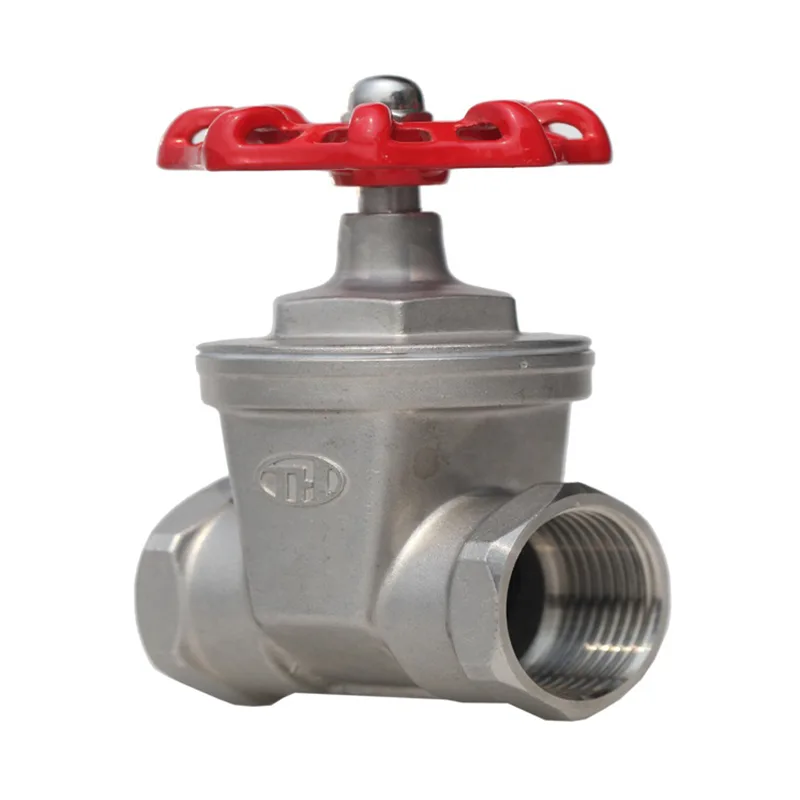
Industrial piping systems rely heavily on durable isolation valves, and the PN16 Stainless Steel Hard-Seal Gate Valve has earned its reputation as a workhorse in demanding applications. However, even this robust component faces unique challenges when exposed to aggressive chemical streams, seawater, acidic condensates, or high-temperature corrosive gases. Understanding these failure modes is not just about troubleshooting—it is about preventing unplanned downtime, ensuring plant safety, and extending asset life. At Tianhong, we have spent decades analyzing field returns and laboratory test data to help engineers preemptively address these issues. This article dissects the most common failure mechanisms, offers actionable mitigation strategies, and provides clear answers to frequently asked questions about the PN16 Stainless Steel Hard-Seal Gate Valve.
1. The Primary Failure Modes at a Glance
| Failure Mode | Primary Cause | Typical Corrosive Environment | Early Warning Signs |
|---|---|---|---|
| Pitting Corrosion | Chloride ion attack on passive film | Seawater, bleach, acidic chlorides | Surface cratering, increased leakage |
| Crevice Corrosion | Stagnant electrolyte under gaskets/seats | Flange joints, seat pockets, under deposits | Localized discoloration, weeping |
| Stress Corrosion Cracking (SCC) | Tensile stress + chlorides + elevated temp | Hot caustic or chloride-bearing steam | Fine branched cracks near welds/stems |
| Wear-Induced Galling | Metal-to-metal hard-seal friction | Dry or low-lubricity media | Erratic torque, scoring on wedge/seat |
| Erosion-Corrosion | High-velocity particulate-laden flow | Slurry lines, flashing services | Thinning of wedge edges and seat faces |
| Seat Leakage Due to Thermal Deformation | Differential expansion of body/bonnet | Cyclic steam or cryogenic-to-ambient | Visible downstream flow when closed |
2. Detailed Analysis of Each Failure Mechanism
2.1 Pitting and Crevice Corrosion
Austenitic stainless steels (CF8M or 316) rely on a chromium-oxide passive layer. When the PN16 Stainless Steel Hard-Seal Gate Valve handles media with chloride concentrations above 200 ppm at 50°C, localized breakdown occurs. Pitting initiates at sulfide inclusions, while crevice corrosion thrives under flange gaskets and seat ring threads. Once initiated, pits act as stress raisers, potentially transitioning to cracking.
Mitigation: Specify low-carbon grades (316L) with molybdenum content > 2.5%. Ensure proper gasket selection—PTFE-encapsulated or expanded graphite with anti-crevice geometry. Regularly flush dead-leg sections.
2.2 Stress Corrosion Cracking (SCC)
SCC is the most insidious failure because it occurs without significant general corrosion. For a PN16 Stainless Steel Hard-Seal Gate Valve, tensile residual stresses from welding, threading, or cold-forming combine with chlorides and temperatures exceeding 60°C. Cracks propagate intergranularly, often leading to sudden stem or bonnet fracture.
Mitigation: Post-weld solution annealing, use of stabilized grades (347), and maintaining torque within specified limits. For severe services, consider duplex stainless steel body options.
2.3 Hard-Seal Galling and Wear
The “hard-seal” design—typically Stellite 6 or 21 hardfacing on wedge and seat rings—offers excellent erosion resistance. However, under dry or low-lubricity conditions, the sliding action during opening/closing can cause adhesive wear (galling). This manifests as increasing operating torque, scored sealing surfaces, and eventual loss of shutoff tightness.
Mitigation: Apply anti-seize lubricant to stem threads during assembly. Specify polished surface finishes (Ra ≤ 0.8 µm) on sealing faces. For cycling services, consider a PN16 Stainless Steel Hard-Seal Gate Valve with a coated wedge (e.g., nickel-phosphorus electroless coating).
2.4 Erosion-Corrosion Synergy
When the medium contains suspended solids or when cavitation occurs downstream of a throttled valve, the protective oxide layer is mechanically removed, exposing fresh metal to corrosion. This accelerates material loss by a factor of 10 to 100. Typical signs are a razor-sharp edge on the wedge and a scooped-out seat profile.
Mitigation: Avoid throttling with gate valves—use them fully open or fully closed. Install upstream strainers or desanders. Specify hardened overlays with higher hardness (≥ HRC 40).
3. Preventive Maintenance and Material Upgrades
| Service Condition | Recommended Material / Feature | Inspection Interval |
|---|---|---|
| Seawater / Brackish | 316L + super-duplex stem, galvanic isolation kit | 6 months |
| Hot caustic (NaOH > 30%, 80°C) | Alloy 20 body or 316L with stress-relief anneal | 3 months |
| Sour gas (H₂S + chlorides) | NACE MR0175 compliant hardfacing, controlled hardness | Quarterly |
| High-cycle operation (> 1000 cycles/yr) | Rolled threads on stem, hardened wedge guide lugs | Monthly torque trend |
4. Frequently Asked Questions (FAQ)
Q1: Can a PN16 Stainless Steel Hard-Seal Gate Valve be used in seawater service without failing prematurely?
A1: Yes, but with critical precautions. Standard 316 stainless steel is borderline for seawater due to crevice and pitting risks. Tianhong recommends using a PN16 Stainless Steel Hard-Seal Gate Valve with a 316L body, a super-duplex stainless steel stem (UNS S32760), and a non-metallic seat insert if tight shutoff is required. Additionally, the valve should be installed with insulated flange kits to prevent galvanic coupling with copper-nickel or carbon steel piping. Even with these upgrades, expect a service life of 5–8 years in ambient seawater, and plan for annual internal inspection using borescope or ultrasonic thickness gauging. For permanent submerged or splash-zone applications, consider moving to a 6Mo or titanium-bodied valve.
Q2: What is the maximum allowable leakage rate for a PN16 Stainless Steel Hard-Seal Gate Valve under ISO 5208, and how does corrosion affect it?
A2: Under ISO 5208 Rate A (the strictest standard for metal-seated valves), a PN16 Stainless Steel Hard-Seal Gate Valve with a DN 150 bore is allowed a leakage of no more than 0.1 × DN mm³/s of water—approximately 15 ml/min for a 6-inch valve. In corrosive environments, two factors degrade this: (1) pitting on the seat face increases the effective leakage area, and (2) galvanic deposits between wedge and seat prevent full closure. Tianhong recommends performing a hydrostatic seat test at 1.5× PN every 12 months, and comparing the leakage flow rate against the baseline value recorded during factory acceptance testing. If leakage doubles from the baseline, schedule a lap-in service to restore the hard-seal surfaces. Do not exceed 2× baseline without intervention, as severe pitting may have penetrated the hardfacing layer.
Q3: How do I select the correct actuator torque for a PN16 Stainless Steel Hard-Seal Gate Valve that experiences frequent temperature swings from -10°C to 150°C?
A3: Thermal cycling changes the clearance between the wedge and the body seats due to differential expansion coefficients (stainless steel ~ 16–18 µm/m·K). For a PN16 Stainless Steel Hard-Seal Gate Valve with a 200 mm face-to-face length, a 160°C delta produces about 0.5 mm of dimensional change, which can cause the wedge to bind at the hot extreme or leak at the cold extreme. Tianhong advises selecting an actuator with a breakaway torque at least 1.8× the cold bench-test torque, but no more than 2.5× to avoid stem over-stress. Use a torque limiter set to 120% of the maximum expected hot torque. Additionally, choose a rising-stem design with a polished stem and graphite packing, which maintains consistent friction across the temperature range. Perform a torque trending log—if you observe a 15% increase over 100 cycles, inspect for galling or seat deformation.
5. Practical Field Checklist for Engineers
-
□
Verify the PN16 Stainless Steel Hard-Seal Gate Valve nameplate material matches the MDS (Material Data Sheet) for the actual service.
-
□
Record baseline operating torque and seat leakage rate within 24 hours of installation.
-
□
For chloride services, install upstream corrosion coupon racks to monitor environmental changes.
-
□
Always close the valve slowly—rapid closure can cause water hammer and dislodge hardfacing.
-
□
When disassembling, photograph the wedge and seat faces; compare with Tianhong’s factory wear-reference photos.
Conclusion
The PN16 Stainless Steel Hard-Seal Gate Valve remains an excellent choice for corrosive industrial environments—provided that engineers recognize its vulnerability to localized corrosion, mechanical wear, and thermal-mechanical interactions. By matching the correct material grade, adopting a disciplined inspection regime, and understanding the physics behind each failure mode, plant operators can achieve 15+ years of reliable service from these valves. The FAQ section above addresses the most pressing operational doubts, but every installation has its unique quirks.
Contact Us – Tianhong’s application engineering team is ready to review your process data, recommend a tailored material upgrade, or perform a finite-element analysis for your specific temperature-pressure cycle. Reach out to us via our website or email your P&ID excerpts to our technical support desk. We respond within 4 business hours with preliminary recommendations and can schedule a virtual site walkthrough to evaluate your current valve performance. Let us help you extend the life of your PN16 Stainless Steel Hard-Seal Gate Valve and reduce your total cost of ownership starting today.