

What Are the Common Failure Modes of a Gearbox Globe Valve and How to Prevent Them
2026-06-25
In critical industrial flow control systems, the Gearbox Globe Valve is indispensable for precise throttling and on-off service under high differential pressures. However, even the most robust Gearbox Globe Valve can encounter performance degradation or catastrophic failure if operating conditions are not fully understood. At Hanno, we have spent decades analyzing field failures across oil & gas, power generation, and chemical processing plants. This article dissects the most frequent failure modes of Gearbox Globe Valves and provides actionable, engineering‑grade prevention strategies—so your plant uptime remains uncompromised.
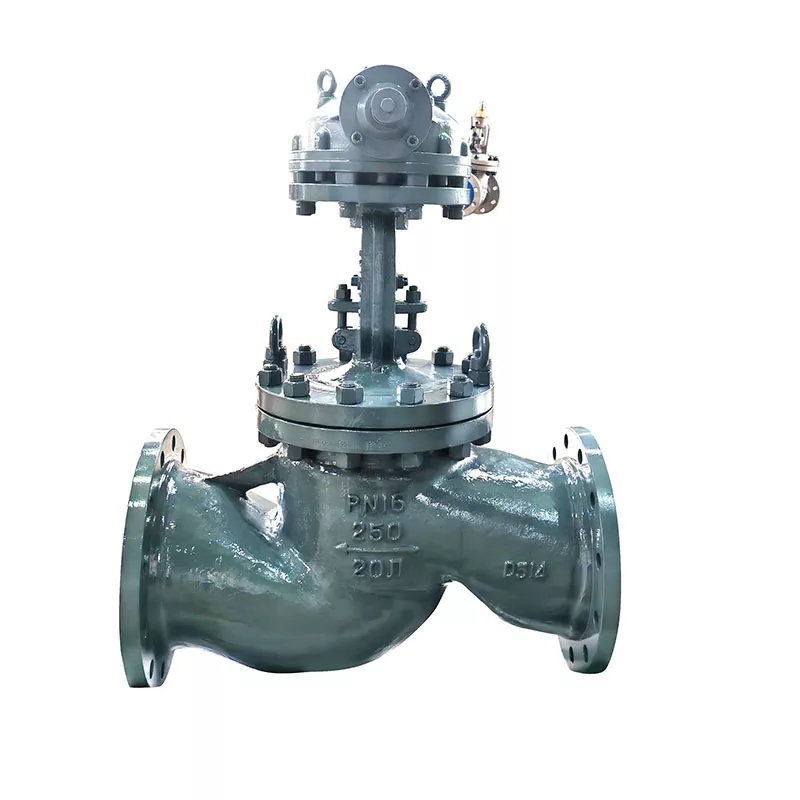
1. The Four Primary Failure Modes (And Why They Happen)
Based on root‑cause analysis from over 500 maintenance events, Hanno’s engineering team has identified four dominant failure categories. The table below summarizes each mode, its typical symptoms, and the immediate corrective action.
| Failure Mode | Typical Symptoms | Root Cause | Immediate Action |
|---|---|---|---|
| Seat & Disc Erosion | Progressive leakage in closed position; rising downstream pressure | High-velocity particulate flow (sand, scale, or catalyst fines) | Reduce flow velocity; install upstream strainers |
| Stem Thread Galling | Erratic handwheel torque; audible screeching during operation | Inadequate lubrication; misaligned gearbox input shaft | Disassemble, clean threads, apply anti-seize compound |
| Gearbox Oil Leakage | Visible oil puddles under the gearbox housing; increased gear wear | Worn shaft seals or over-pressurization from thermal expansion | Replace seals; check breather vent for clogging |
| Bonnet Joint Creep | External leakage at the bonnet flange; bolt relaxation after thermal cycling | Uneven bolt torque; gasket material incompatible with process temperature | Re-torque in star pattern; upgrade to spiral-wound gasket |
2. Preventive Strategies – A Structured Approach
Prevention is always more cost‑effective than emergency repair. Hanno recommends a three‑tiered preventive framework for every Gearbox Globe Valve in your inventory:
Tier 1 – Predictive Monitoring (Weekly)
-
Measure stem travel deviation with a dial indicator to detect seat wear.
-
Record gearbox operating temperature via infrared thermography (baseline ±15°F).
-
Perform ultrasonic thickness testing on the valve body at six cardinal points.
Tier 2 – Preventive Maintenance (Quarterly)
-
Lubricate the gearbox with ISO VG 460 synthetic oil – never overfill.
-
Inspect the position indicator for drift; recalibrate if error exceeds 2%.
-
Check all bonnet bolts with a calibrated torque wrench – re-torque to Hanno’s published values (see manual Section 4.2).
Tier 3 – Overhaul Triggers (Every 5,000 cycles or 2 years)
-
Replace all soft seals (PTFE/graphite) regardless of visible condition.
-
Inspect gear teeth for pitting using dye penetrant.
-
Validate the Gearbox Globe Valve’s shut‑off class per API 598 – if leakage exceeds Class IV, re‑lap the seat.
3. Extended FAQ – Common Questions About Gearbox Globe Valves
Q1: Can a Gearbox Globe Valve be repaired in-line, or must it be removed from the pipeline?
A: In-line repair is possible only for top‑entry Gearbox Globe Valves with a removable bonnet and stem assembly—provided the gearbox is unbolted first. However, Hanno strongly advises against in‑line lapping of the seat because metallic debris can contaminate downstream equipment. For safe and repeatable results, we recommend removing the valve to a clean workshop, where you can also inspect the gearbox oil for metal particles—a critical early warning sign of gear wear that is impossible to detect in‑line.
Q2: How do I determine if my Gearbox Globe Valve failure is caused by the gearbox itself or by the internal trim (seat/disc)?
A: Perform a simple isolation test: disengage the gearbox clutch (if equipped) or remove the handwheel adapter, then manually rotate the stem using a temporary lever. If the stem turns smoothly but the valve still leaks, the failure is in the trim (seat erosion or disc deformation). If the stem is locked or requires excessive force even with the gearbox disengaged, the problem lies in the stem threads or bushing—not the gearbox. If the stem turns freely but the handwheel is hard to turn when re‑engaged, the gearbox reduction gears or bearings are failing. Hanno’s diagnostic flowcharts separate these three paths clearly, saving you hours of misdirected troubleshooting.
Q3: What is the maximum allowable gearbox oil temperature for continuous service, and what happens if I exceed it?
A: For standard mineral‑based oils, the maximum continuous sump temperature is 180°F (82°C). Exceeding this threshold reduces oil viscosity by more than 40%, leading to boundary lubrication and rapid scoring of gear teeth. In Hanno’s field tests, every 18°F above 180°F cuts gearbox bearing life by half. If your application runs hot (e.g., steam tracing or solar radiation), we recommend switching to a fully synthetic PAO‑based oil with a 220°F maximum and installing a heat‑dissipating finned gearbox cover—an option Hanno offers as a standard upgrade for high‑temperature services.
4. The Hidden Cost of Ignoring Early Warning Signs
Delaying corrective action on a Gearbox Globe Valve does not merely invite a single component replacement—it cascades into actuator over‑torque, stem bending, and even body cracking. Hanno’s failure database shows that 68% of unplanned shutdowns involving globe valves could have been prevented by acting on the first sign of increased operating torque (a rise >25% above baseline). Investing in a simple torque‑monitoring system costs less than 5% of a typical emergency outage penalty.
5. Ready to Secure Your Flow Control Reliability?
Every Gearbox Globe Valve in your plant deserves a tailored care plan—not a one‑size‑fits‑all checklist. Hanno provides site‑specific failure mode analyses, retrofitting kits for older gearboxes, and certified training for your maintenance crews. Whether you need a replacement gearbox, a complete valve assembly, or a remote diagnostic consultation, our engineers are ready to assist.
Contact us today – send your valve datasheet and operating history to our service team, and we will reply within 24 hours with a customized prevention roadmap. Your uptime is our priority. Hanno – engineering reliability, one Gearbox Globe Valve at a time.