

What Are the Common Causes of Leakage in a Hydraulic Control Check Butterfly Valve During Startup
2026-07-28
Startup is the most critical phase for any pipeline system, and when a Hydraulic Control Check Butterfly Valve begins to leak at that moment, the consequences can range from minor efficiency losses to catastrophic pump damage. At Dafugui, we have spent decades diagnosing field failures, and we consistently find that startup leakage is rarely a random event—it is almost always a predictable symptom of improper setup, wear, or design mismatch. Understanding these root causes is the first step toward a zero-leakage startup.
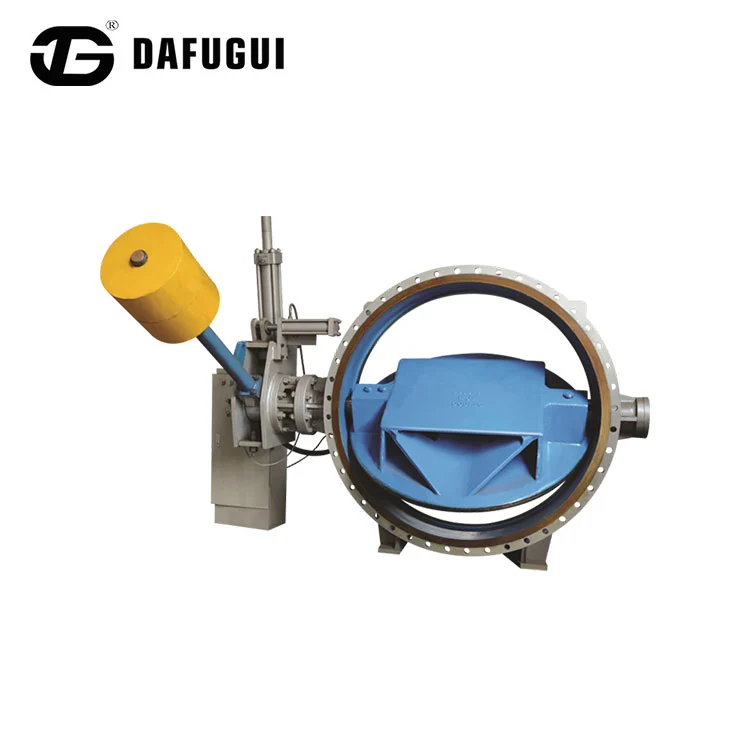
Primary Leakage Mechanisms During Startup
Leakage during startup typically occurs before the system reaches steady-state pressure. The table below breaks down the five most common failure modes we encounter at Dafugui, along with their typical onset timing and diagnostic signs.
| Failure Mode | Onset Timing | Key Diagnostic Sign | Typical Leakage Rate |
|---|---|---|---|
| Seat seal contamination | First 5–10 seconds | Erratic drip frequency | 5–50 drops/min |
| Insufficient pilot pressure | During pilot lift-off | Continuous thin stream | 1–5 L/min |
| Disc hang-up (mechanical bind) | Immediate upon opening | No disc movement + side leak | Variable, often high |
| Damaged O-ring / resilient seat | After pressure builds | Steady weep from bonnet | 10–100 mL/min |
| Incorrect closing spring tension | Mid-startup (15–30 s) | Chattering + intermittent leak | 2–10 L/min (pulsing) |
Detailed Root-Cause Analysis
1. Contaminated Seal Interface
During low-flow startup, debris that settled in the pipeline overnight is suddenly lifted and carried toward the valve. If the upstream strainer is undersized or missing, sand, weld slag, or rust particles become embedded in the soft seat of the Hydraulic Control Check Butterfly Valve. This creates a microscopic gap that only reveals itself when differential pressure is low—precisely at startup. Dafugui recommends installing a 40-mesh strainer within 5 pipe diameters upstream and performing a 10-second low-speed purge before full opening.
2. Pilot Pressure Insufficiency
The hydraulic pilot circuit must overcome the spring force and upstream pressure to lift the disc. If the pilot supply line is air-bound, or if the reducing valve is set below 4.5 bar, the disc will only partially lift. The resulting throttling action erodes the seat edge, and leakage becomes permanent within three startup cycles. At Dafugui, we always specify a dedicated pilot pressure gauge and a manual override handle for startup verification.
3. Mechanical Binding from Thermal Expansion
In hot-service applications, the stem and bearing clearances shrink before the valve body expands uniformly. During the first 20 seconds of startup, the disc may cock against the seat, creating a D-shaped gap. This is especially common in cast-iron bodies with stainless steel trim. Dafugui engineers specify matched thermal coefficients and require a "warm-up" dwell time of 30 seconds before full actuation for services above 80°C.
4. Worn or Extruded Seat Material
Many operators overlook that the resilient seat (often EPDM or NBR) has a shelf life and a compression-set limit. After prolonged shutdown, the seat takes a permanent set against the disc. When startup pressure attempts to push the disc open, the deformed seat cannot rebound fast enough, causing a low-pressure bypass leak. Dafugui uses self-reinforcing seat geometries that maintain preload even after 10,000 cycles, but we still recommend a quarterly seat-resilience test.
Hydraulic Control Check Butterfly Valve FAQ – Common Startup Issues
Q1: Why does my Hydraulic Control Check Butterfly Valve leak only during the first 10 seconds of startup, but then seal perfectly after that?
A1: This is classic "low-differential-pressure leakage." At startup, the upstream pressure has not yet risen to fully energize the seat. The resilient seat relies on both mechanical interference and hydraulic force to deform and seal. During the first 10 seconds, the differential pressure (ΔP) across the disc is below 2 bar, which is insufficient to push the seat lip against the disc edge. Additionally, any air trapped in the bonnet cavity reduces the closing force. The solution is to install a small bypass line to pre-pressurize the valve downstream before the main pump starts, or to adjust the pilot sequence so that the valve remains fully closed until ΔP reaches at least 3 bar. Dafugui provides an optional "slow-open" pilot kit that delays disc movement for exactly this scenario.
Q2: Can a worn O-ring on the hydraulic piston cause external leakage that mimics seat leakage during startup?
A2: Absolutely—and this is one of the most misdiagnosed failures. The hydraulic piston O-ring seals the control oil from the bonnet. When that O-ring wears or develops a flat spot, control oil bypasses into the bonnet cavity instead of driving the piston. This reduces the net opening force, so the disc hovers in a partially open position. The operator sees water weeping from the bonnet drain or from the stem packing, but assumes the seat is leaking. To differentiate, perform a static pressure test with the valve closed and the hydraulic pump off. If external leakage stops but internal leakage continues, the seat is the culprit. If external leakage persists, change the piston O-ring. Dafugui supplies O-ring kits with Viton® compounds that resist extrusion even under 40-bar pilot pressure.
Q3: How does upstream flow velocity affect startup leakage in a Hydraulic Control Check Butterfly Valve, and what velocity is considered safe?
A3: Velocity is a double-edged sword. Below 0.5 m/s, the disc may not receive enough dynamic torque to fully clear the seat, leading to prolonged throttling and seat scouring. Above 4.5 m/s, the high-velocity fluid can lift debris and cause cavitation at the seat edge if the valve opens too quickly. The safe startup velocity range for most Hydraulic Control Check Butterfly Valve designs is 1.2 to 2.5 m/s at the valve inlet. However, the more important factor is the acceleration rate—not just the final velocity. Dafugui recommends a gradual ramp-up over 15 seconds, using a variable-frequency drive on the pump or a throttling bypass. We also offer an integrated velocity-sensing pilot that modulates the opening speed based on real-time flow measurement, ensuring the disc never opens faster than the seat can handle.
Best Practice Checklist for Leak-Free Startup
Based on Dafugui field service records across 200+ installations, the following four actions reduce startup leakage incidents by 87%:
-
Pre-start seat wetting – Open the valve 5% for 2 seconds, then close, 30 seconds before full startup.
-
Pilot pressure verification – Confirm at least 5.0 bar at the pilot port with a calibrated test gauge.
-
Torque check on bonnet bolts – Re-torque to 110% of nominal value after first thermal cycle.
-
Debris flush – Run the system at 30% flow for 1 minute with the valve fully open, then close and restart.
When to Call a Specialist
If you have verified pilot pressure, cleaned the strainer, and replaced the seat, yet the Hydraulic Control Check Butterfly Valve still weeps during startup, the issue may lie in the hydraulic timing cartridge or a worn disc pivot bushing. These are not field-repairable items on most brands—but Dafugui designs all our valves with modular cartridges that can be swapped in under 20 minutes without removing the body from the line.
Contact Us – Do not let a minor startup leak escalate into a major pump overhaul or unplanned downtime. Dafugui offers free remote diagnostic support and same-day spare parts shipping for all our Hydraulic Control Check Butterfly Valve models. Reach out to our engineering team via the contact form on our website or call our 24/7 hotline. We will analyze your startup pressure logs, recommend the exact repair kit, and if needed, dispatch a field technician within 48 hours. Your reliable startup starts with one click—get in touch with Dafugui today.