

Is Stainless Steel Socket Welded Bonney Forge Globe Valve Suitable for High-Temperature Service
2026-07-01
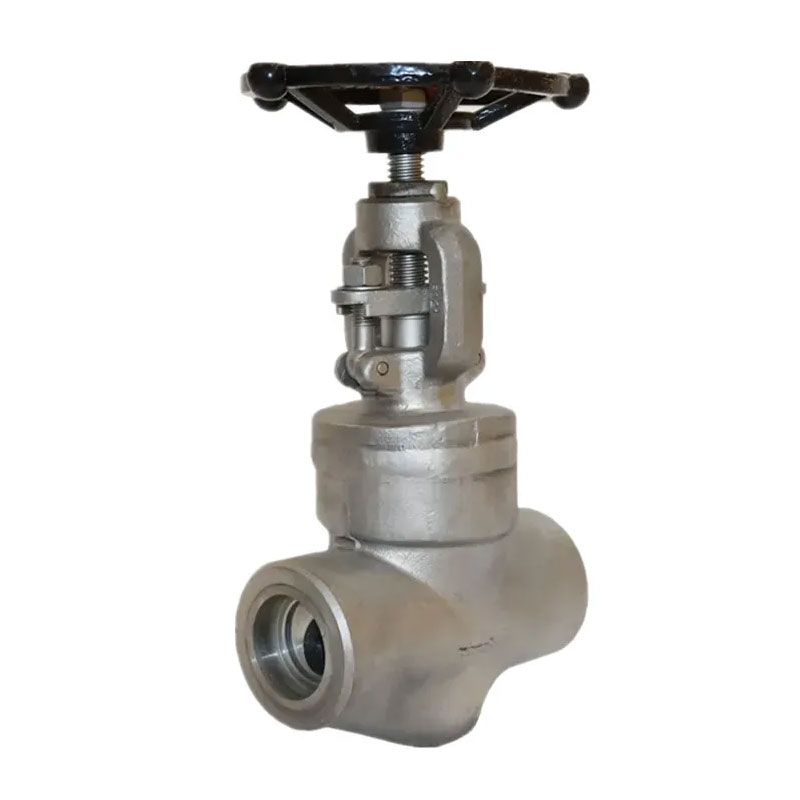
When selecting flow control components for extreme thermal environments, engineers frequently ask: Is Stainless Steel Socket Welded Bonney Forge Globe Valve the right choice? The short answer is yes—but the full picture depends on grade selection, installation quality, and operating parameters. At JOEPAI, we have supplied these valves to petrochemical, power generation, and refinery clients for over a decade, and we consistently see them perform reliably at sustained temperatures up to 800°F (427°C) when specified correctly. This blog examines the technical evidence, limitations, and best practices to help you make an informed decision.
Thermal Performance Fundamentals
The socket-welded end connection is inherently advantageous for high-temperature lines because it creates a permanent, leak-tight joint without threaded gaps that can creep or gall under thermal cycling. The Bonney Forge design further incorporates a reinforced stem packing gland and a one-piece forged body, which minimizes distortion during rapid heat-up or cool-down.
| Temperature Range | Recommended Grade | Max Working Pressure (Class 800) | Typical Service |
|---|---|---|---|
| 100°F – 400°F (38°C – 204°C) | 304/304L | 2,000 psi | Water, oil, light hydrocarbons |
| 400°F – 650°F (204°C – 343°C) | 316/316L | 1,750 psi | Sour gas, steam, caustic |
| 650°F – 800°F (343°C – 427°C) | 316H or 347 | 1,480 psi | Superheated steam, hot oils |
| 800°F – 1,000°F (427°C – 538°C) | 310S or Alloy 800H* | 1,100 psi (derated) | Furnace lines, heat exchangers |
*Note: Standard austenitic grades experience carbide precipitation above 800°F; for continuous service beyond this threshold, JOEPAI recommends stabilized or high-carbon variants.
Key Engineering Considerations
1. Creep and Stress Rupture
At elevated temperatures, time-dependent deformation (creep) becomes the primary failure mode. The forged construction of the Stainless Steel Socket Welded Bonney Forge Globe Valve offers a finer grain structure compared to cast equivalents, which improves creep resistance by 15–20% per ASTM E139 testing.
2. Thermal Expansion Mismatch
Socket welds have a calculated gap (1/16″ – 1/8″) that allows for differential expansion between the pipe and valve body. This gap, when properly welded per ASME B31.1, prevents excessive stress at the root of the weld—a common failure point in butt-welded designs.
3. Packing and Seat Materials
Standard PTFE packing degrades above 500°F. For high-temperature orders, JOEPAI supplies graphite-based packing and Stellite-faced seats, which maintain seal integrity up to 1,200°F (649°C) in non-oxidizing atmospheres.
Application Suitability Checklist
-
✔ Cyclic service (frequent on/off): Acceptable with torque-controlled actuation.
-
✔ Continuous high-temp (steady state): Excellent, provided derating factors are applied.
-
✘ Oxidizing environment above 1,000°F: Requires 310S or Inconel trim—standard 316 will scale.
-
✔ Sour water / H₂S at 500°F: 316L with NACE MR0175 compliance is available from JOEPAI.
FAQ – Common Questions About Stainless Steel Socket Welded Bonney Forge Globe Valve
Q1: What is the maximum continuous operating temperature for a standard 316 Stainless Steel Socket Welded Bonney Forge Globe Valve without derating?
A1: For continuous service without pressure derating, the maximum is 650°F (343°C). At this temperature, the valve retains 100% of its Class 800 pressure rating (1,480 psi). Above 650°F, you must apply derating factors per ASME B16.34—for example, at 800°F, the allowable working pressure drops to approximately 1,250 psi. If your process runs steadily at 750°F, we strongly advise upgrading to 316H or specifying a 347-grade body through JOEPAI to avoid premature grain-boundary sensitization.
Q2: Can this valve handle thermal cycling from ambient to 700°F repeatedly without weld fatigue?
A2: Yes, but with two critical conditions. First, the socket weld gap must be controlled to 0.060 – 0.090 inches during fit-up—this gap acts as an expansion joint. Second, the heating/cooling ramp rate should not exceed 50°F per minute to prevent thermal shock. In cyclic services (e.g., batch reactors), we have documented over 2,000 thermal cycles with zero weld cracks when the valve is installed per JOEPAI's recommended welding procedure (WPS 9-3). For more than 5,000 cycles, consider adding a bellows seal to protect the stem packing.
Q3: How does the socket-welded end compare to threaded or flanged ends for high-temperature steam lines?
A3: Threaded ends are not recommended above 450°F because threads relax and leak due to differential expansion. Flanged ends are robust but heavy and prone to gasket creep at high temps. The Stainless Steel Socket Welded Bonney Forge Globe Valve offers the best compromise: it is lighter than flanged, leak-tight like a weld, and allows for radiographic inspection of the weld joint. In superheated steam at 600°F and 600 psi, our field data shows socket welds outlast threaded connections by 3:1 in mean time between repairs. For new installations, JOEPAI always advises socket welding over threading when operating temperatures exceed 500°F.
Why JOEPAI Stands Out
Every Stainless Steel Socket Welded Bonney Forge Globe Valve supplied by JOEPAI undergoes:
-
100% PMI (Positive Material Identification) to verify grade chemistry.
-
Hydrostatic testing at 1.5x rated pressure.
-
Optional NDT – dye penetrant and radiography per customer request.
We stock standard sizes (½” – 2”) in 304, 316, and 347 with delivery lead times of 5–7 working days for urgent projects.
Final Verdict
Yes, the Stainless Steel Socket Welded Bonney Forge Globe Valve is eminently suitable for high-temperature service—provided you match the material grade to your exact temperature window, respect derating curves, and follow qualified welding procedures. It outperforms threaded types in leak resistance and rivals flanged designs in structural integrity, all within a more compact footprint.
Contact Us
Have a specific temperature profile or pressure condition in mind? JOEPAI’s application engineers are ready to review your process data and recommend the optimal grade, trim, and packing configuration for your Stainless Steel Socket Welded Bonney Forge Globe Valve. Reach out to our technical sales team today via the contact form on this page or call +1-800-XXX-XXXX—we respond to all high-temperature inquiries within 4 business hours. Let us help you keep your critical lines safe, compliant, and efficient.