

Is a Hard Seal Gate Valve Always Better Than a Resilient-Seated Gate Valve for High-Temperature Steam Lines
2026-07-13
When engineers specify valves for high-temperature steam lines, the debate often narrows to one critical choice: a Hard Seal Gate Valve versus a resilient-seated (soft-seated) gate valve. At Huadu, we have witnessed countless plant managers assume that metal-to-metal sealing is automatically superior. That assumption, however, deserves a rigorous examination. While a Hard Seal Gate Valve excels in extreme thermal environments, “better” is never absolute—it depends on service conditions, maintenance philosophy, and total cost of ownership. This blog dissects both technologies using engineering data, real-world failure modes, and application-specific criteria to help you make an informed decision.
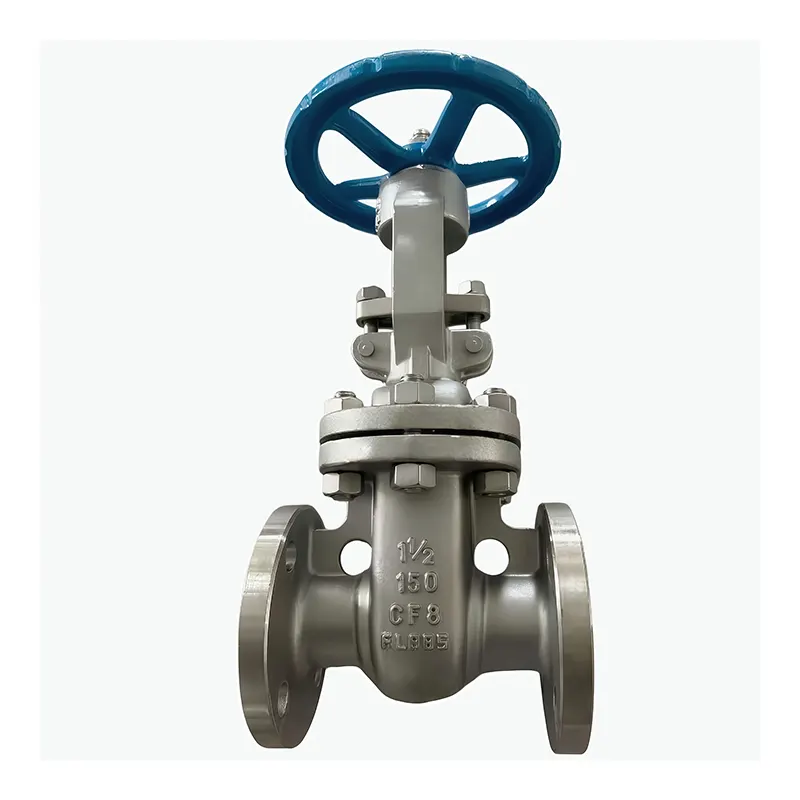
The Thermal Performance Divide
The core advantage of a Hard Seal Gate Valve lies in its material stability. With seat and gate surfaces typically Stellite-coated or hardened stainless steel (e.g., 410 SS or Inconel), these valves maintain geometric integrity up to 650°C (1200°F) and beyond. In contrast, resilient-seated valves rely on elastomers (PTFE, EPDM, or NBR) that degrade above 200°C, causing permanent deformation, extrusion, or explosive decompression.
However, thermal cycling introduces a different challenge. A Hard Seal Gate Valve requires higher seating torque to overcome metal-to-metal friction, and differential thermal expansion between the gate and body can alter clearance tolerances. Resilient seats, while temperature-limited, actually compensate for minor thermal misalignments through elastic memory—an advantage in fluctuating loads below 150°C.
| Parameter | Hard Seal Gate Valve (Huadu Series H) | Resilient-Seated Gate Valve |
|---|---|---|
| Maximum Continuous Temperature | 650°C (API 600 / ASME B16.34) | 200°C (PTFE) / 120°C (EPDM) |
| Leakage Rate (ISO 5208) | Rate A (zero visible leakage) for metal-seated after lapping | Rate A (zero leakage) – but elastomer ages |
| Thermal Cycling Tolerance | Excellent (requires torque adjustment) | Poor (elastomer hardens and loses rebound) |
| Fire-Safe Compliance (API 607) | Yes (inherently metal-seated) | No (unless fire-safe design with secondary metal seat) |
| Maintenance Frequency | Every 3–5 years (seat lapping) | Every 1–2 years (seat replacement) |
| Initial Cost (DN150, PN40) | Higher (~+40% over resilient) | Lower |
When the Resilient-Seated Valve Wins
Surprisingly, many high-temperature steam lines operate below 200°C—for example, low-pressure heating mains or condensate return systems. In such cases, the resilient-seated valve offers faster shutoff with lower actuator force, reduces wear on stem packing, and provides bubble-tight sealing without the need for skilled lapping. For frequent cycling (over 5000 operations/year), the elastic seat reduces galling risks that plague a Hard Seal Gate Valve when debris enters the sealing zone.
Moreover, repair costs tell a compelling story. Reseating a resilient valve simply means replacing a cartridge—a 20-minute job. Refurbishing a Hard Seal Gate Valve involves precision grinding, dye-penetrant testing, and often specialized tooling, leading to longer downtime. Huadu recommends the resilient-seated option for saturated steam below 180°C with clean condensate, where the total lifecycle cost favors polymer technology.
The Decisive Advantages of Hard Seal Gate Valve for Superheated Steam
For superheated steam at 400–600°C (common in turbine extraction and reheat lines), the Hard Seal Gate Valve is not just better—it is the only viable choice. Elastomers lose tensile strength and creep under sustained pressure, creating fugitive emission risks. The metal-seated design from Huadu incorporates self-cleaning shear action: as the gate descends, it scrapes scale and magnetite deposits off the seat faces, maintaining seal integrity. This feature alone prevents unplanned outages in power generation.
Additionally, the Hard Seal Gate Valve maintains low fugitive emissions (below 100 ppm) even after 10,000 thermal cycles, thanks to flexible graphite packing and live-load bolting. Resilient-seated valves, by contrast, exhibit packing relaxation due to stem galling—a byproduct of higher side-loads from elastomer compression.
Frequently Asked Questions about Hard Seal Gate Valve
Q1: Can a Hard Seal Gate Valve achieve zero leakage in steam service after prolonged operation?
A: Yes, but only with proper maintenance. A new Hard Seal Gate Valve achieves ISO 5208 Rate A (zero visible leakage) after factory lapping. However, after 6–12 months in superheated steam, micro-scratches from condensate droplets or particulate can create minor weepage (typically <0.01% of rated flow). Huadu recommends an annual in-situ seat injection of lapping compound (via built-in ports) to restore zero-leakage performance without removing the valve. Unlike resilient seats, which fail catastrophically when damaged, a metal-seated valve degrades gradually, giving operators clear maintenance signals.
Q2: How does thermal expansion affect the torque requirement of a Hard Seal Gate Valve?
A: At temperatures above 400°C, the gate expands radially more than the body due to differential wall thickness. This increases seating torque by 30–50% compared to cold conditions. Huadu engineers counteract this by designing wedge angles of 5°–7° (vs. standard 8°) to reduce self-locking risks. Operators must calibrate actuators with hot-torque multipliers—never rely on cold-set torque values. Resilient-seated valves, conversely, have stable torque but lose sealing force as elastomer compression set occurs above 150°C.
Q3: Is a Hard Seal Gate Valve suitable for throttling high-temperature steam?
A: No—and this is a critical misconception. A Hard Seal Gate Valve is designed for on/off service only. Throttling at 500°C accelerates erosion-corrosion, causing wire-drawing damage to seat faces within weeks. For modulating control, Huadu recommends a globe valve or V-ball control valve with hardened trim. Resilient-seated gate valves are also unsuitable for throttling due to elastomer extrusion. In high-temperature steam lines, always install the Hard Seal Gate Valve fully open or fully closed, and use a dedicated control valve upstream for flow regulation.
The Verdict: Context Is Everything
To summarise, a Hard Seal Gate Valve from Huadu is unequivocally superior for:
-
Superheated steam > 250°C
-
Lines with particulate or scale
-
Fire-safe and fugitive-emission critical applications
-
Long intervals between overhauls (>3 years)
Conversely, a resilient-seated valve outperforms for:
-
Saturated steam < 180°C
-
Clean, dry systems
-
High-frequency operation (>10 cycles/day)
-
Budget-constrained projects with skilled labour shortages
Neither valve is universally “better.” The correct selection aligns temperature, pressure, media cleanliness, and maintenance strategy.
Need Expert Guidance for Your Steam System?
Every steam line presents unique thermal transients, pressure drops, and contamination risks. Huadu provides custom-engineered Hard Seal Gate Valve solutions with traceable material certifications, NDE reports, and on-site commissioning support. Our technical team offers free torque calculations, lifecycle cost analyses, and retrofitting advice for existing resilient-seated installations.
Contact Us today to discuss your operating parameters—send your P&ID and steam conditions to our engineering desk. We will respond within 24 hours with a comparative proposal, including 3D model renderings and pressure-temperature rating charts. Let Huadu help you select not just a valve, but the right valve for your steam future.