

How to Select a Suitable Breather Valve to Handle Back Pressure in Flare Systems
2026-06-08
Selecting a suitable Breather Valve for flare systems requires understanding back pressure dynamics. Baoyi engineers recommend evaluating set pressure, flow capacity, and material compatibility to prevent relief failure.
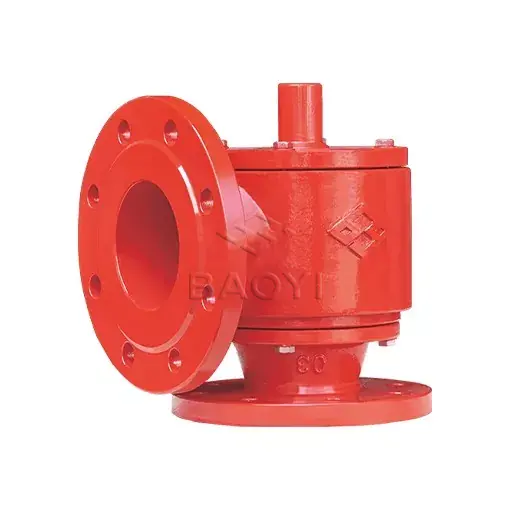
Key Factors in Breather Valve Selection
| Factor | Consideration for Flare Systems |
|---|---|
| Back Pressure Level | Low (≤10% set pressure) vs. High (variable) |
| Valve Type | Conventional, balanced, or pilot-operated |
| Material | Corrosion-resistant alloys for sour service |
| Seat Seal | Soft (FKM/PTFE) or metal-to-metal |
Common Flare System Configurations
-
Low Back Pressure (<10% set pressure) – Conventional Breather Valve works well.
-
Moderate Back Pressure (10–40%) – Balanced bellows type reduces back pressure effect.
-
High or Variable Back Pressure – Pilot-operated Breather Valve isolates the main valve from back pressure fluctuations.
Breather Valve FAQ
Q: How does back pressure affect a conventional Breather Valve?
A: Back pressure increases the force under the valve disc, raising the effective opening pressure. At 50% back pressure, a conventional Breather Valve may require nearly double the set pressure to open, leading to overpressure risks.
Q: Can a pilot-operated Breather Valve handle fluctuating flare header back pressure?
A: Yes. The pilot senses tank pressure independently of back pressure. As long as the differential across the pilot exceeds 0.5 psi, the Breather Valve opens precisely at set pressure, even with 90% back pressure.
Q: What happens if the Breather Valve chatters due to back pressure?
A: Chatter rapidly destroys seating surfaces and may ignite flammable vapors. For flare systems, always verify back pressure margins or specify a balanced Breather Valve to avoid this failure mode.
Why Baoyi for Your Flare System?
Baoyi provides ASME-certified Breather Valve models with third-party flow verification. Pilot-operated units handle back pressure up to 90%, with stainless steel trim standard.
Contact us today for a Breather Valve sizing sheet and technical consultation tailored to your flare system back pressure conditions.