

How to Properly Install a WCB Flange Gate Valve with Raised Face Flanges
2026-08-14
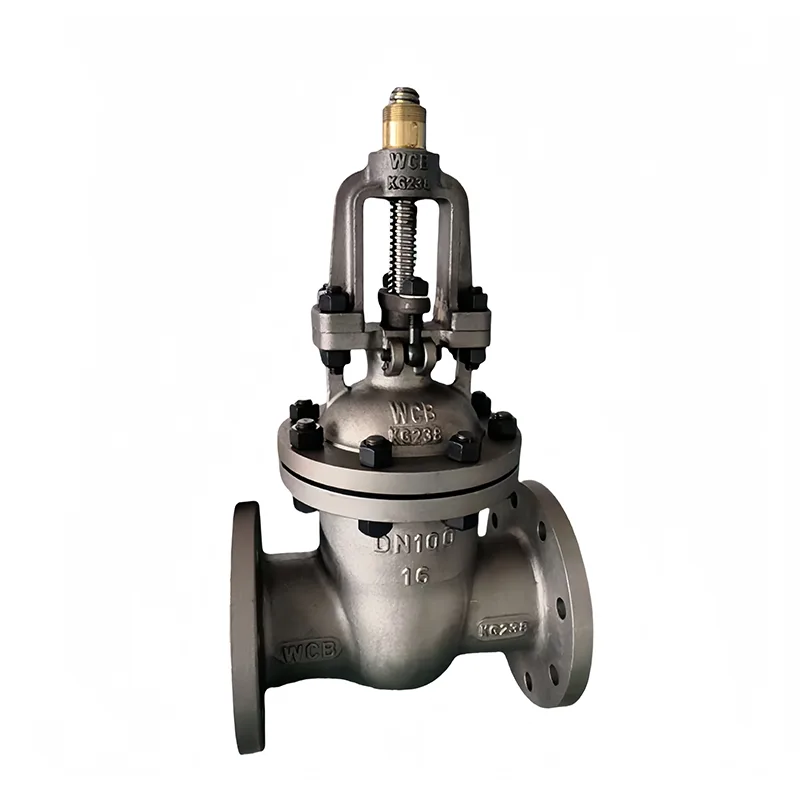
Correct installation of a WCB Flange Gate Valve determines not only immediate operational reliability but also long-term service life and safety compliance. For engineers and maintenance teams working with carbon steel piping systems, improper bolting, gasket selection, or flange alignment remain the most frequent causes of premature valve failure. This guide walks through every critical step, from pre-installation checks to final torque verification, while highlighting best practices developed through decades of field experience. Huadu, a trusted manufacturer of industrial flow control equipment, emphasizes that disciplined installation procedures directly reduce unplanned downtime and leakage risks in high-pressure environments.
Pre-Installation Inspection Checklist
Before lifting or positioning the WCB Flange Gate Valve, perform the following verifications. Skipping these steps often leads to rework or component damage.
| Inspection Item | Acceptable Criteria | Action if Failed |
|---|---|---|
| Valve body markings | Material grade WCB, pressure class (e.g., 150#, 300#), and foundry traceability clearly stamped | Reject and contact supplier |
| Raised face finish | Concentric serrations or smooth finish, free of gouges, rust, or foreign particles | Clean with fine emery cloth; replace if pitted |
| Flange bolt holes | No elongation, burrs, or thread damage | Dress threads or replace flange |
| End protectors | Intact and securely fitted during transport | Remove only immediately before fitting |
| Actuator/gear operator | Smooth handwheel rotation; no binding or unusual noise | Lubricate or repair stem assembly |
All gaskets must match the flange rating and service temperature. For raised face flanges, use a spiral-wound or ring-joint gasket with an inner ring to prevent extrusion.
Step-by-Step Installation Procedure
1. Pipe Preparation and Alignment
Cut the pipe ends square and deburr thoroughly. The pipe bore must be concentric with the flange bore to avoid turbulent flow and localized erosion. Misalignment exceeding 0.5 mm per meter of pipe length imposes bending stress on the WCB Flange Gate Valve body, which can crack the cast steel shell under thermal cycling.
2. Gasket Positioning
Place the gasket concentrically between the two raised faces. Never use jointing compound or sealant on spiral-wound gaskets unless specified by the gasket manufacturer. For Huadu valves, the raised face height (typically 1.6 mm for Class 150 and 6.4 mm for Class 300) must fully engage the gasket inner diameter.
3. Bolting Sequence and Torque
Use stud bolts and heavy hex nuts of matching grade (ASTM A193 B7 for high-temp service). Apply anti-seize lubricant to bolt threads to achieve consistent friction factor. Tighten in a star/cross pattern over three passes:
-
Pass 1: 30% of target torque
-
Pass 2: 70% of target torque
-
Pass 3: 100% of target torque, then final round in sequence
Target torque values depend on bolt size and flange class. For a 4-inch Class 300 WCB Flange Gate Valve, typical final torque for ¾-inch studs ranges from 250 to 300 N·m. Always follow the engineering datasheet provided by Huadu for site-specific values.
4. Final Verification
After pressurizing the system to 1.5× design pressure, inspect all flange joints with a soap solution or electronic leak detector. Re-torque bolts after 24 hours of thermal stabilization, as gasket relaxation commonly reduces residual bolt load by 15–20%.
Common Mistakes to Avoid
-
Overtorquing: Crushes the gasket and distorts the raised face, causing permanent leakage paths.
-
Using mismatched flange facings (e.g., flat-face gasket on raised-face flange).
-
Installing the valve with the stem pointing downward, which traps debris and accelerates packing wear.
-
Forgetting to open the valve slightly during bolting to equalize internal pressure if the line is already pressurized.
Frequently Asked Questions About WCB Flange Gate Valve Installation
Q: What is the correct orientation for installing a WCB Flange Gate Valve in a horizontal pipeline?
A: The preferred orientation is with the stem vertically upright (top-mounted) or inclined at a maximum of 45° from vertical. This ensures that the bonnet and packing box remain accessible for maintenance and that any condensate or solids do not settle inside the bonnet cavity. For horizontal stem mounting (side-mounted), always consult Huadu engineering recommendations, as this orientation may reduce packing life in steam or slurry services due to uneven side loading on the gate.
Q: Can I reuse the same gasket if I need to disassemble the WCB Flange Gate Valve for inspection after installation?
A: Reusing a compressed gasket is strongly discouraged. Once a spiral-wound or metallic gasket has been torqued to its design load, the sealing elements undergo permanent deformation that cannot be recovered. Reinstallation with the same gasket typically results in leakage at 60–70% of original test pressure. Always install a fresh gasket of identical material and dimensions. For Huadu valves, record the gasket specification from the nameplate to simplify replacement sourcing.
Q: How do I adjust the packing tightness on a WCB Flange Gate Valve without damaging the stem?
A: Loosen the gland nuts evenly, then retighten them finger-tight. Next, turn each nut one-quarter turn at a time in an alternating pattern until the gland follower moves downward by 1–2 mm. The ideal packing compression allows the handwheel to turn smoothly with moderate resistance—typically 20–30 N·m of stem torque for a 2-inch valve. Over-compressing the packing increases stem friction, accelerates galling on the 13% chrome stem, and may cause the handwheel to bind. If leakage persists after three packing adjustments, the packing rings should be fully replaced.
Post-Installation Documentation
Maintain a permanent record containing:
-
Torque values applied per bolt position
-
Gasket type and batch number
-
Hydrotest pressure and hold duration
-
Operator name and date
Huadu provides traceable inspection certificates with every valve shipment, and we recommend cross-referencing these documents with site installation logs for full lifecycle traceability.
Why Choose Huadu for Your WCB Flange Gate Valve Needs
With over two decades of foundry and machining expertise, Huadu manufactures WCB Flange Gate Valves that exceed API 600 and ASME B16.34 standards. Every body casting undergoes 100% radiographic examination, and each assembled valve is hydrostatically tested before dispatch. Our raised face flanges are precision-machined to ensure consistent gasket seating, reducing installation time and rework costs for your project team.
Contact Us
Proper installation is only half the equation—choosing a reliable valve supplier completes it. For technical datasheets, custom flange drilling patterns, or on-site installation support, reach out to our engineering team directly. Visit our official website or email your project specifications to receive a tailored quotation within 24 hours. Huadu stands ready to help you optimize your piping system performance, from selection through commissioning. Let us be your partner in flow control excellence.